From Digital Camera World · · 1m 10s
180° Rule: Why Your Camera Shouldn't Cross the Line
The 180° rule prevents confusion in filmmaking by keeping camera angles on the same side of an imaginary line between characters.
In brief
The 180° rule prevents confusion in filmmaking by keeping camera angles on the same side of an imaginary line between characters. The 180° rule ensures visual continuity in filmmaking by requiring camera placements to stay on one side of an imaginary line between characters. Originally reported by Digital Camera World.
Quick answers
- What is the 180° rule?
- The 180° rule ensures visual continuity in filmmaking by keeping characters on the same side of an imaginary line.
- How does it work?
- Camera placements for two characters must stay on one side of an imaginary line running between them.
- What is the key takeaway from 180° Rule: Why Your Camera Shouldn't Cross the Line?
- The 180° rule ensures visual continuity in filmmaking by requiring camera placements to stay on one side of an imaginary line between characters.
What is the 180° rule?
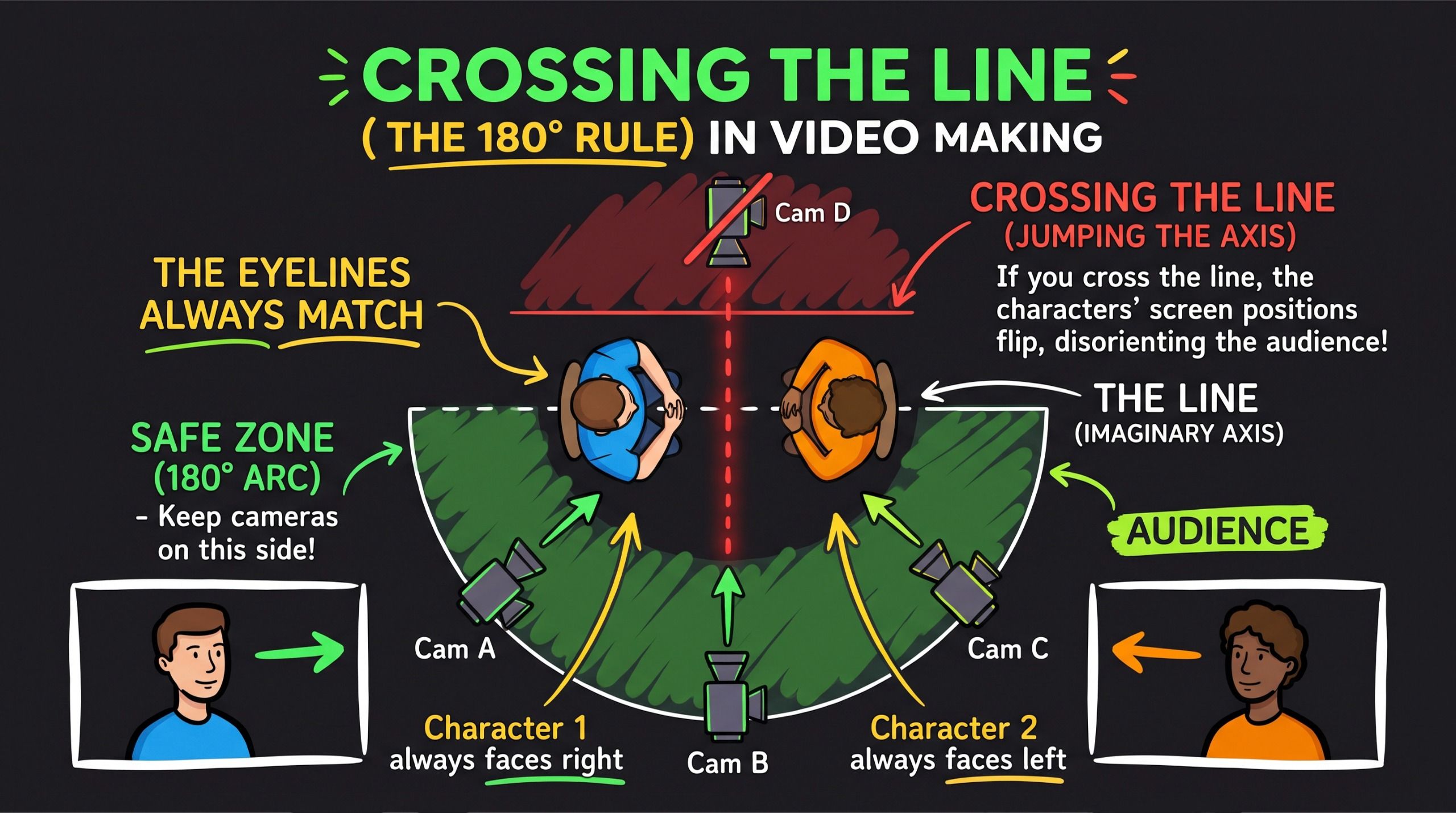
The 180° rule ensures visual continuity in filmmaking by keeping characters on the same side of an imaginary line.
How does it work?
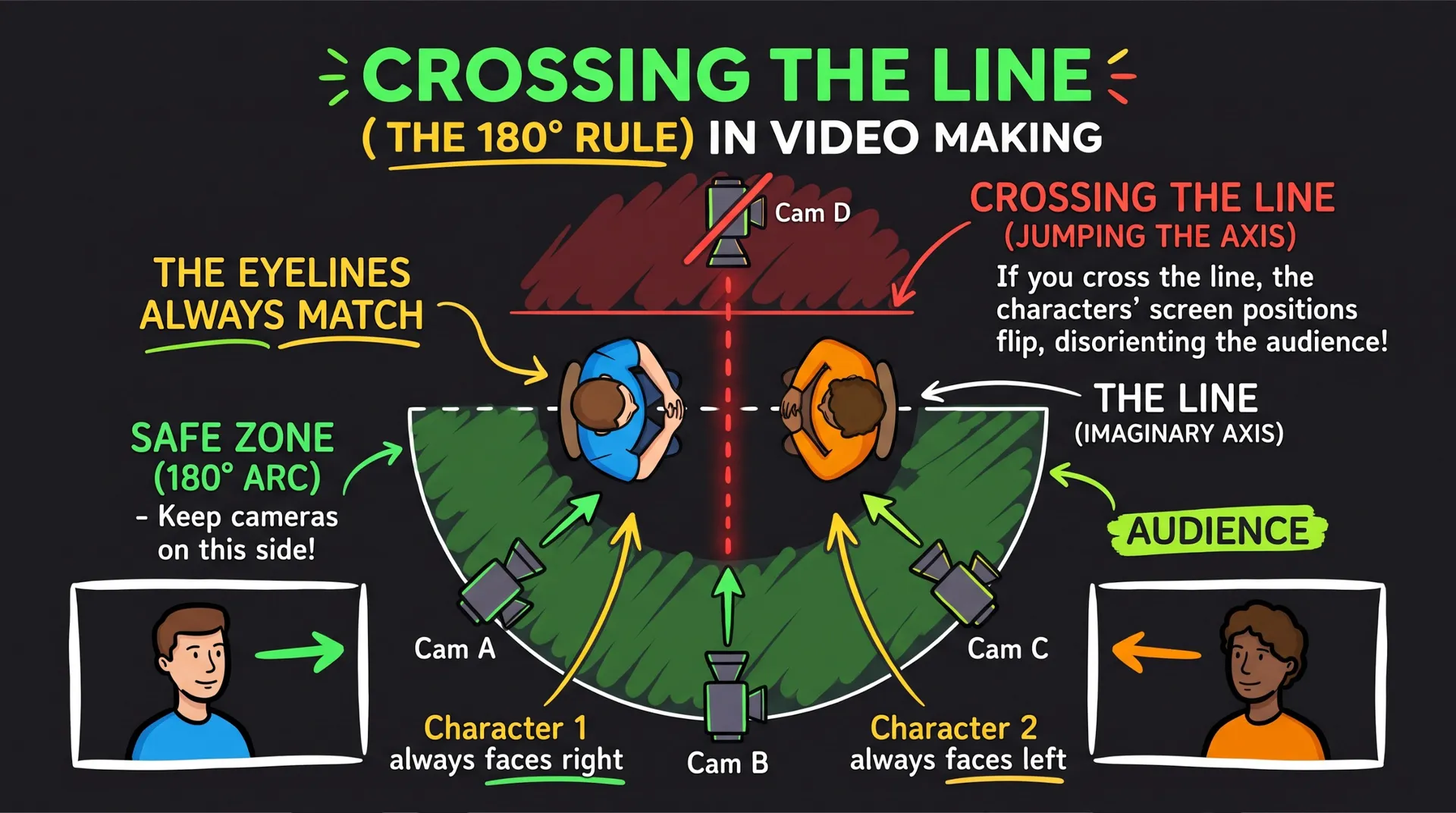
Camera placements for two characters must stay on one side of an imaginary line running between them.
Example scenario
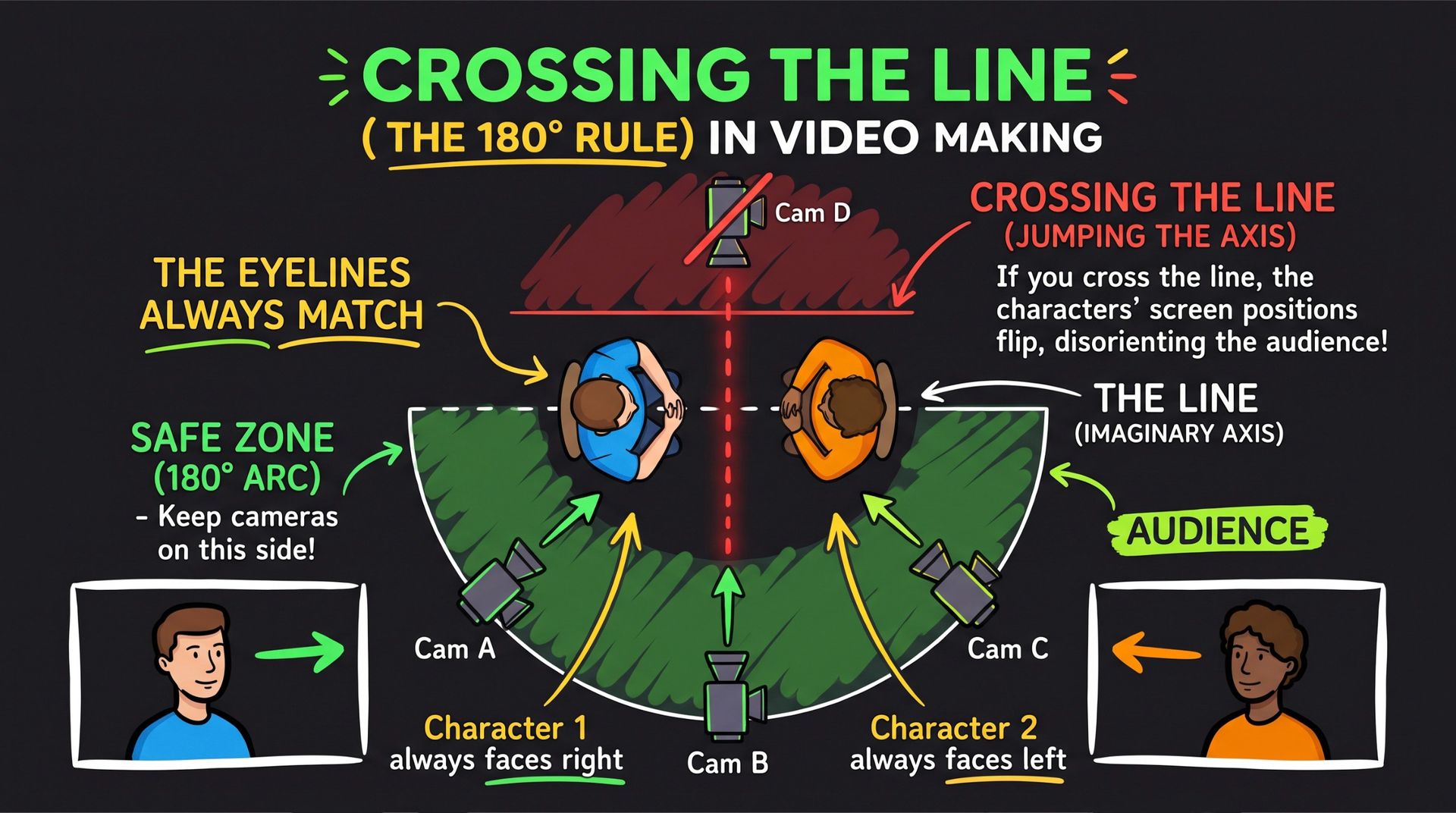
Character 1 talks to character 2 on opposite sides of the frame, with camera over character 2's shoulder.
Reverse angle shots
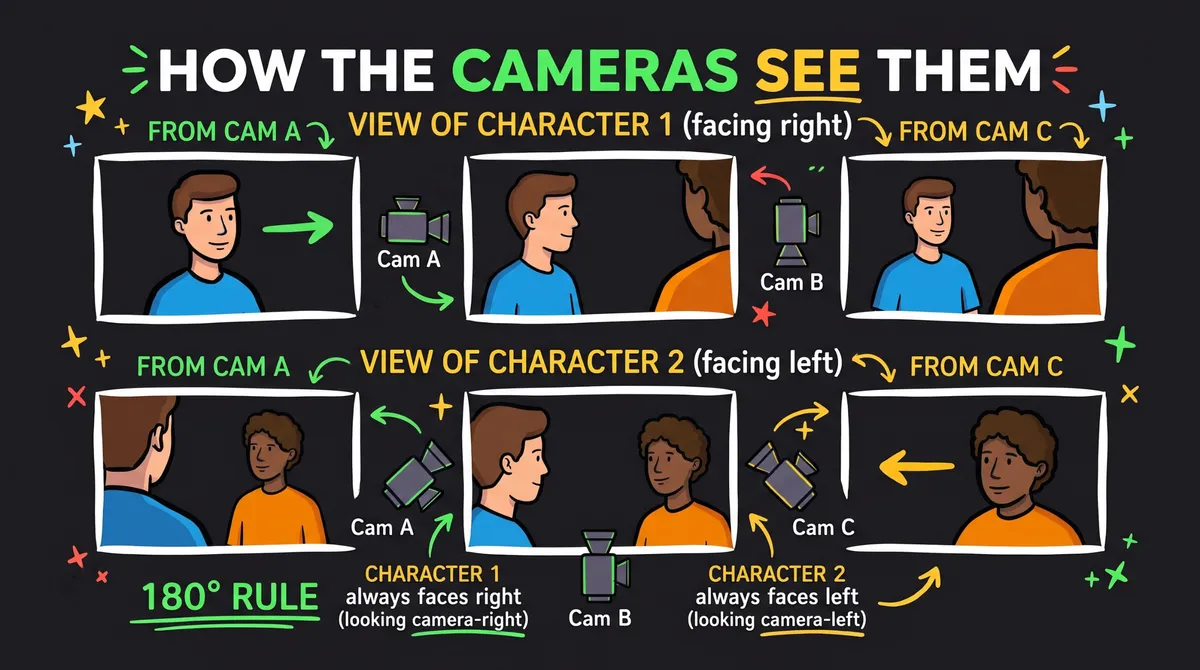
Reverse angle shots pair two shots to maintain visual continuity when characters move between each other.
Why movement matters
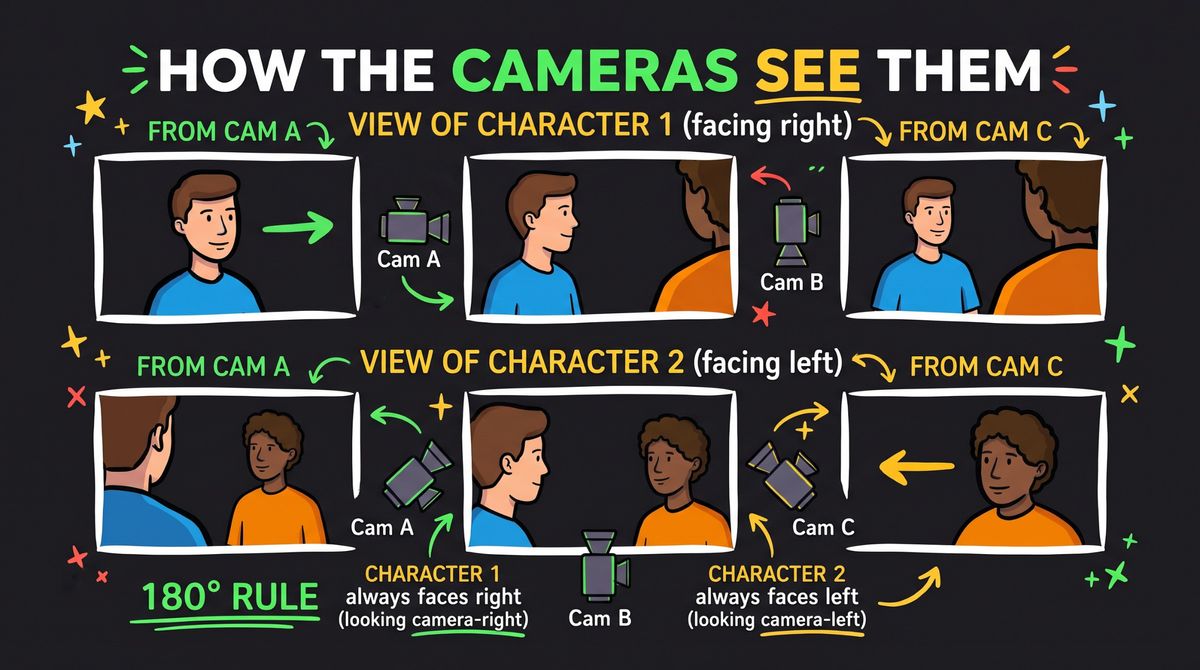
Subjects should move in the same direction across the screen to avoid confusing the viewer.
Crossing the line
Crossing the line can change on-screen movement direction, but two solutions make it more acceptable.
Static subjects
People looking left to right in one shot should continue looking left to right in the next.
The takeaway
The 180° rule ensures visual continuity in filmmaking by requiring camera placements to stay on one side of an imaginary line between characters.