From Foreign Affairs · Alan Boswell · · 5m
The Red Sea's new wars are merging into one
Middle Eastern powers are now fighting proxy wars across the Horn of Africa, turning two separate regions into a single conflict zone.
In brief
Middle Eastern powers are now fighting proxy wars across the Horn of Africa, turning two separate regions into a single conflict zone. Wars in the Middle East and Horn of Africa have become inseparable as Saudi Arabia and the UAE pursue rival interests across the Red Sea, risking a wider regional conflict. Originally…
Sudan war is now a proxy fight
On June three, U.S. Secretary of State Marco Rubio told Congress that Sudan's three-year conflict had become a proxy war, blaming Saudi Arabia and the UAE for blocking American peace efforts.
“proxy war”
Two regions are now one conflict

For a century, policymakers treated the Horn of Africa and Arabian Peninsula as separate regions divided by the Red Sea. That distinction is now disappearing as wars on each side reshape the other.
Iran war deepens the divide
The United States and Israel's February decision to launch war on Iran drove a wedge between Abu Dhabi and Riyadh, weakening American security order and making Red Sea control more urgent.
UAE has dominated Horn for a decade
The UAE established ports and military bases across the Horn of Africa, offered large financial packages to allies, and deeply involved itself in Sudan's civil war over the past ten years.
Saudi Arabia shifts its strategy

The Iran war and December breakdown of Emirati-Saudi partnership in Yemen made Riyadh less confident in Washington's protection and more intent on controlling Red Sea security alongside Egypt, Turkey, and Pakistan.
New wars could erupt across borders
Conflict is rising between Sudan's armed forces backed by Saudi Arabia and Ethiopia, an Emirati ally. A new war between Ethiopia and Eritrea could turn into a regional conflict overlapping Sudan's war.
The Red Sea once connected both shores
For millennia, the Red Sea linked present-day Djibouti, Eritrea, Ethiopia, and Yemen. People, goods, and cultural trends moved regularly among them. Christianity and Islam both spread across the sea.
Colonialism split the two regions
Starting in the twentieth century, European colonialism and nationalist movements severed governance links across the Red Sea and Gulf of Aden, hardening separation between Arabian and African shores.
Cold War's end widened the gulf
After the first Gulf War in nineteen ninety to nineteen ninety-one, the U.S. military footprint expanded in the Middle East, giving Gulf states a reprieve from managing their near abroad.
Horn fragmented as Middle East focused inward
Somalia collapsed in nineteen ninety-one. Eritrea seceded from Ethiopia in nineteen ninety-three. South Sudan seceded in two thousand eleven. The U.S. rarely saw the Horn and Middle East as linked.
Turkey enters Somalia in twenty eleven
During the Arab Spring, Turkey's Recep Tayyip Erdogan became the first non-African leader to visit Mogadishu in almost twenty years, seeking to expand Turkish influence in the region.
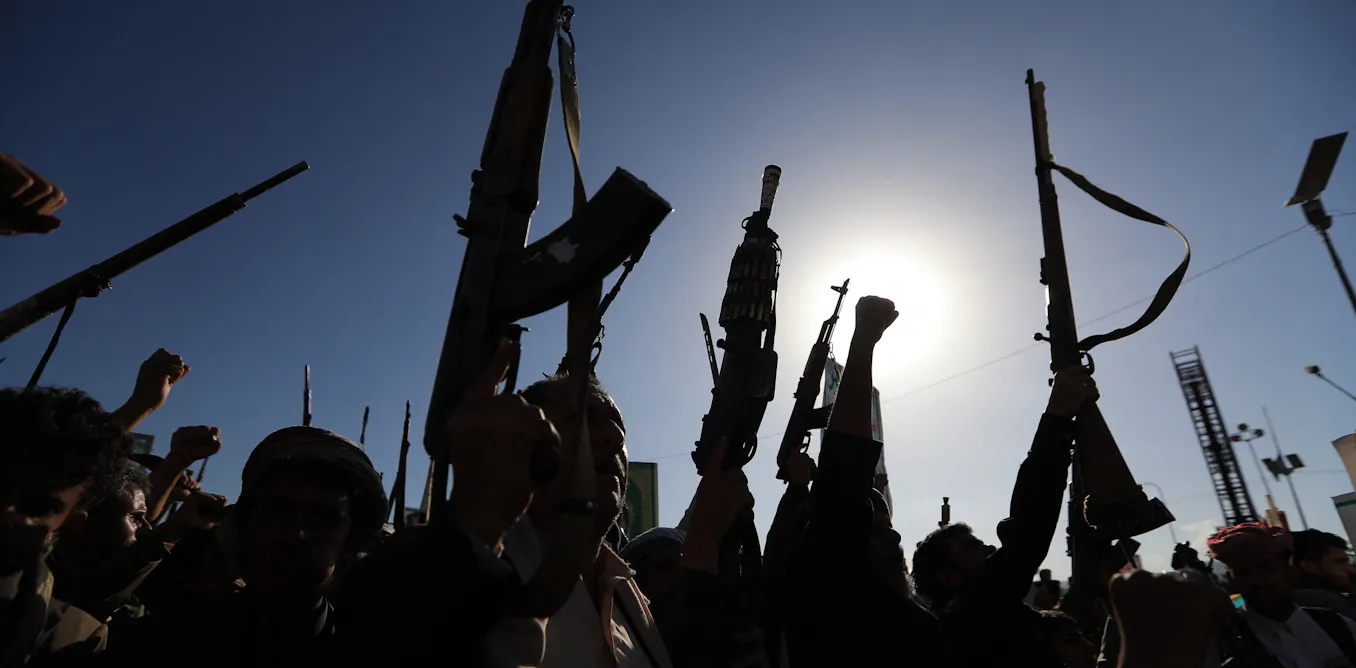
Houthis takeover drives Gulf intervention
The Houthis took over much of Yemen in twenty fourteen. Saudi Arabia and the UAE intervened militarily in twenty fifteen, needing military bases in the Horn to sustain their campaign against the rebel group.
UAE bets three billion on Ethiopia
The UAE placed a major bet on Ethiopian leader Abiy Ahmed, who rose to power in twenty eighteen, backing his regime with an early infusion of three billion dollars and critical military support.
Sudan war splits Saudi and UAE
When Sudan's junta leaders turned on each other in twenty twenty-three, the UAE became the major patron of Sudan's Rapid Support Forces. Saudi Arabia backed the Sudanese armed forces instead.
Israel recognizes Somaliland in December
In December twenty twenty-five, Israel became the first country to recognize Somaliland's independence. Egypt, Saudi Arabia, Turkey, and others fiercely opposed this move. The UAE remained silent.
TPLF retakes Ethiopia's Tigray region
In April, the Tigray People's Liberation Front effectively annulled a twenty twenty-two peace deal and retook power over Ethiopia's Tigray region. In late September, it launched large-scale offensives against the Ethiopian army.
Houthis seek links to al-Shabab
As the Houthis expanded operations around the Bab el Mandeb Strait, they reportedly sought inroads into the Horn, especially with al-Shabab. U.S. officials assert the Yemeni group is already sending al-Shabab weapons.
U.S. blocks UN support for Somalia mission
In July, the Trump administration vowed to block the UN from giving logistical support to an African Union military deployment in Somalia that had succeeded in taking and holding territory against al-Shabab.
Powers must coordinate to prevent wider war
Saudi Arabia and the UAE must agree to de-escalate conflict in the Horn before a new regional war erupts. They should press belligerents to cease-fire and coordinate to prevent cross-border wars involving Ethiopia.
Integration may be irreversible but unmanaged
The Horn of Africa's return to the Middle East theater is likely irreversible. The question now is whether various powers can manage their interests to defuse conflict or whether wars will continue ricocheting across the…
“wars launched on one side of the Red Sea no longer remain contained there”
The short version
Wars in the Middle East and Horn of Africa have become inseparable as Saudi Arabia and the UAE pursue rival interests across the Red Sea, risking a wider regional conflict.