From Foreign Policy · Donna Zuckerberg · · 4m
Emily Wilson chooses her words carefully
The Homeric scholar's new essay collection on translation is bitingly smart and teaches readers how to think about language.
In brief
The Homeric scholar's new essay collection on translation is bitingly smart and teaches readers how to think about language. Wilson demonstrates that translation requires infinite tiny choices about meaning, tone, and pace, and that careful word selection matters more than most readers realize. Originally reported by…
Wilson revolutionized book promotion

Nearly a decade ago, Emily Wilson used Twitter threads to show exactly how translators work, detailing her choices for the first-ever Odyssey translation by a woman in English.
Her threads combined three things
Transparency, accessibility, and humor made Wilson's Twitter threads hugely popular with both trained classicists and newcomers wondering why another translation was needed.
New essay collection just released

Crossing the Wine-Dark Sea: Journeys Through Ancient Literature compiles revised review essays with substantial new material, including the expanded Twitter threads as its final essay.
Wilson's Nolan review went viral

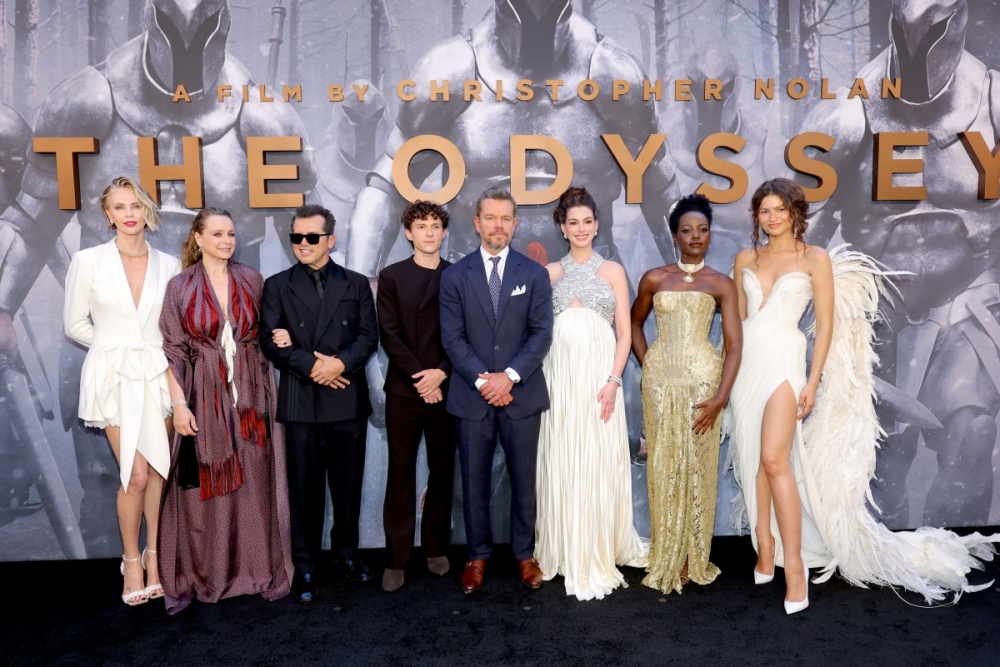
Her scathing review of Christopher Nolan's Odyssey film adaptation briefly crashed the London Review of Books website and sparked debate about whether she was too harsh.
She opened with backhanded praise
Wilson called the film an entertaining way to hide from heat, noting her teenagers enjoyed it, then proceeded to dismantle nearly everything else about it.
“an entertaining way to hide from the high temperatures for a few hours”
Her voice is scholar shade
The book reads like jokes scholars make to each other over mediocre wine at receptions, with surgical precision and learned wit rather than broad public lectures.
She targets embellishing translators

Wilson's harshest critiques go to translators who expand the original text without adding anything useful or interesting, especially those who don't sound like actual English.
Mendelsohn's translation gets dissected
Wilson shows how Mendelsohn turned fourteen Greek words into twenty-four English ones by adding phrases with no Greek equivalent, borrowing phrasing from earlier translations.
Her damning conclusion on Mendelsohn
She praises him for following Lattimore's defiance of contemporary English idiom, a backhanded compliment that questions whether his choices actually improve the text.
Wilson's rule number sixteen
Don't try to please everyone. If nobody objects to any choice you make, your choices are too timid. Wilson lives by this rule in all her writing.
“Don't try to please everyone. If nobody objects to any choice you make, your choices are too timid.”
She critiques women translators harshly
In her essay on Sappho, Wilson is especially tough on women writers whose only connection to Sappho is shared gender, calling out Mary Robinson's aspirations to sublimity.
But she fights misogyny in texts
Wilson points out how generations of translators added misogynistic editorializing, calling the twelve slave girls executed by Telemachus sluts or whores, words completely absent from the original.
Nolan misattributed her translation
The director cited Wilson's opening line in interviews, and media twisted this to suggest he based his script on her translation, infuriating a translator as careful as Wilson.
Translation requires infinite tiny choices

Wilson walks readers through how translators must balance meaning, tone, pace, and poetic effects to create something meaningful for contemporary readers.
She uses modern comparisons boldly
Wilson argues Aristophanes' comedy spirit is best expressed by Cardi B and Megan Thee Stallion's WAP, and finds resonance between her complicated man and Avril Lavigne's song.
Some modern parallels feel forced
Several essays end with brief parables about modern times, like Brexit and Trump, that feel unnecessary when Wilson's analysis already speaks to contemporary relevance.
She's retranslating the Odyssey
Wilson has announced a complete retranslation of her bestselling 2017 Odyssey, iterating on her work according to the twenty rules she sets out in this book.
The new translation will be longer
Her 2017 version cut Homer's dactylic hexameter into ten-syllable English lines. The new one will expand to give more room exploring the ancient world and social roles.
She regrets overusing slave
Wilson told the Associated Press she overused slave as a general term and wants more specificity about the broad array of social roles held by enslaved people in the epic.
Wilson pushes readers to be better
Nearly a decade after her original translation was praised for calling a slave a slave, she continues pushing readers to think more carefully about language and meaning.
The big picture
Wilson demonstrates that translation requires infinite tiny choices about meaning, tone, and pace, and that careful word selection matters more than most readers realize.