From Fortune · Beatrice Nolan · · 4m
AI regulation battle becomes a culture war
Silicon Valley's biggest names are splitting over whether AI needs new rules, and the debate is turning political.
In brief
Silicon Valley's biggest names are splitting over whether AI needs new rules, and the debate is turning political. AI regulation is no longer just a safety debate, it's become a culture war where tech leaders are taking sides to Trump, and effective altruism has become a political target. Originally reported by…
The AI regulation divide
Anthropic's Dario Amodei and OpenAI's Sam Altman want frontier AI companies to slow down, open to independent evaluators, and coordinate on safety standards. Meta's Mark Zuckerberg and Nvidia's Jensen Huang reject new regulation entirely.
Zuckerberg's market solution
Zuckerberg argues the market will discipline AI companies naturally. People won't use misaligned systems, so trust becomes a competitive advantage. Labs ignoring safety will fall behind, and those causing harm face legal liability.
Huang rejects the premise
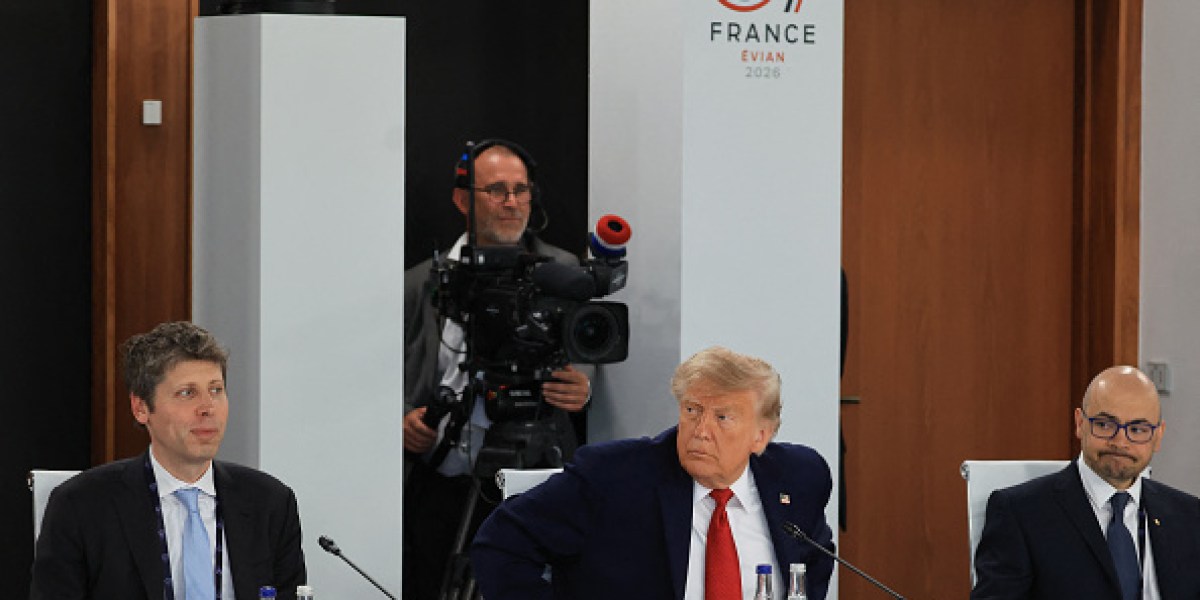
Nvidia's Jensen Huang said this week that safety and speed are not in conflict, and the industry does not need new laws or regulations.
Cohere warns of cartel risk
Canadian AI lab Cohere argues that a safety regime built around a small group of dominant Silicon Valley companies could become a cartel, especially if they get an antitrust exemption to coordinate rules others must follow.
Cohere's alternative approach
Cohere cofounder Aidan Gomez calls for an evidence-based risk framework, mandatory transparency, independent testing tailored to actual capabilities, and assurance mechanisms free from conflicts of interest.
Pineau on regulation
Cohere's chief AI officer Joelle Pineau says regulation is essential for the social contract. But she warns that frontier labs should not be the sole authors of rules governing them.
“There has to be a level of trust, and the regulatory system is about keeping people safe and instilling trust.”
Pineau's core concern
She worries that a small set of labs both build the technology and set the rules, excluding other voices from deploying it or shaping policy.
“If you need to set your rules in a closed room with a small set of very powerful players, you're not doing so in the interest of citizens.”
Tech leaders lobby Trump
Zuckerberg, Huang, and Elon Musk separately contacted Trump last month to oppose an industry-funded AI oversight body modeled on financial regulators. They feared it would concentrate power in OpenAI, Anthropic, and Google DeepMind.
Trump's position
Trump dismissed calls for an AI slowdown, framed regulation as a threat to America's competition with China, and said the main guardrail needed is a high IQ president.
Effective altruism becomes target
Rather than debate how AI systems should be tested and governed, the Trump administration and allies have turned the issue into a culture war, targeting effective altruism, a philosophical movement focused on using evidence to improve lives.
EA's AI safety connection
Effective altruism became linked to AI safety because prominent EA-aligned funders and researchers focused on risks from highly capable AI systems. The movement gained notoriety through its association with disgraced FTX founder Sam Bankman-Fried.
New York Post attacks Amodei
The New York Post published a cover story calling Anthropic CEO Dario Amodei's proposed external evaluators from METR handpicked super-woke globalists trying to save us from an AI apocalypse.
Pentagon weighs in
The Department of War's Office of the Under Secretary for Research and Engineering posted: Americanism, not effective altruism. The United States will continue to be AI dominant.
Polarization threatens progress
While increased attention to AI safety is positive, growing polarization around regulation makes sensible debate and meaningful new rules harder to achieve.
Public fears AI existential risk
A new Politico poll found 63 percent of Americans believe advanced AI poses at least a moderate risk of destroying humanity. The concern crosses political lines, with 70 percent of Harris voters and 60 percent of Trump voters expressing worry.
Pause debate splits public
About 45 percent of Americans said development of more advanced AI models should be paused, while 40 percent said the industry should keep going because the technology could bring significant benefits.
What to remember
AI regulation is no longer just a safety debate, it's become a culture war where tech leaders are taking sides to Trump, and effective altruism has become a political target.




