From Fortune · Sheryl Estrada · · 1m 40s
October historically best for stocks in midterm years
Since 1950, October has delivered positive returns 73.7% of the time in U.S. midterm election years, averaging a 3% gain for the S&P 500.
In brief
Since 1950, October has delivered positive returns 73.7% of the time in U.S. midterm election years, averaging a 3% gain for the S&P 500. Historical data shows October performs best for stocks in midterm election years, with positive returns 73.7% of the time since 1950, though 2026's strong year-to-date gains raise…
October shines in midterm years
Since 1950, October has been the best-performing month in U.S. midterm election years, averaging a 3% gain for the S&P 500 and posting positive returns 73.7% of the time.
“October has been the best-performing month of the year in U.S. midterm years, averaging a 3% gain for the S&P 500 and posting positive returns 73.7% of the time.”
November follows closely behind
November ranks second in midterm years, averaging a 2.7% gain with positive returns 78.9% of the time, while September has averaged a 0.8% decline.
UBS research confirms the pattern

UBS Global Research examined 19 midterm elections since 1950 and found S&P 500 returns averaged about 6% from September through year-end in midterm years, compared with about 4% in other years.
Volatility peaks then normalizes
UBS strategist Maxwell Grinacoff noted that markets have been choppy from August-end until early October with a median decline of minus 1.4%, before rallying through year-end. Volatility normalizes after elections.
“The market has typically been choppy from August-end until early October, with a median decline of -1.4%, before the market starts to rally through year-end and into the next year.”
JPMorgan sees Q4 strength
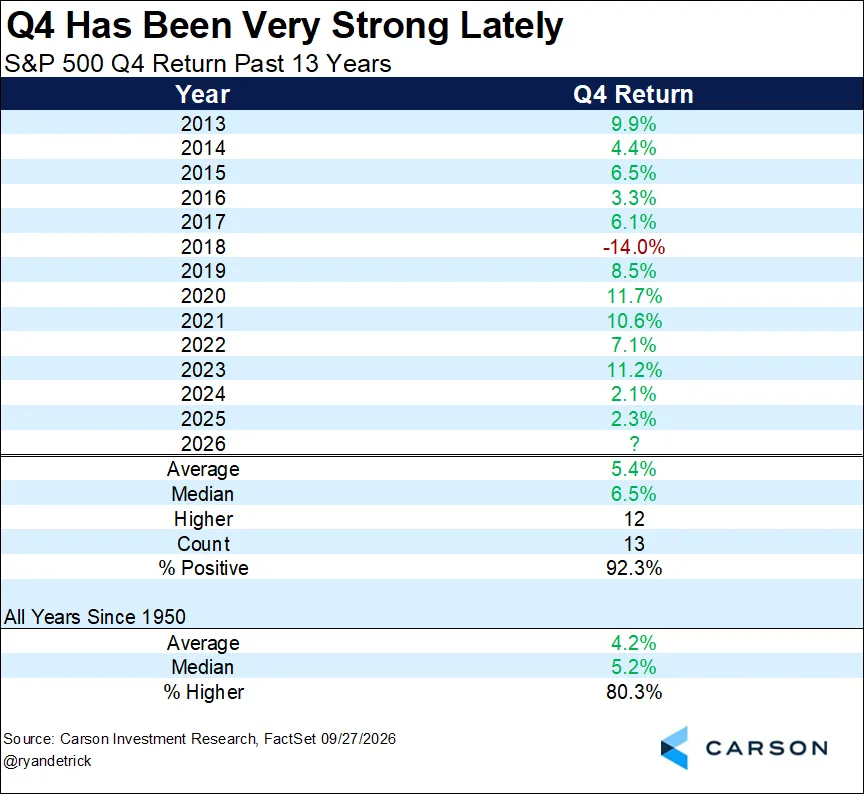
J.P. Morgan Asset Management finds the S&P 500 has historically been slightly negative in the first three quarters of midterm years, before averaging a 6.6% gain in the fourth quarter.
2026's strong start complicates outlook
The S&P 500 was up approximately 13% year to date as of September 18, raising questions about whether the historical Q4 pattern holds after such strong gains, or if valuations and economic fundamentals will alter it.
What it means
Historical data shows October performs best for stocks in midterm election years, with positive returns 73.7% of the time since 1950, though 2026's strong year-to-date gains raise questions about whether the pattern will hold.