From Fortune · Ningrong Liu · · 3m
Xi's tech push turns U.S. containment into fuel
Washington's blockade is accelerating China's hard-tech rise, not slowing it. Xi arrives in Washington with AI on the agenda but Beijing already moving ahead.
In brief
Washington's blockade is accelerating China's hard-tech rise, not slowing it. Xi arrives in Washington with AI on the agenda but Beijing already moving ahead. U.S. technology sanctions intended to contain China are instead mobilizing Beijing's capital, talent and global partnerships to accelerate its hard-tech…
Xi arrives with AI on agenda
Chinese President Xi Jinping arrives in Washington on Thursday. Artificial intelligence tops the agenda, with both sides agreeing to an AI hotline to warn each other of runaway systems.
U.S. once saw China as follower
The U.S. once viewed China as a fast follower in technology. It now confronts a country on the frontier, ironically in part due to U.S. action.
Blockade fuels China's rise
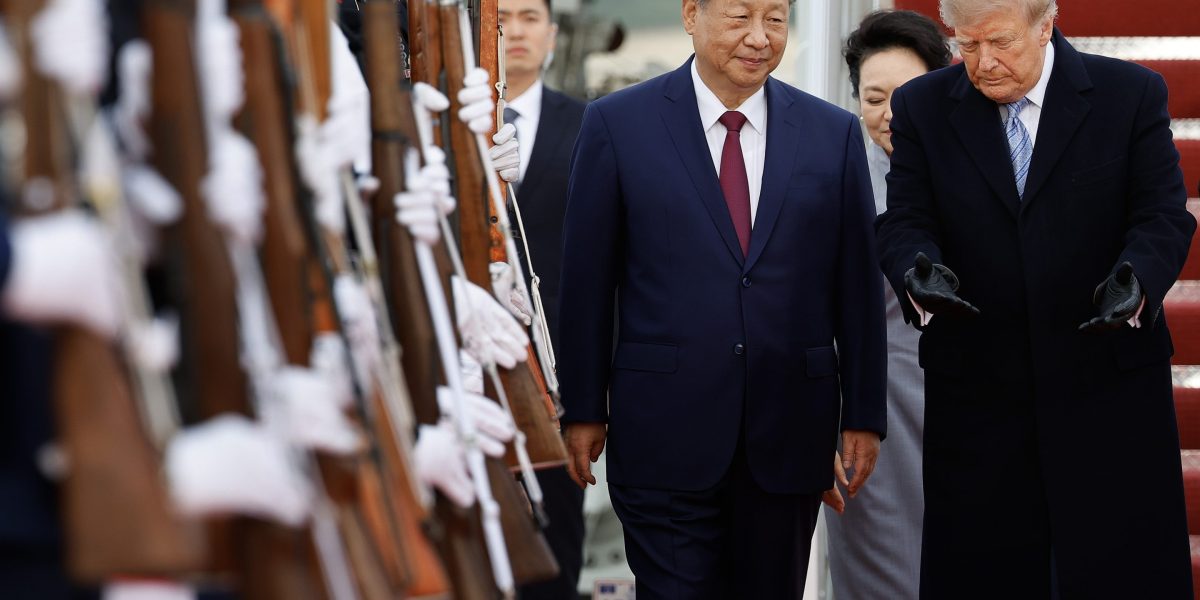
Washington's technology blockade is accelerating Beijing's hard-tech rise. U.S. pressure has mobilized capital, talent and global partners, turning containment into fuel for China's technological superiority.
Chinese champions emerge
ChangXin Memory Technologies and Unitree Robotics are proof Beijing can mobilize capital and scientific expertise to build national champions in semiconductors, robotics and advanced manufacturing.
Xi elevates hard technology
Xi Jinping made a personal trip to Shanghai in April, elevating basic research as the main control switch for downstream industries. He ordered China's financial system to invest early, invest in small-scale projects, invest for the long term, and invest in hard technology.
“invest early, invest in small-scale projects, invest for the long term, and invest in hard technology”
China mobilizes three levers
Beijing is pulling three specific levers to sustain its tech push: capital through a listing frenzy and scientist-entrepreneurs; talent through recruiting world-class researchers; and international academic cooperation through joint institutions and programs.
Record research spending and talent
China's research spending surpassed three point nine trillion yuan, five hundred sixty eight billion dollars in two thousand twenty five. At least eighty five world-class researchers relocated to China between early two thousand twenty four and late two thousand twenty five, including Nobel laureates Omar Yaghi, Hartmut Michel, Philip H. Dybvig, Ferenc Krausz and Andre Geim.
Chinese AI talent surges
Just over fifty seven percent of top AI talent in two thousand twenty five had degrees from Chinese institutions, up from forty six percent in two thousand twenty two. Just thirteen percent had degrees from U.S. institutions.
Beijing's dual-track strategy
China is building sovereignty at home while building influence abroad. Open-source models like Kimi K three, Qwen and DeepSeek enable the Global South to build sovereign AI without relying on Western infrastructure.
Competition will outlast any deal
Whatever gets agreed at the Xi-Trump meeting will be a preamble to decades-long tech competition. China has already caught up and moved on, while U.S. politicians debate how to constrain its rise.
The short version
U.S. technology sanctions intended to contain China are instead mobilizing Beijing's capital, talent and global partnerships to accelerate its hard-tech dominance.