From Futurism · Victor Tangermann · · 1m 30s
Mystery red dots might be baby black holes
James Webb spotted strange objects in the ancient universe that could be the earliest stages of supermassive black holes.
In brief
James Webb spotted strange objects in the ancient universe that could be the earliest stages of supermassive black holes. The mysterious red dots observed by James Webb may be newly-formed black holes in their infancy, evolving into the supermassive black holes we see at galaxy centers today. Originally reported by…
Webb spots mysterious red dots
NASA's James Webb Space Telescope discovered strange objects called "little red dots" in the ancient universe, just hundreds of millions of years after the Big Bang.
Two main theories emerge
Scientists debated whether the red dots were emerging galaxies or the earliest stages of supermassive black holes, which are enormous collapsed cosmic objects.
New simulation supports black hole idea
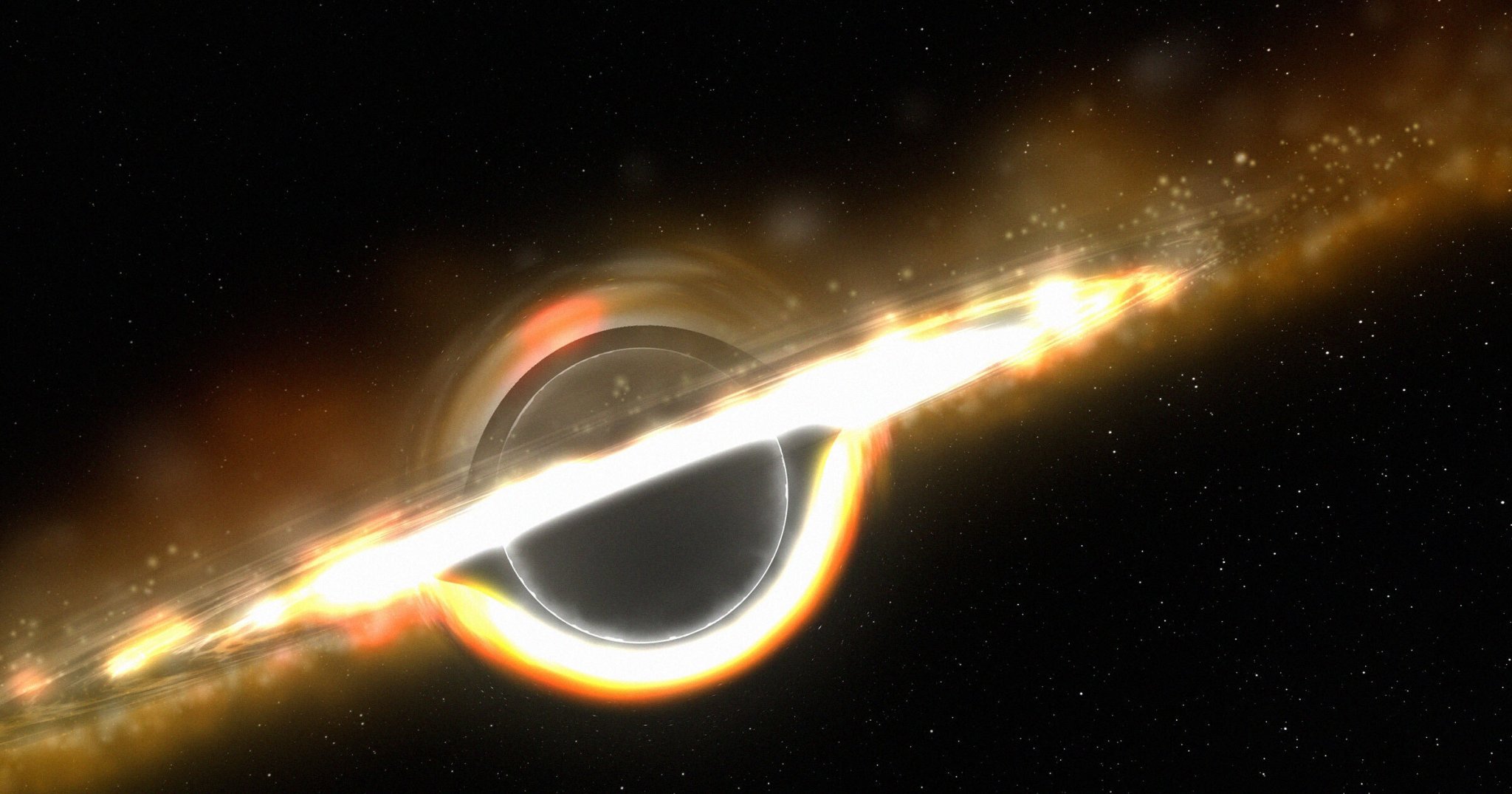
Max Planck Institute astrophysicist Sunmyon Chon simulated the early universe and found that rapidly-forming black holes could emit light while consuming material, matching the red dots.
“At 500,000 years, it looks like a little red dot, but after maybe one million years or so, the surrounding gas is mostly accreted into the black hole.”
Black holes evolve into quasars
Chon's team proposes these newly-formed black holes develop dense disks and evolve into overmassive quasars, extremely bright objects powered by gas being absorbed by supermassive black holes.
Evolution happens fast
Chon suggests these black holes could evolve into today's supermassive black holes in less than a billion years, with the transformation from red dot to quasar taking roughly one million years.
Scientists remain skeptical
Not all researchers agree with Chon's theory. Cambridge astrophysicist Roberto Maiolino prefers simpler explanations, while Chon himself acknowledges his model may not explain all the red dots.
“We don't want to claim that all the little red dots come from what we've modeled.”
The bottom line
The mysterious red dots observed by James Webb may be newly-formed black holes in their infancy, evolving into the supermassive black holes we see at galaxy centers today.