From Github · · 1m
Energy-Based Reasoners Outperform Sudoku Solvers
Energy-Based Reasoners solve Sudoku with 99.9% accuracy using 345× less compute than top models.
In brief
Energy-Based Reasoners solve Sudoku with 99.9% accuracy using 345× less compute than top models. Energy-Based Reasoners achieve 99.9% Sudoku accuracy with 345× fewer inference FLOPs than EqR. Originally reported by Github.
Quick answers
- What are Energy-Based Reasoners?
- Energy-Based Reasoners learn an energy function to guide reasoning state refinement and stopping.
- How do EBRs work?
- EBRs use gradient descent on an energy function to find low-energy states that solve problems.
- What is the key takeaway from Energy-Based Reasoners Outperform Sudoku Solvers?
- Energy-Based Reasoners achieve 99.9% Sudoku accuracy with 345× fewer inference FLOPs than EqR.
What are Energy-Based Reasoners?
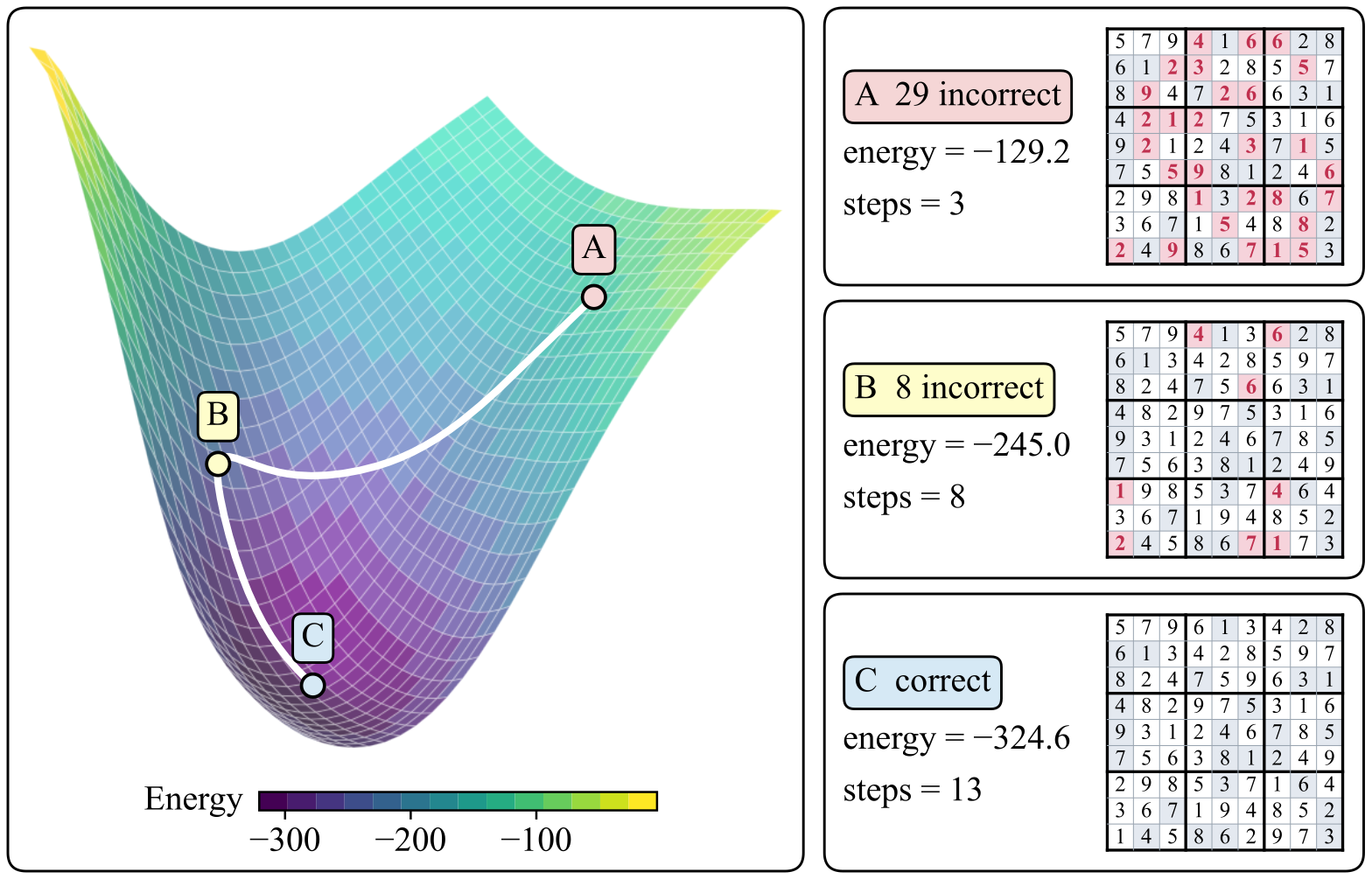
Energy-Based Reasoners learn an energy function to guide reasoning state refinement and stopping.
“E θ (z; x) ∈ R”
How do EBRs work?
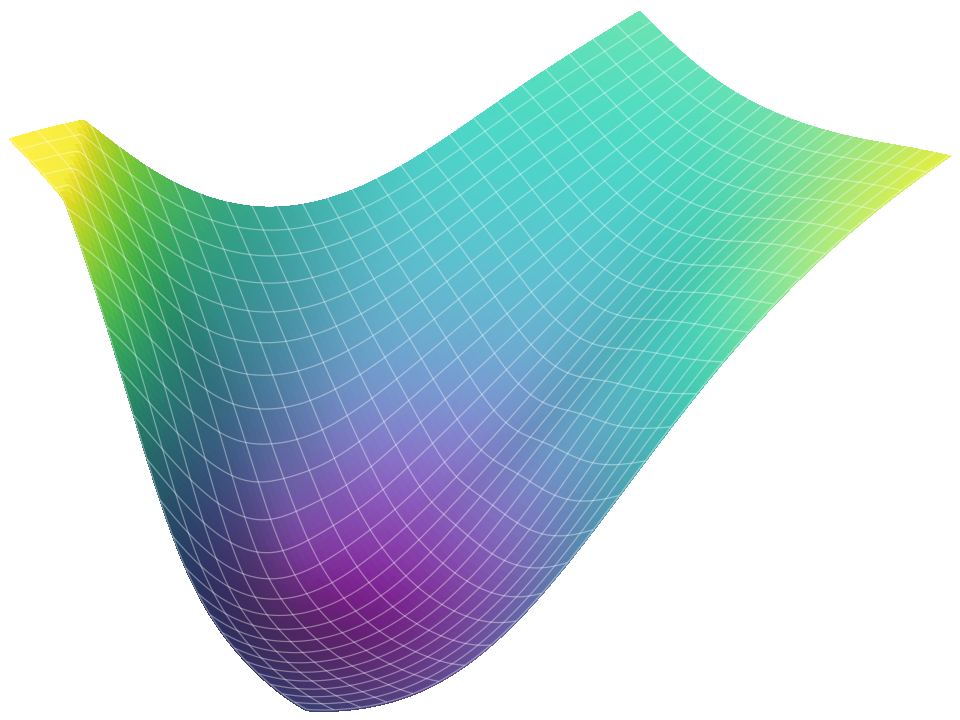
EBRs use gradient descent on an energy function to find low-energy states that solve problems.
“z t+1 = Π M (z t - α ∇ z E θ (z t ; x))”
EBRs solve Sudoku with 99.9% accuracy
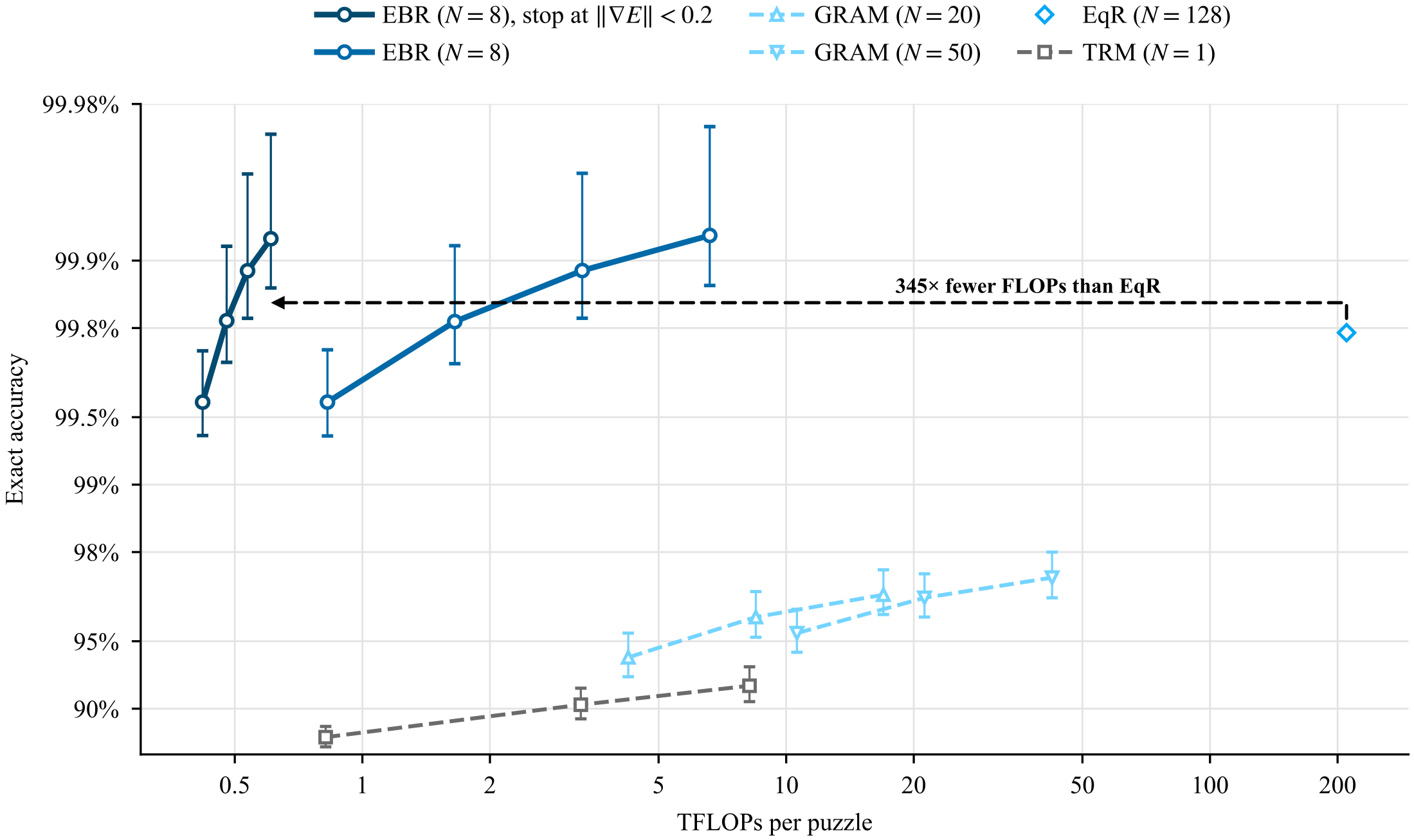
EBRs achieve 99.9% accuracy on Sudoku-Extreme while using 345× less inference compute than EqR.
“99.9% accuracy on Sudoku-Extreme”
EBRs outperform other models
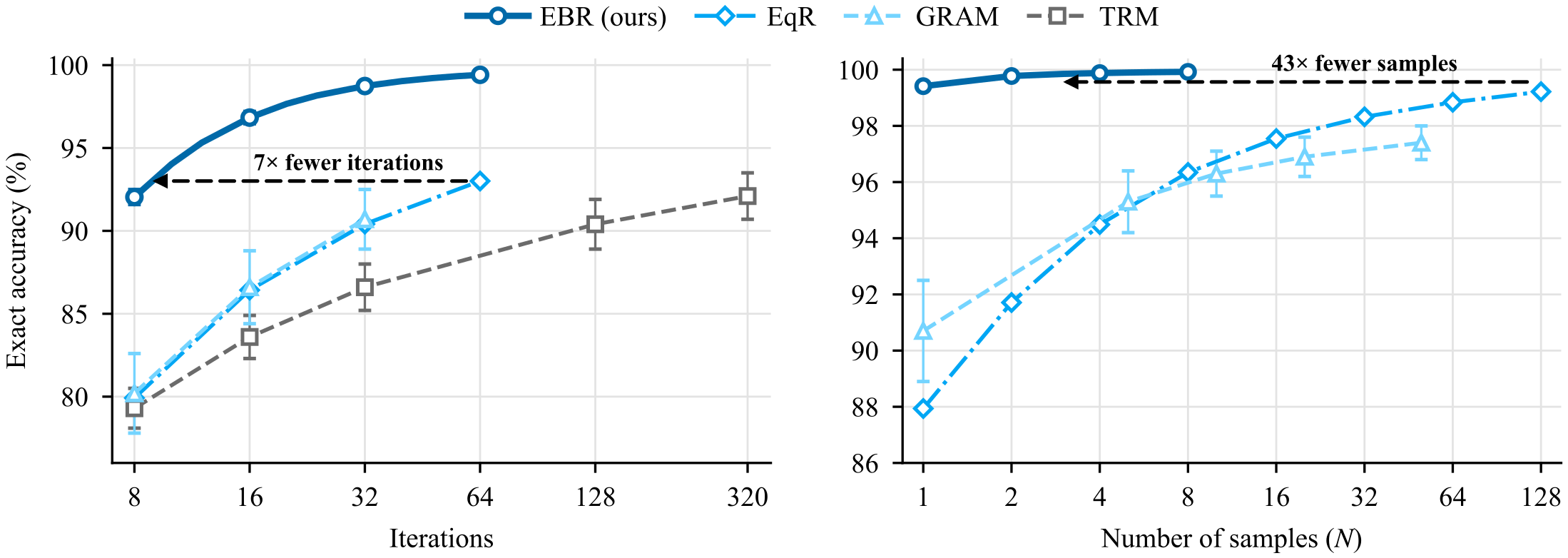
EBRs achieve 99.9% single-sample accuracy with 5 passes versus 128 samples for EqR.
“99.9 (5) vs 99.8 (128)”
EBRs handle multiple solutions
EBRs find 98.1% of distinct solutions for 8x8 N-Queens with 20 samples.
“98.1 for 8x8 N-Queens”
Why EBRs are better
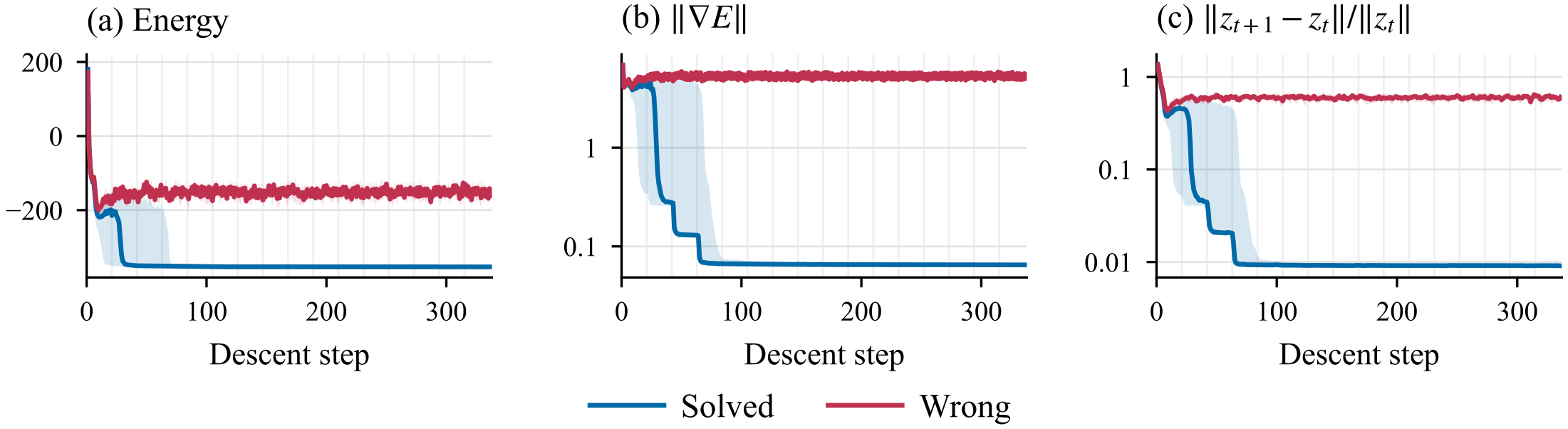
EBRs stop trajectories when gradient falls below threshold, reducing compute without sacrificing accuracy.
“gradient norm and residual during descent”
The key point
Energy-Based Reasoners achieve 99.9% Sudoku accuracy with 345× fewer inference FLOPs than EqR.
Read the TL;DR — this story on one card.