From Guitar World · · 4m
Eric Johnson's rig tour: gear, tone and technique
The legendary guitarist reveals his three-amp setup, vintage Strats and why he ships everything to Europe rather than compromise his sound.
In brief
The legendary guitarist reveals his three-amp setup, vintage Strats and why he ships everything to Europe rather than compromise his sound. Eric Johnson prioritizes tone consistency over convenience, shipping his entire USA rig to Europe for tours and using a three-amp system to achieve distinct clean, dirty and lead…
Shipping his rig across the Atlantic
Eric Johnson ships his entire USA rig to Europe rather than hiring backline, accepting the financial hit to maintain his signature sound. He jokes he'll eat bread and cheese for a year, but it's worth it for tone consistency.
“I'm going to go home broke because I shipped everything over here, but at least I'll have my sound.”
His rig hasn't changed much
Despite 13 years since his last rig tour, Johnson says the core setup remains largely the same. The general structure and architecture stay consistent, though specific amps may change.
Three distinct sounds, three amps
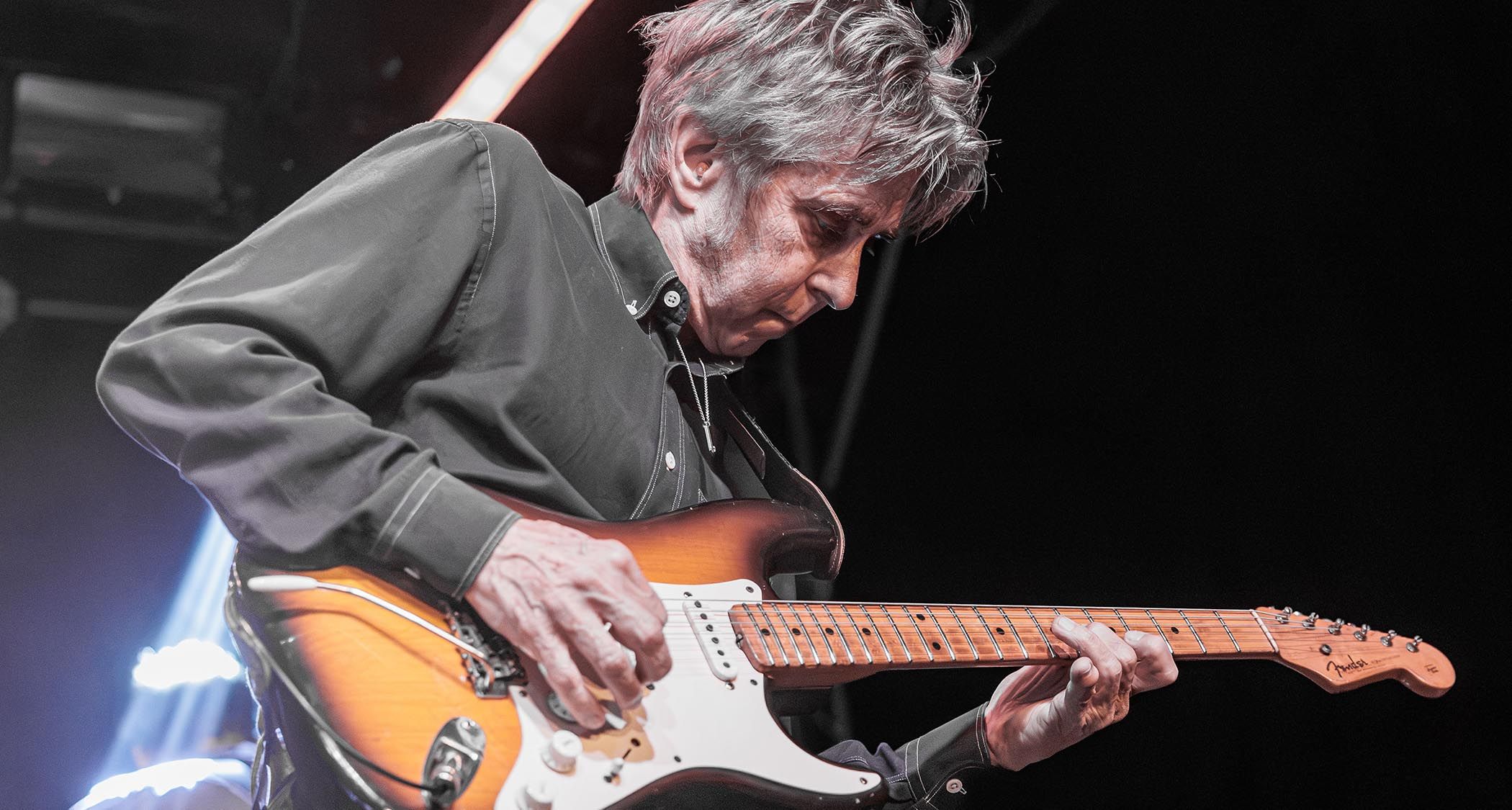
Johnson uses a three-amp system: a Marshall for lead tone, a Fender Deluxe Reverb for clean rhythm, and a Two Rock Classic Reverb for dirty rhythm with fuzz. Each amp is optimized for its specific sound.
Why one amp won't work
Different amps have different gain structures and tone control placements in their schematics. A Marshall excels at blues-rock while a Fender black-panel delivers clean country tones, so Johnson couldn't achieve both with a single amp.
Lead signal chain
For lead, the guitar goes through a wah-wah, then an Echoplex and Tube Driver, before hitting the Marshall head and cabinet. This chain delivers the high-gain lead tone Johnson needs.
Clean rhythm signal chain
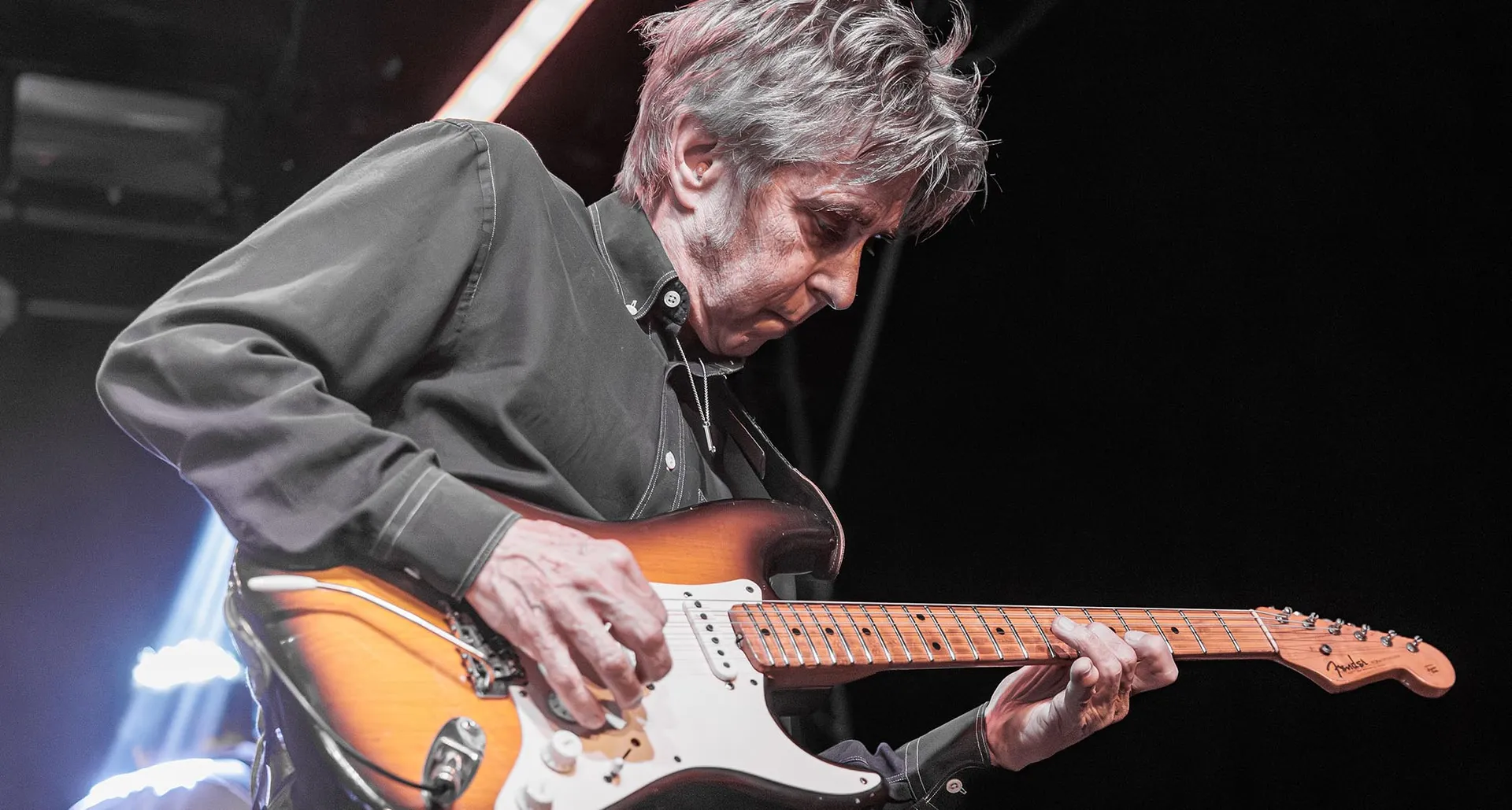
The clean rhythm path uses a Deluxe Memory Man loop, another Echoplex, and a TC Stereo Chorus feeding two Fender Deluxe Reverbs for lush, spacious tones.
Dirty rhythm with fuzz
The dirtier rhythm uses an Ibanez TS808 Tube Screamer, Arbiter Fuzz Face, and MXR Digital Delay into a Two Rock Classic Reverb and Marshall cabinet for aggressive, textured tones.
Experimenting with digital amps
Johnson has tested the Fender Tone Master and Neural Quad Cortex but hasn't committed to them live yet. He's exploring whether to replicate his vintage sound or pursue a different sonic direction.
His main guitar is a 1954 Strat
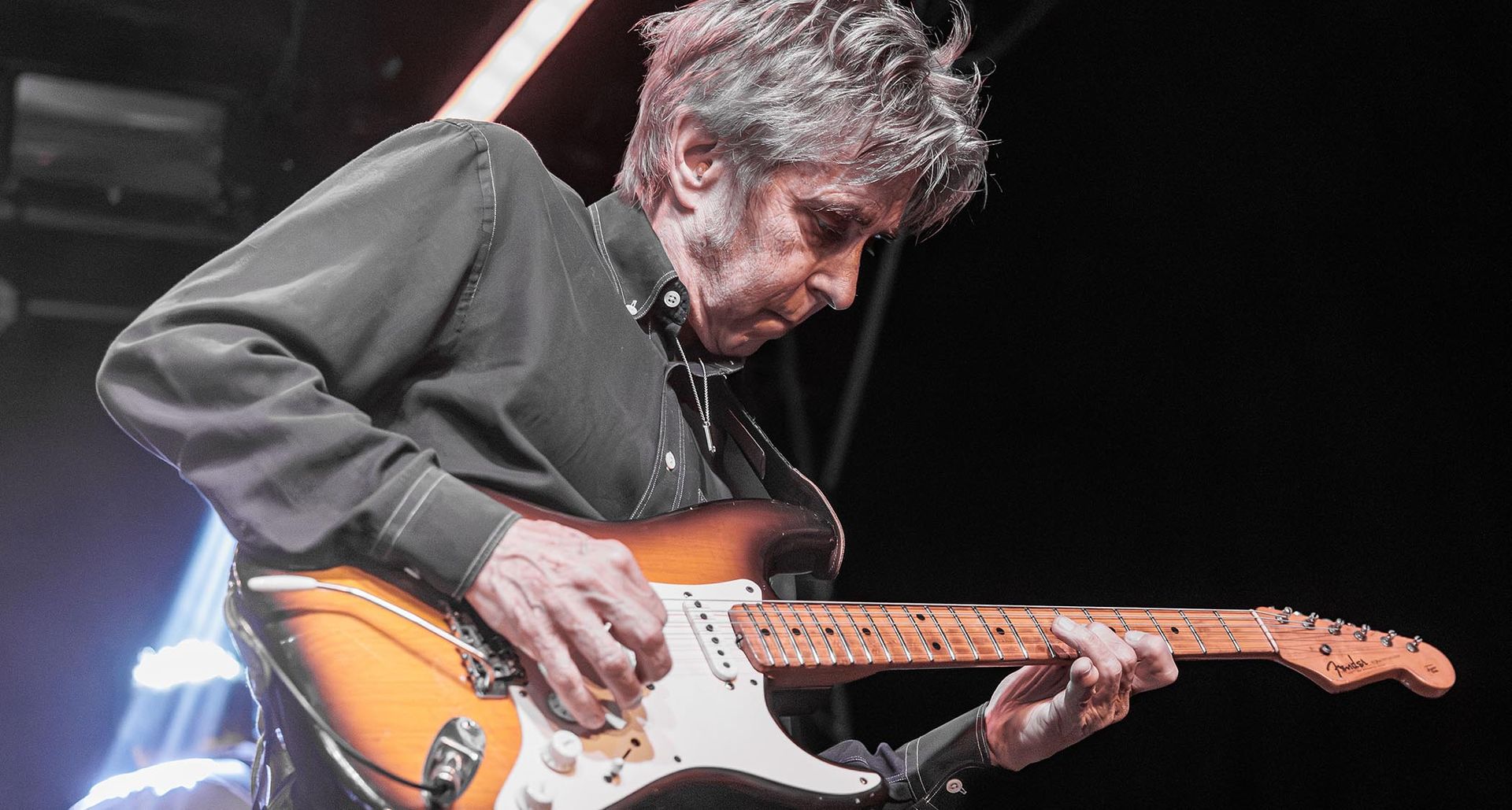
Johnson's primary instrument is a 1954 Stratocaster that's been refinished and has a flattened neck. He also carries a Custom Shop Les Paul and an EJ rosewood fingerboard Stratocaster for specific songs.
Custom Strat setup details
Johnson prefers a flatter fretboard with bigger frets, a DiMarzio HS2 bridge pickup wired as single-coil, and the tone control hooked to the bridge pickup. Action is kept low enough to avoid fret-out.
Neck profile preference
Johnson favors a rounded, soft V neck that's smaller than later nineteen-fifties models but thicker. This shape allows different chord voicings while remaining comfortable for extended playing.
Standard string gauge
Johnson uses stock ten through forty-six gauge strings on his Strats. He experimented with thicker gauges but found this set more balanced for his playing style.
Piano shaped his guitar approach
Starting on piano influenced Johnson's guitar playing significantly. He transferred piano's chord voicing concepts and technique to guitar, helping him avoid narrow thinking about tone and harmony.
Breaking free from patterns
Johnson learned every note on every fret early on, freeing himself from shape-based thinking. He recommends guitarists memorize the fretboard so they can play melodically without relying on patterns.
Influenced by diverse styles
Johnson's father exposed him to many musical styles, which shaped his eclectic approach. He draws inspiration from Chet Atkins, Jimi Hendrix, Django Reinhardt, Wes Montgomery and Jerry Reed.
Staying a student of guitar
Johnson keeps learning from all musical eras and instruments, from nineteen-thirties and forties jazz to contemporary players. He believes guitarists should remain open-minded and never stop exploring.
At a glance
Eric Johnson prioritizes tone consistency over convenience, shipping his entire USA rig to Europe for tours and using a three-amp system to achieve distinct clean, dirty and lead sounds that a single amp cannot deliver.