From Guitar World · · 1m 30s
Meet the "super arpeggio" that can supercharge your solos
Stack triads on top of each other to create extended arpeggios that add color and movement to your guitar playing.
In brief
Stack triads on top of each other to create extended arpeggios that add color and movement to your guitar playing. Build super arpeggios by stacking triads from the second note of each previous triad, creating extended melodic possibilities over a single chord. Originally reported by Guitar World.
What is a super arpeggio
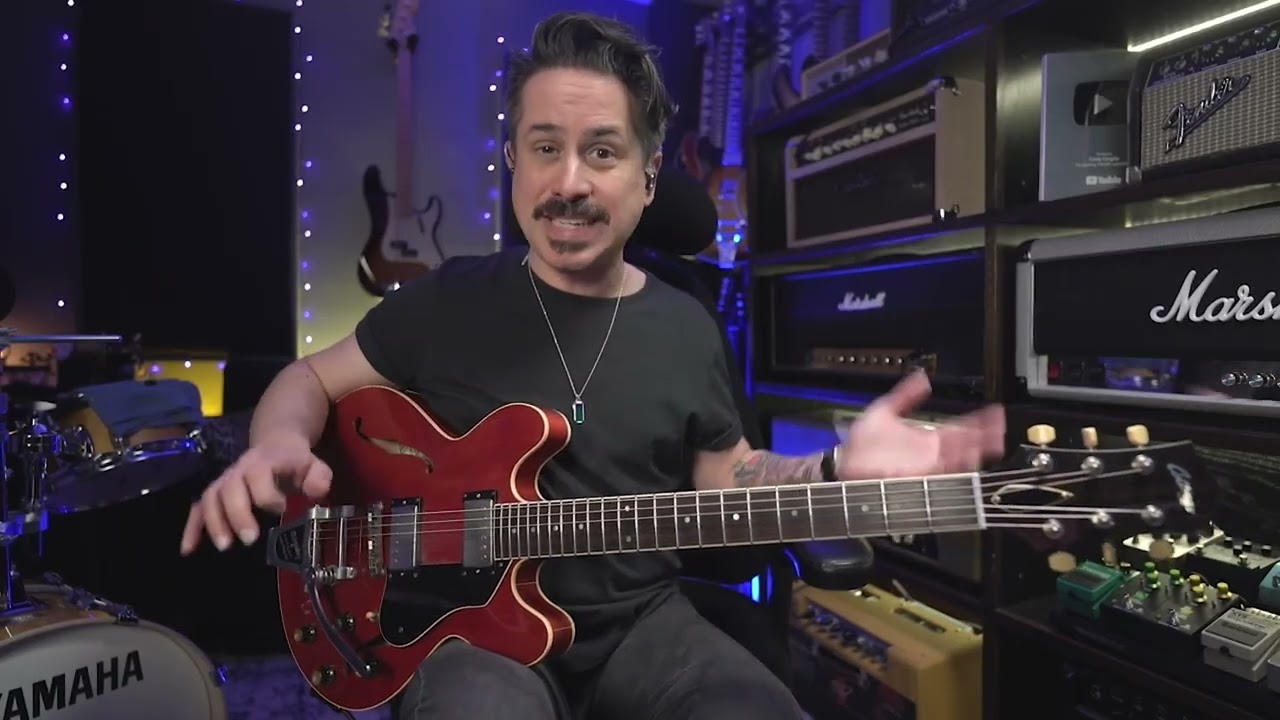
It's a technique from Larry Carlton based on stacking major and minor triads on top of a chord. This creates much longer arpeggios that move through different triadic forms.
How to build it
Start with a C major triad over Cmaj7. Form the next triad from the second note, E, giving you E minor. Then form a triad from G, yielding G major.
Playing it in context
Over a Cmaj7 vamp, outline C major, E minor and G major triads in steady 16th notes. Resolve with a lick based on C major pentatonic scale.
Understanding the intervals

Together, the three triads give you a Cmaj9 arpeggio: C (root), E (major 3rd), G (5th), B (major 7th), and D (9th).
Apply it to minor chords
Over Am, play triads built from A minor, C major, and E minor. Combine these with A minor pentatonic licks for musical, varied improvisation.
“You'll find that combining the progression of triads with minor pentatonic lines will sound very musical and also offer many different options for improvisation.”
Practice across the fretboard
These triadic forms can and should be played everywhere on the neck. Move the shapes to different positions to expand your soloing vocabulary.
Here's the gist
Build super arpeggios by stacking triads from the second note of each previous triad, creating extended melodic possibilities over a single chord.