From Indiatimes · Pranjal Pandey · · 2m
Voyager 1 reaches one light-day from Earth
NASA's Voyager 1 spacecraft crosses a historic milestone, becoming the farthest human-made object from Earth at 25.9 billion kilometers.
In brief
NASA's Voyager 1 spacecraft crosses a historic milestone, becoming the farthest human-made object from Earth at 25.9 billion kilometers. Voyager 1 reaches one light-day from Earth, the farthest human-made object, after 49 years of travel. Originally reported by Indiatimes.
Quick answers
- What is a light-day?
- A light-day is the distance light travels in 24 hours, equivalent to 25.9 billion kilometers.
- What is the key takeaway from Voyager 1 reaches one light-day from Earth?
- Voyager 1 reaches one light-day from Earth, the farthest human-made object, after 49 years of travel.
Voyager 1 milestone
Nasa's Voyager 1 spacecraft is set to cross a milestone no human-made object has reached.
One light-day distance
The spacecraft will be approximately 25.9 billion kilometers from Earth, a distance light takes 24 hours to travel.
Time to reach milestone
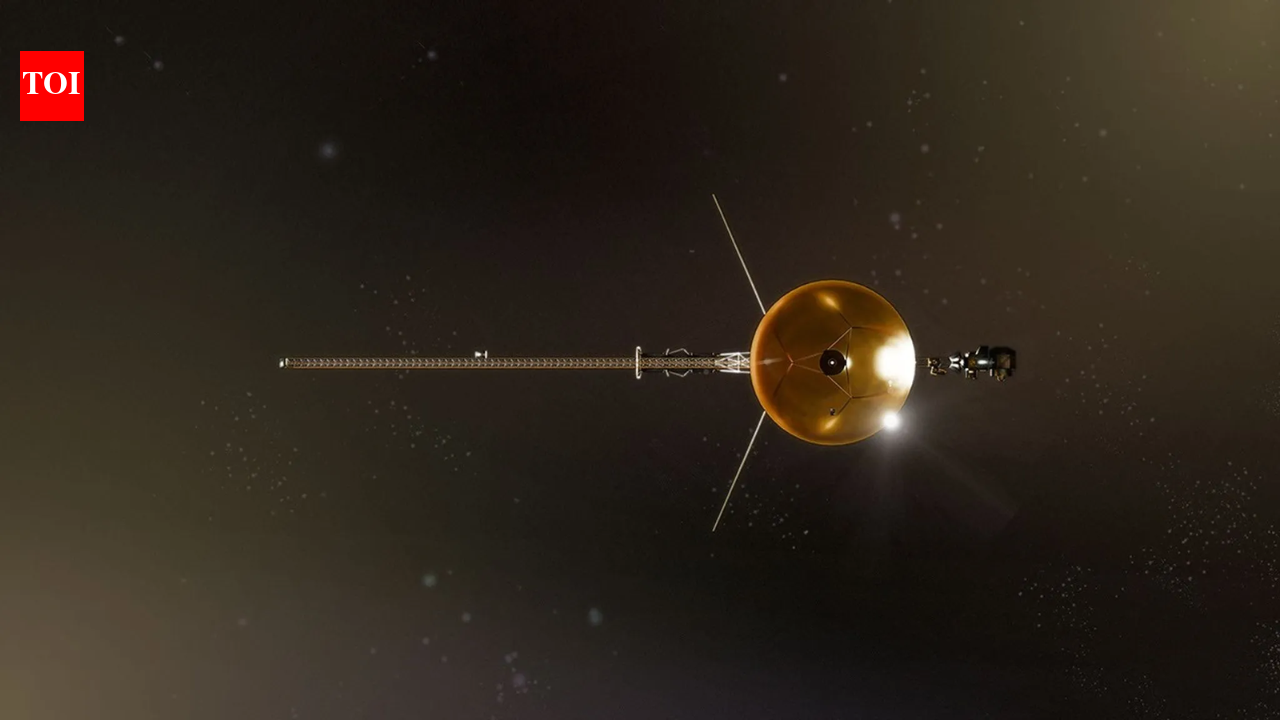
Voyager 1 is expected to reach the one-light-day mark at 5:16:07 am EST on Wednesday.
Two-way communication delay
A response from Voyager 1 would take another 24 hours to return, making a two-way exchange nearly 48 hours.
What is a light-day?
A light-day is the distance light travels in 24 hours, equivalent to 25.9 billion kilometers.
Voyager 1 launch
Voyager 1 was launched by Nasa on September 5, 1977, from Cape Canaveral in Florida.
Voyager : Purpose
It was designed to study Jupiter and Saturn, their moons, rings and magnetic fields.
Voyager 1 trajectory
Voyager 1 reached Jupiter in March 1979 and Saturn in November 1980 before heading into interstellar space.
Voyager 1 direction
It is moving towards the constellation Ursa Minor, also known as the Little Bear.
Voyager 1 target star
It is moving towards the star Gliese 445, more than 17 light-years from Earth.
Voyager 1 heliopause
Voyager 1 crossed the heliopause in August 2012, becoming the first human-made object in interstellar space.
Voyager 2 comparison
Voyager 2 was launched 16 days earlier on August 20, 1977, but followed a different trajectory.
Voyager 2 heliopause
Voyager 2 crossed the heliopause in November 2018, becoming the second spacecraft in interstellar space.
Voyager 2 distance
Voyager 2 is expected to reach one light-day from Earth in November 2035, nine years after Voyager 1.
Golden Record
Voyager 1 carries a 12-inch gold-plated copper disc with greetings in 55 languages.
Golden Record purpose
The record contains sounds and images to represent Earth's diversity and human culture.
The bottom line
Voyager 1 reaches one light-day from Earth, the farthest human-made object, after 49 years of travel.
Read the TL;DR — this story on one card.