From Kiplinger · · 2m
How to Talk Inheritance With Your Kids
Parents can discuss inheritance without specific numbers by focusing on intentions and estate planning.
In brief
Parents can discuss inheritance without specific numbers by focusing on intentions and estate planning. Parents should explain inheritance intentions and estate planning without disclosing exact numbers to avoid surprises. Originally reported by Kiplinger.
Inheritance Conversations

Kiplinger editors Alexandra Svokos and Diane Harris hosted a panel discussion on how families can approach inheritance conversations without specific dollar amounts.
Key Conversation Points
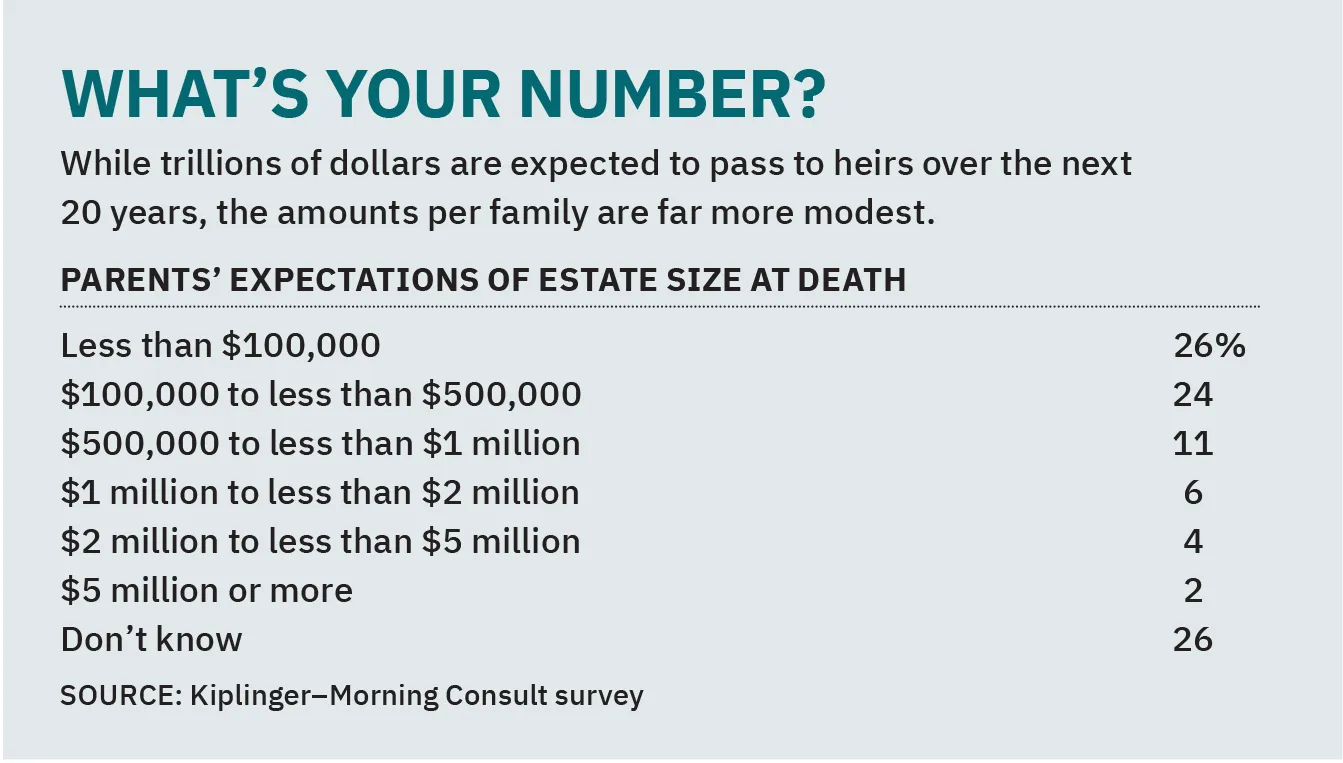
Parents don't need to disclose exact numbers but should explain intentions, estate planning documents, asset types, and distribution reasoning to children.
Survey Findings
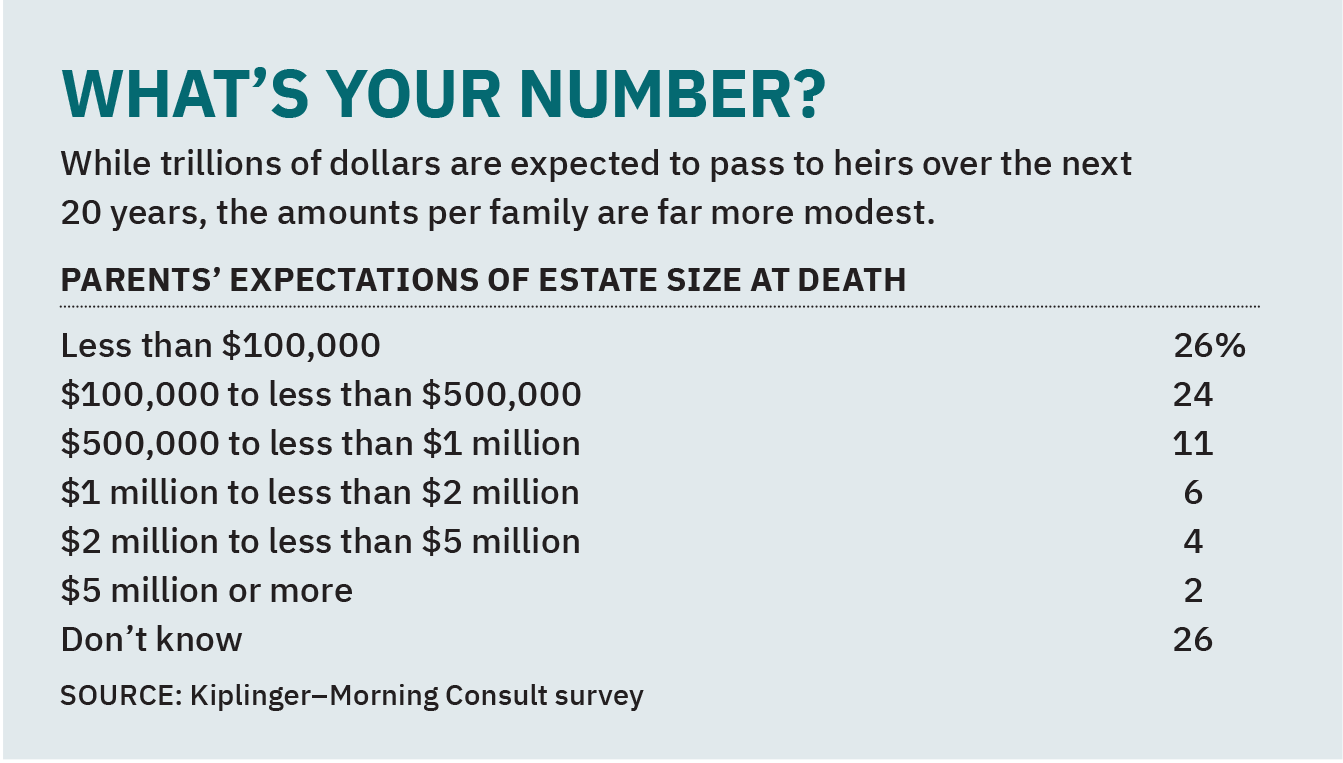
A Kiplinger-Morning Consult survey showed most adult children want to know how much they'll receive from inheritance.
Group vs One-on-One

Family dynamics determine whether group or one-on-one conversations are better for discussing inheritance matters.
Handling Gifts

Parents who gift money to children should consider interest-bearing accounts for short-term needs or CDs for longer-term security.
Blended Families
Blended families need trusts to ensure assets pass to intended heirs and protect emotional items from disputes.
Special Circumstances
Children with dementia or estrangement require special needs trusts and letters of intent to manage inheritance without reopening conflicts.
Long Term Care
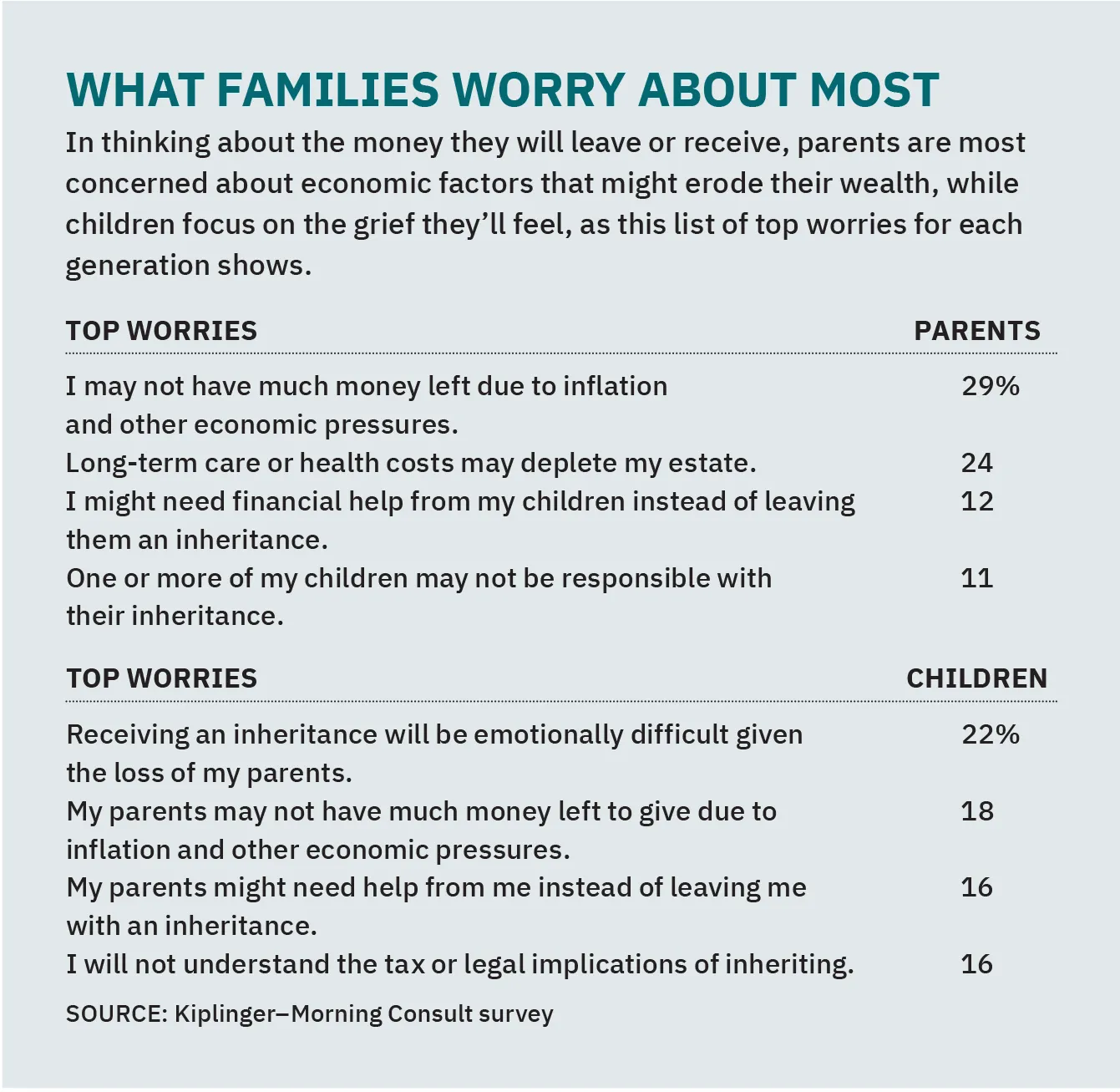
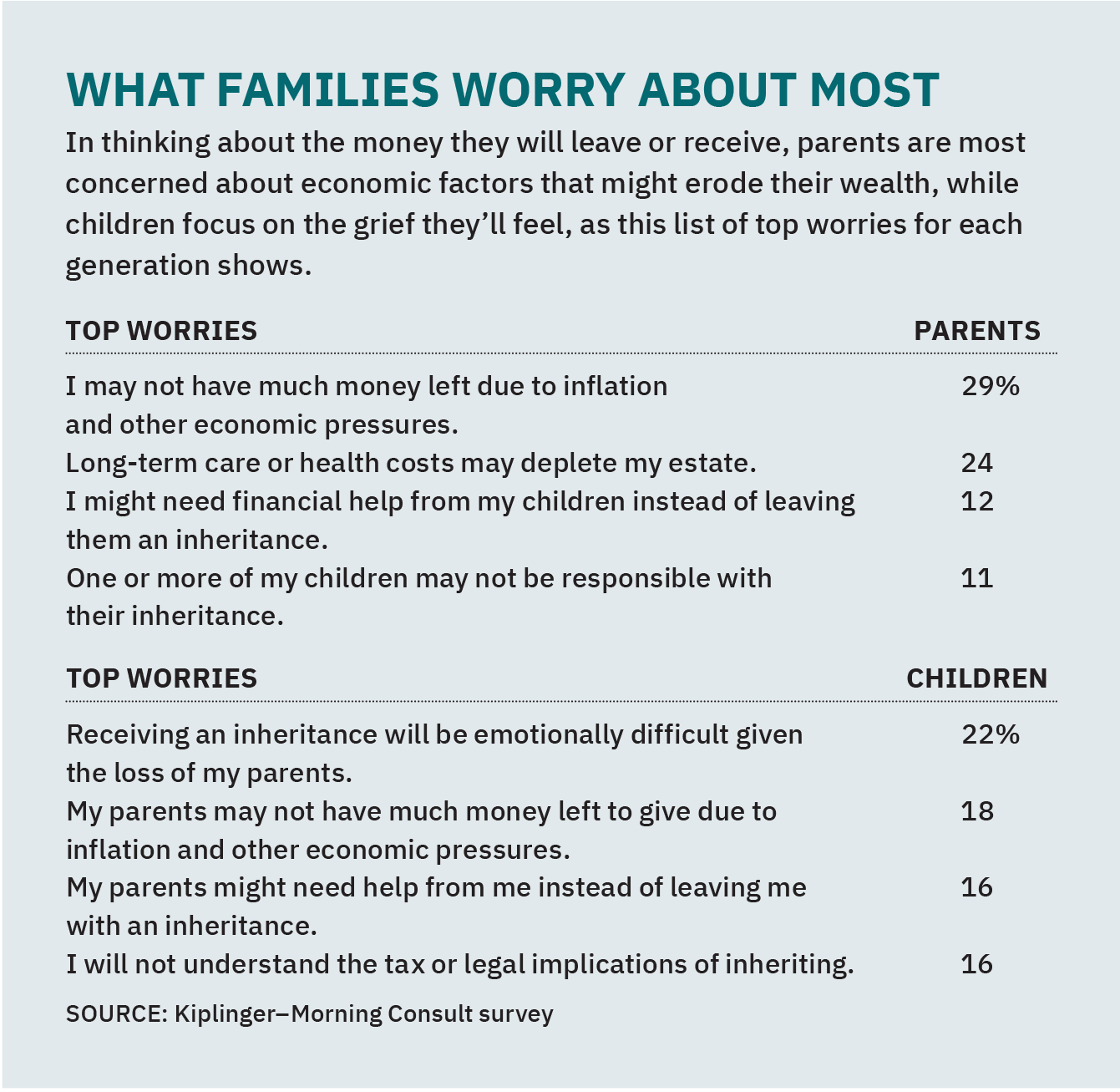
24% of older parents fear long-term care costs will deplete their estate, prompting discussions about financial planning.
Trusts for Protection
Trusts help blended families ensure assets pass to intended heirs and protect emotional items from disputes.
Estate Planning Steps
Parents should consult professionals for estate planning, especially for blended families or children with special needs.
Financial Planning
Parents can use interest-bearing accounts for short-term needs or CDs for longer-term security when managing gifts.
Special Needs Trusts
Special needs trusts help manage inheritance for children with dementia or special needs without disrupting family dynamics.
Estate Planning Resources
Parents can find estate planning attorneys through professional directories like the National Association of Estate Planners and Councils.
Long Term Care Costs
Long-term care costs are a major concern for families, with 24% of older parents fearing they will deplete their estate.
Next Steps
Parents should consult professionals to discuss inheritance planning and address specific family circumstances.
What matters most
Parents should explain inheritance intentions and estate planning without disclosing exact numbers to avoid surprises.