From Linguistic Discovery · · 4m
Pre-Greek: The lost language hidden within Ancient Greek
About 1,000 words in Ancient Greek have no Indo-European origin, revealing a mysterious substrate language spoken before the Greeks arrived.
In brief
About 1,000 words in Ancient Greek have no Indo-European origin, revealing a mysterious substrate language spoken before the Greeks arrived. Ancient Greek contains hundreds of borrowed words from a Pre-Greek substrate language, visible in place names, plant and animal terms, and even the names of Greek gods…
Mystery words in Ancient Greek
About 1,000 words in Ancient Greek can't be traced to any Indo-European language. These include seemingly quintessential Greek words like labyrinth, olive, Achilles, Odysseus, Athens, and Athena.
The Indo-European puzzle
Despite centuries of research, linguists cannot connect these mystery words to Proto-Indo-European, the parent language of all Indo-European languages. No cognates appear in neighboring languages either.
Languages as historical records
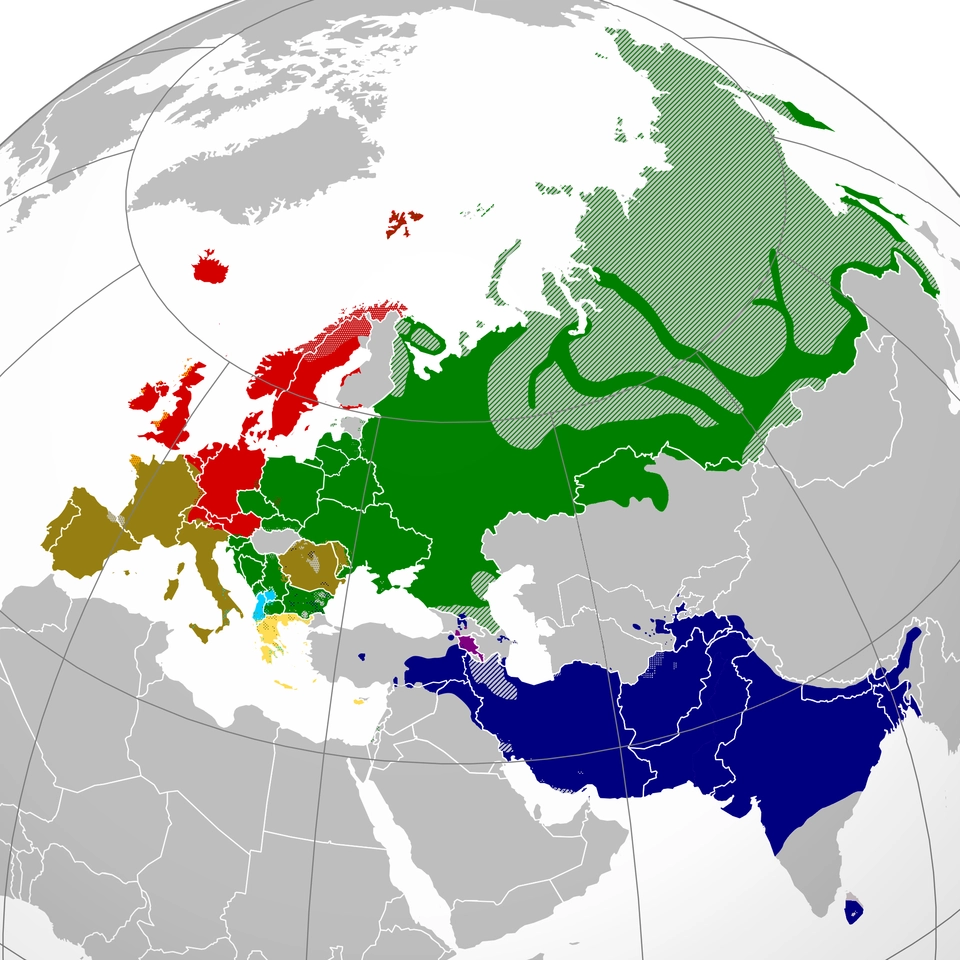
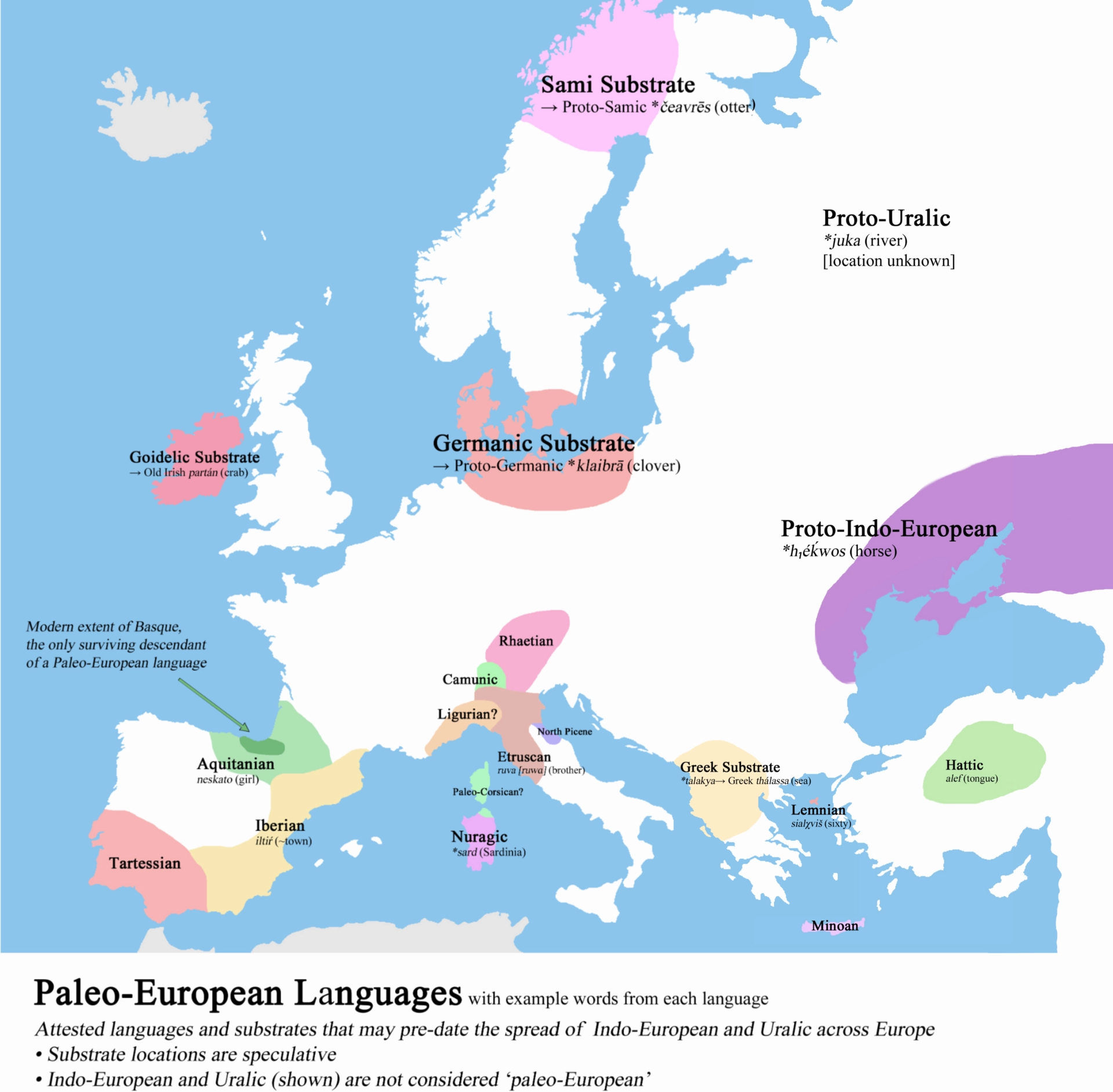
All languages contain a fossil record of their history. Indo-European languages didn't always dominate Europe; they arrived as newcomers to lands occupied by Neolithic farming societies for millennia.
Paleo-European languages
Before the Indo-Europeans arrived, Early European Farmers spoke Paleo-European languages. Only Basque survives today, but these languages left traces in the Indo-European languages that replaced them.
Linguistic stratification explained
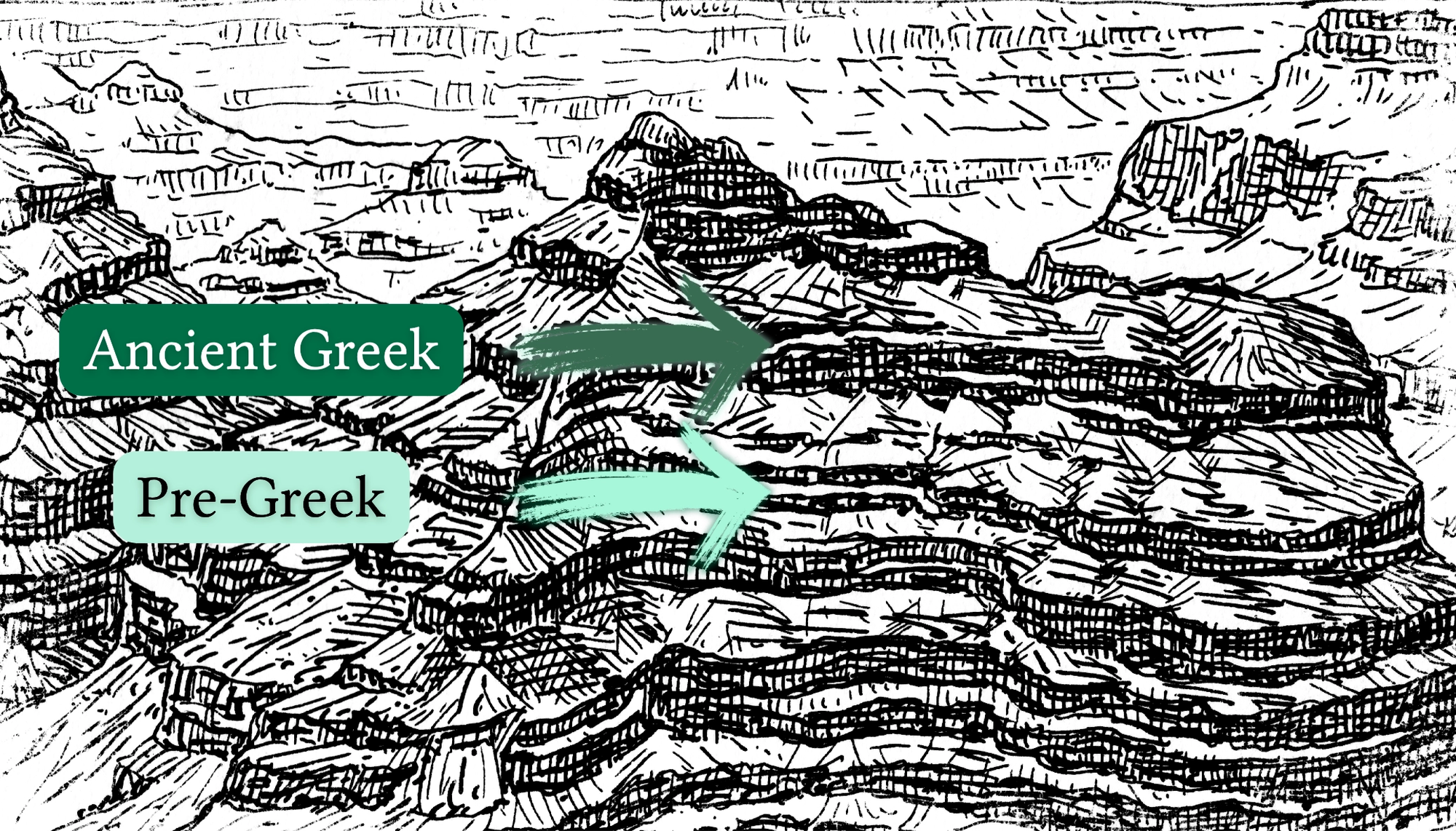
When a socially dominant language replaces a less dominant one, the substrate language often disappears but leaves traces. Linguists call this linguistic stratification, with the dominant language as superstrate and the replaced language as substrate.
Greek encounters new plants
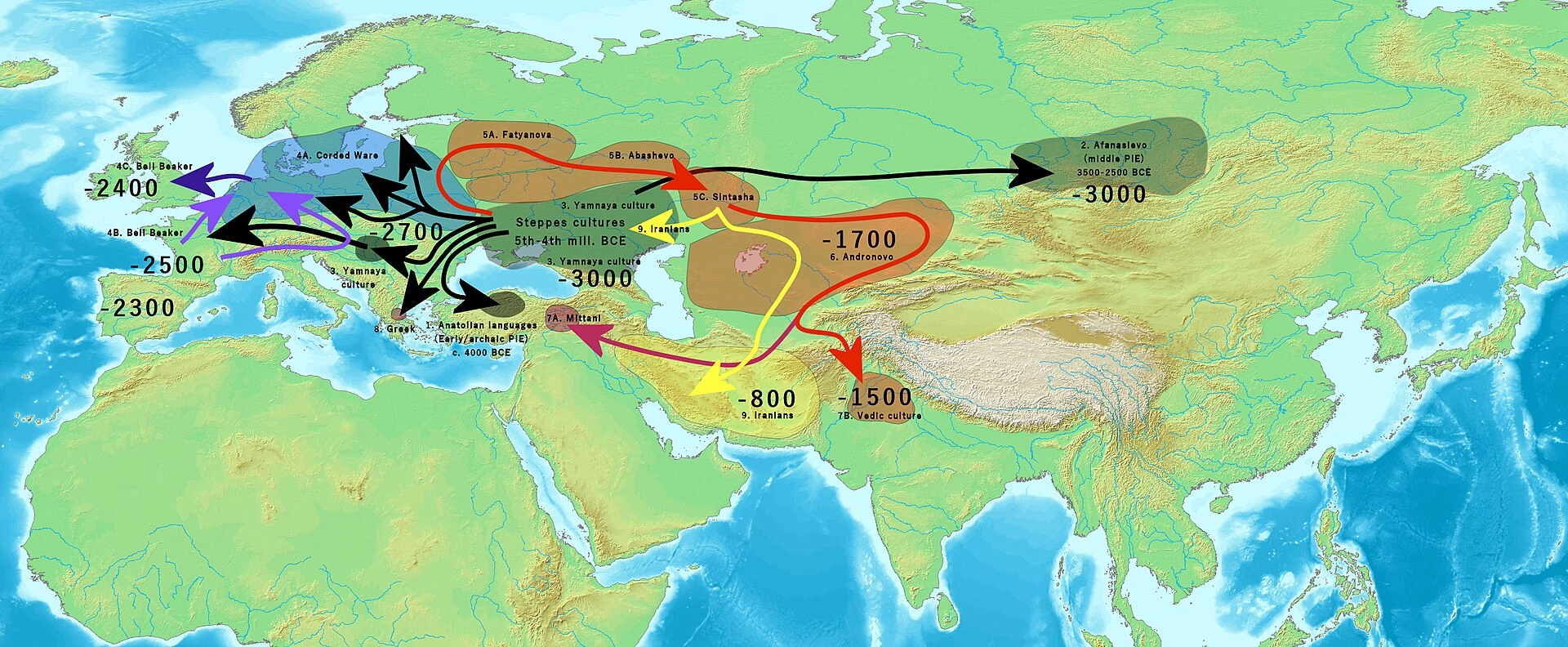
Early Greek speakers migrated from the landlocked Pontic-Caspian Steppe into the Mediterranean, encountering unfamiliar plants like olives, hyacinths, figs, and cypresses. They borrowed local names rather than inventing new words.
The word for sea
Proto-Indo-European had no word for sea because it originated in landlocked steppes. Greek borrowed thálassa from Pre-Greek speakers, while other Indo-European languages created their own sea terms: English sea, Latin mare.
Olive and other borrowed plants
The Greek word for olive, elaía, appears in Mycenaean Linear B and was borrowed by Etruscans and Romans as well. Similar borrowings exist for hyacinth, fig, and cypress, all plants absent from Proto-Indo-European homelands.
Words without Indo-European roots
Mystery words consistently resist etymologization despite advances in historical linguistics. If these words existed in Proto-Indo-European, we should find cognates in multiple daughter languages, but we don't.
Wine across the Mediterranean
The word for wine appears in Greek, Latin, Hittite, Armenian, and Hebrew, but none can be traced to their parent languages. This suggests a Pre-European substrate word that spread through Mediterranean wine culture.
Impossible sound patterns
Some Greek words start with sound sequences impossible in Proto-Indo-European. The /dn/ in dnóphos (darkness) and /ps/ in pséphas cannot be explained by normal sound changes from Indo-European.
The rare sound beta
The sound beta was rare or absent in Proto-Indo-European but common in Pre-Greek loanwords like áblaroi (wood), abýrbēlos (heavy), and thórybos (noise). This pattern suggests substrate borrowing.
Phonetic variation signals borrowing
Borrowed words often show random pronunciation variations as speakers struggle with unfamiliar sounds. The word for darkness appears as dnóphos, knéphas, zóphos, and pséphas, suggesting a difficult Pre-Greek initial sound.
Odysseus and the digamma
Odysseus appears as both Odysseús and Olysseús, with the /l/ version reaching Latin as Ulixes. This /l/ and /d/ alternation, plus /b/ and /pʰ/ variations, mark the word as Pre-Greek.
Semantic categories reveal borrowing
Pre-Greek loanwords cluster in predictable categories: flora (178 words), fauna (180), equipment (154), and human physiology (81). These are exactly the types migrants would borrow from local populations.
Greek gods from Pre-Greek
Except for Zeus, Eos, Pan, Hades, and possibly Poseidon, nearly all Greek god names cannot be traced to Proto-Indo-European. The Greeks adopted almost their entire pantheon from Pre-Greek civilization.
“Except for Zeus, Eos, Pan, Hades, and perhaps Poseidon, all the names of Greek gods cannot be reconstructed to Proto-Indo-European”
Duplicate words for one concept
Ancient Greek has pairs of words for the same thing, like táphos and týmbos (both meaning grave). One is Indo-European, the other Pre-Greek, reflecting social stratification between populations.
Pre-Greek suffixes in place names
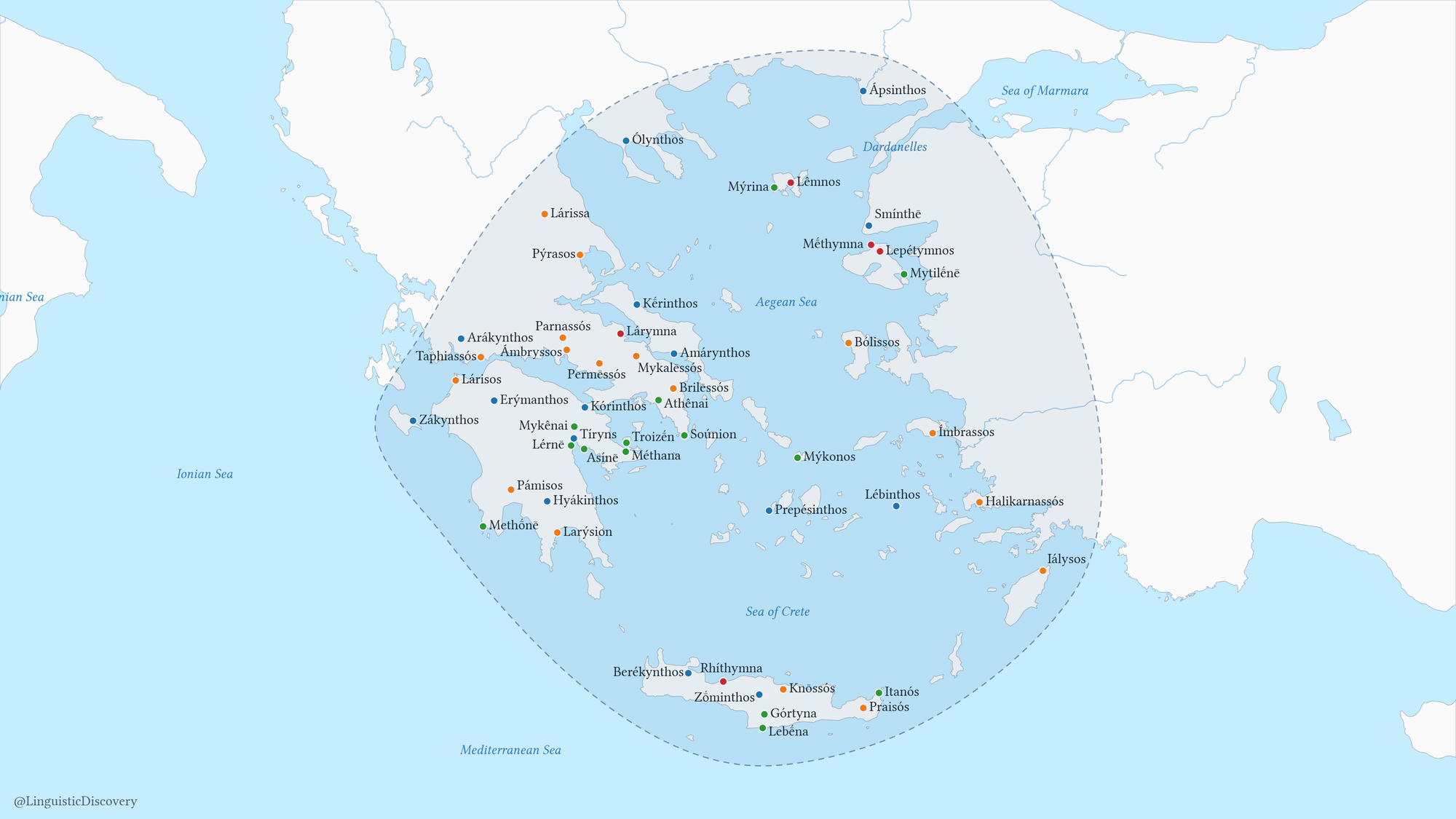
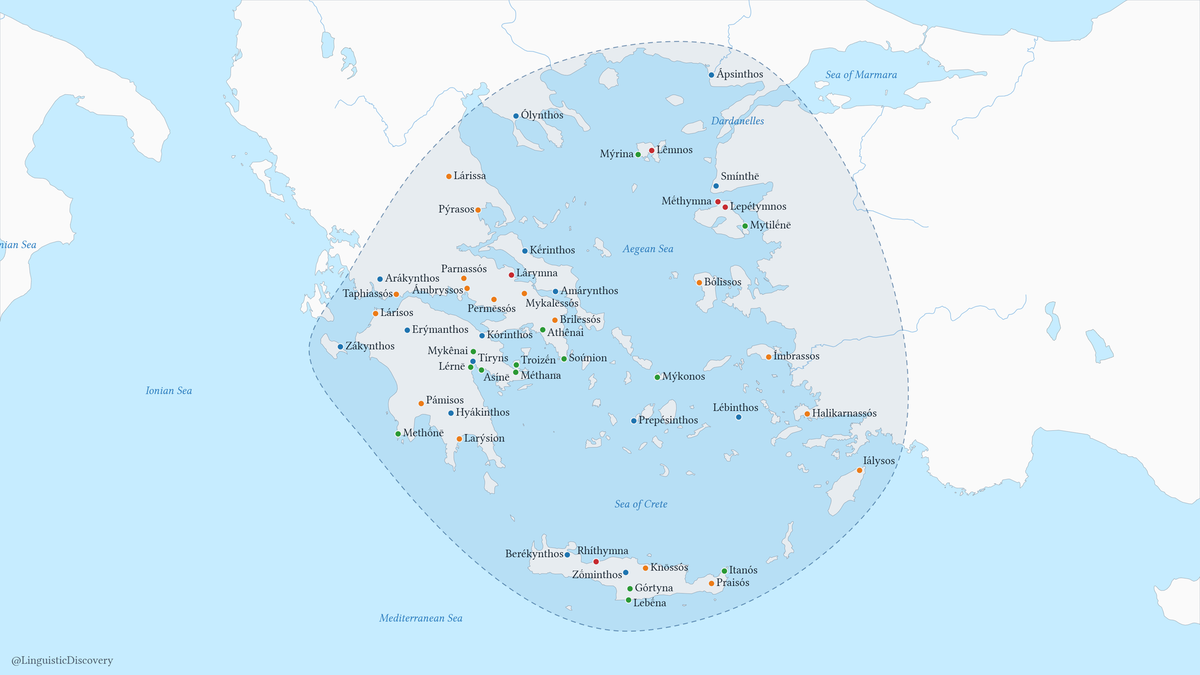
Place names contain fossilized Pre-Greek suffixes like -nth (Corinth, Hyacinth), -ss (Knossos), -n (Athens), and -mn (Lemnos). These recur across the Aegean, marking the Pre-Greek substrate region.
Mapping the Pre-Greek homeland
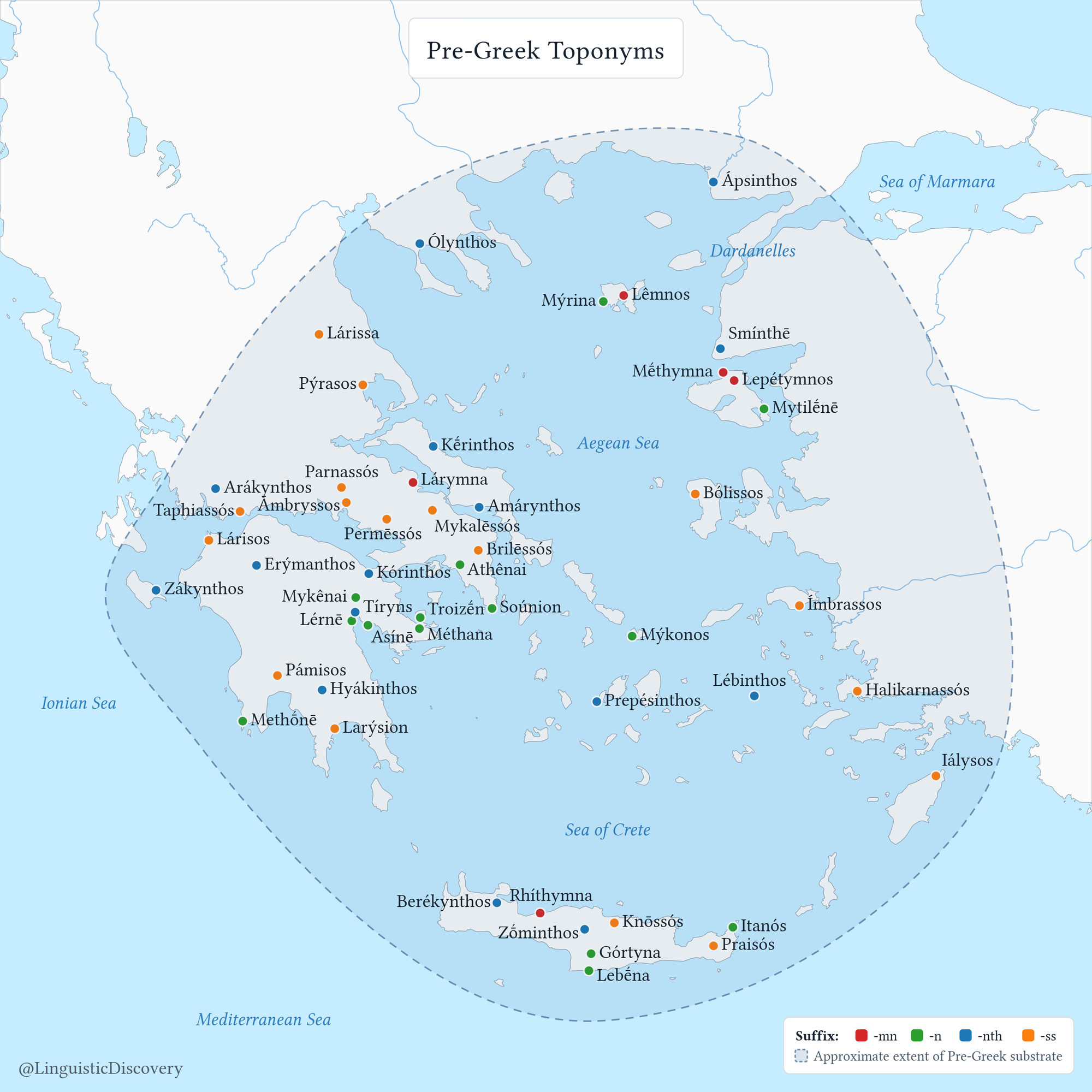
By tracking Pre-Greek place name suffixes across the Aegean, linguists can map where the substrate language was spoken. The distribution shows Pre-Greek occupied the Aegean islands and coastal regions.
Words with and without suffixes
Some Pre-Greek words appear both with and without their suffixes. Kḗrinthos (bee bread) and kērós (beeswax) show the -nth suffix is real, not random. Similar words for wax appear across the Mediterranean.
The key point
Ancient Greek contains hundreds of borrowed words from a Pre-Greek substrate language, visible in place names, plant and animal terms, and even the names of Greek gods.