From MoneyWeek · · 1m 40s
Oil ETFs: how to trade a crude spike
Brent is back above $100, and the fund you pick decides how much of that move you actually capture.
In brief
Brent is back above $100, and the fund you pick decides how much of that move you actually capture. Most oil ETFs track futures, not the spot price, so in a sudden crisis they lag the headline oil number you see quoted. Originally reported by MoneyWeek.
Brent tops $100 again
Middle East tension flared again this week and pushed Dated Brent, the North Sea benchmark, above $100 for the first time since July.
“The on/off Middle East crisis is on again this week, sending up oil prices in response.”
Spot means right now
Dated Brent is a spot price: the cost of a cargo loading in the next few days or weeks. It reflects demand for physical barrels today, not expectations.
Futures are a different market
Traders watch contracts for delivery in one month, three, six or years out. The chain is long, but the action sits in contracts nearest expiry.
Why an ETF, not futures
You can't buy physical oil as an individual, and futures are fiddly. An ETF such as WisdomTree Brent Crude Oil (LSE: BRNT) does the job more simply.
“As an individual investor, you can't trade physical oil directly.”
The roll is the catch
Oil ETFs buy near-term futures and roll them before expiry. Sell high and buy lower each time and you earn roll yield. Reverse it and the fund quietly bleeds.
Spikes leave ETFs behind
In a crisis, spot often jumps far more than futures do. A traditional oil ETF tracks the futures, so it captures only part of the headline move.
“a typical oil ETF will not rise by as much as the spot price does”
A spot-shaped alternative
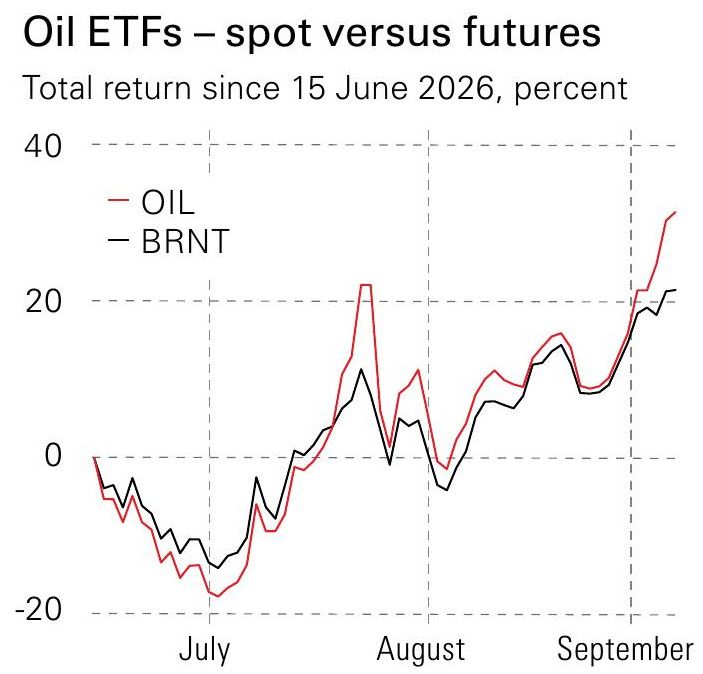
Onyx Spot Return Crude Oil ETF (LSE: OIL) holds daily Dated Brent futures rolled continuously, so it hugs spot. Launched in June, it has beaten the traditional funds since.
The short version
Most oil ETFs track futures, not the spot price, so in a sudden crisis they lag the headline oil number you see quoted.