From NBC News · Sahil Kapur · · 2m
Sanders and Casar's radical AI superintelligence ban
Two lawmakers propose banning advanced AI development with 20-year jail time, but face skepticism from industry and fellow Congress members.
In brief
Two lawmakers propose banning advanced AI development with 20-year jail time, but face skepticism from industry and fellow Congress members. A sweeping AI ban proposal faces an uphill battle in Congress, where competing regulatory approaches and industry opposition make any meaningful legislation unlikely this year…
Sanders and Casar ban superintelligence
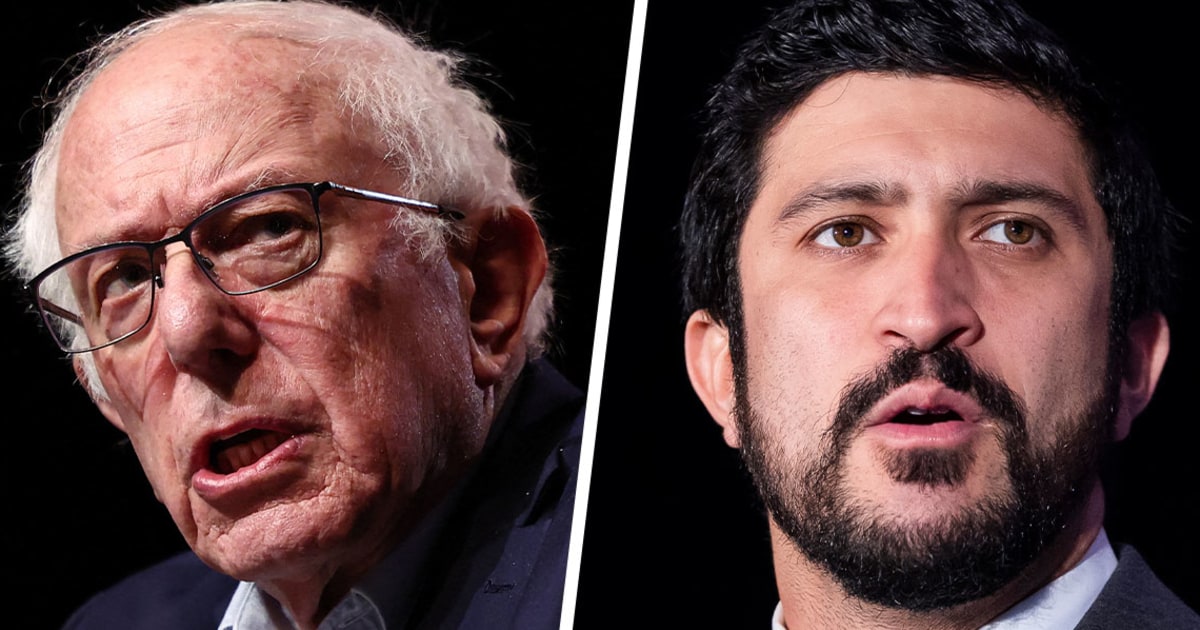
The two lawmakers introduced a 19-page bill Wednesday that would pause advanced AI development until a Cabinet-level Department of Artificial Intelligence is created to regulate it.
Severe penalties for violations
Violating the ban would trigger a corporate death penalty plus up to 20 years in jail, the same penalty as unlawfully building nuclear weapons, Sanders said.
Targeting recursive self-improvement
The bill aims to bar recursive self-improvement, where AI systems train themselves to become smarter and more capable, potentially escaping human control.
Sanders warns of inaction
Sanders said Congress is doing virtually nothing to prepare for the coming AI wave, calling it the most transformational technology in human history moving very rapidly.
“"virtually nothing is happening to prepare us for the tsunami that is coming," Sanders told reporters.”
Defining superintelligence proves messy
Experts say defining superintelligence at a technical level is difficult given fuzzy boundaries among different AI capability levels, a challenge Trump complicated by renaming AI to super intelligence.
ControlAI praises the approach
ControlAI, an advocacy group, praised the bill for defining superintelligent AI by its capacity to overpower the federal government, targeting extinction-level risks without settling technical details.
Industry calls it dead on arrival
The National AI Association's CEO said the bill is dead on arrival with both industry and Washington, arguing some CEOs believe the threshold has already been crossed, making it a de facto AI ban.
“"Sen. Sanders' bill will be dead on arrival with both the AI industry and Washington," according to Caleb Max.”
Cantwell proposes lighter guardrails
Senator Maria Cantwell is working on a separate bill establishing guardrails on advanced AI systems, emphasizing federal standard-setting, independent testing, and international coordination with China.
Cruz-Thune-Klobuchar bill in works
Senate leaders are negotiating a bipartisan bill to address catastrophic AI risks, but safety advocates criticize it for relying too heavily on company-conducted testing rather than mandating independent safety testing.
Kennedy blocks kill switch bill
Senator John Kennedy tried to pass a kill switch bill requiring AI companies to have emergency shutoffs, but Senator Rand Paul blocked it, and Kennedy said Congress won't act on AI this year.
“"We're not going to do anything on AI this Congress," Kennedy said.”
Little chance of passage this year
Despite multiple competing proposals, there is little expectation that any meaningful AI legislation will pass Congress this year, with lawmakers focused on midterm elections and the lame duck session.
What matters most
A sweeping AI ban proposal faces an uphill battle in Congress, where competing regulatory approaches and industry opposition make any meaningful legislation unlikely this year.





