From PolitiFact · Madison Czopek · · 4m
Florida's dengue outbreak hits 524 local cases
Florida reports its largest dengue outbreak in over 15 years, with 524 locally acquired cases as helicopters spray mosquito larvae across affected counties.
In brief
Florida reports its largest dengue outbreak in over 15 years, with 524 locally acquired cases as helicopters spray mosquito larvae across affected counties. Florida has recorded 524 locally acquired dengue cases in 2026, its largest outbreak in over 15 years, prompting aerial spraying of mosquito larvae in Pinellas…
Helicopters spray Florida counties
On November 5, low flying helicopters blanketed areas of Florida's Pinellas and Hillsborough counties with a fine mist containing Bti, a natural bacteria that kills mosquito larvae.
524 cases acquired in Florida
Florida has recorded 524 locally acquired dengue cases in 2026. The state also counted 382 international travel-associated cases as of October 31.
Largest outbreak in 15 years
This is Florida's largest dengue outbreak in more than 15 years. The previous largest was in 2023, when the state reported 189 dengue cases contracted in Florida.
Dengue spreads through mosquito bites

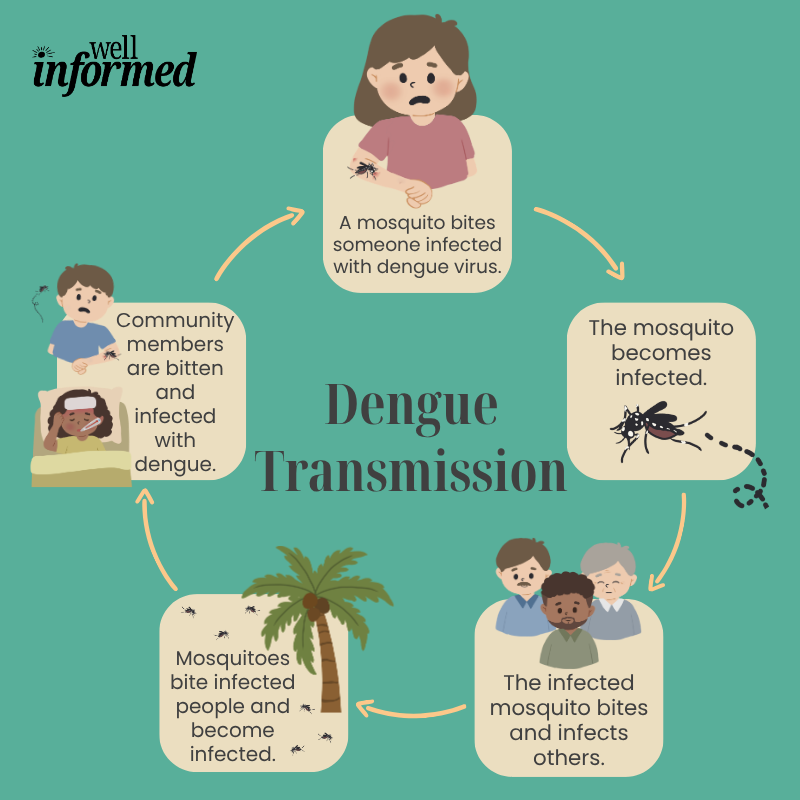
Dengue fever develops after infection with any of four dengue viruses. The virus is not transmitted person-to-person and spreads only through infected mosquito bites.
Most people don't get sick
About three in four people infected with dengue do not get sick. If symptoms develop, they typically appear four to ten days after an infected mosquito bite.
Mild dengue symptoms
Common symptoms of mild dengue include high fever, headache, nausea, vomiting, rash, pain behind the eyes and muscle, joint and bone pain.
Severe dengue is life-threatening
About one in twenty people infected develops severe dengue, sometimes called dengue hemorrhagic fever or dengue shock syndrome, which can cause shock, internal bleeding and death.
Warning signs of severe infection
Severe dengue warning signs include serious stomach pain, vomiting at least three times in 24 hours, bleeding from gums or nose, rapid breathing, blood in stool or vomit, restlessness, extreme tiredness and purplish spots under…
No specific cure for dengue
There is no specific cure or treatment for dengue. Most people recover in about one week. The CDC recommends rest, hydration and acetaminophen to reduce fever and pain.
Avoid aspirin and ibuprofen
People with dengue should avoid aspirin and ibuprofen because they can raise the risk of bleeding. Severe dengue may require blood transfusions or intravenous fluid and electrolyte replacement.
Second infection can be worse
After infection with one dengue virus, immunity protects against reinfection with that virus but not the other three. A second dengue infection can cause more severe symptoms than the first.
“Dengue is a doozy, mainly because the second infection can be more dangerous than the first.”
Florida's climate fuels outbreak
Florida's climate and environment provide ideal conditions for Aedes mosquitoes that spread dengue. When infected travelers introduce the virus, female mosquitoes can pass it to over 500 infected offspring.
Excessive rainfall worsens outbreak
Kristi Miley, a University of Florida public health professor, said excessive rainfall this late in the year combined with mosquito multiplication explains how an outbreak of this magnitude can happen.
“When you consider the multiplication equation here and add that to the amount of excessive rainfall that the state has been experiencing this late in the year, one can quickly see how an outbreak of this magnitude can happen.”
Risk extends beyond Florida
Any state with climate to support Aedes mosquitoes could see local dengue transmission. In 2025, locally acquired dengue appeared in Florida, California and Arizona. Virginia reported a case in August.
Eliminate standing water
Dengue mosquitoes breed in standing water. Health officials urge people to dump or cover standing water after rain, discard old tires, empty bird baths weekly and protect boats with tarps.
“Dump or cover any standing water, especially after each time it rains.”
Prevent mosquito bites and spread

Use EPA-registered insect repellents like deet and picaridin and cover skin with shoes, socks and long sleeves. Avoid mosquito exposure for seven days after symptoms to prevent spreading dengue to mosquitoes.
The main idea
Florida has recorded 524 locally acquired dengue cases in 2026, its largest outbreak in over 15 years, prompting aerial spraying of mosquito larvae in Pinellas and Hillsborough counties.