From Space · · 2m
Japan's MMX Mission Returns First Martian Moon Samples
Japan's MMX spacecraft aims to return the first samples from Mars' moon Phobos to Earth by 2031.
In brief
Japan's MMX spacecraft aims to return the first samples from Mars' moon Phobos to Earth by 2031. Japan's MMX mission will return the first samples from Mars' moon Phobos to Earth in 2031, helping scientists understand the moon's origin and Mars' early history. Originally reported by Space.
The mission
Japan's MMX mission aims to become the first spacecraft to return samples from Mars to Earth.
Launch and timeline
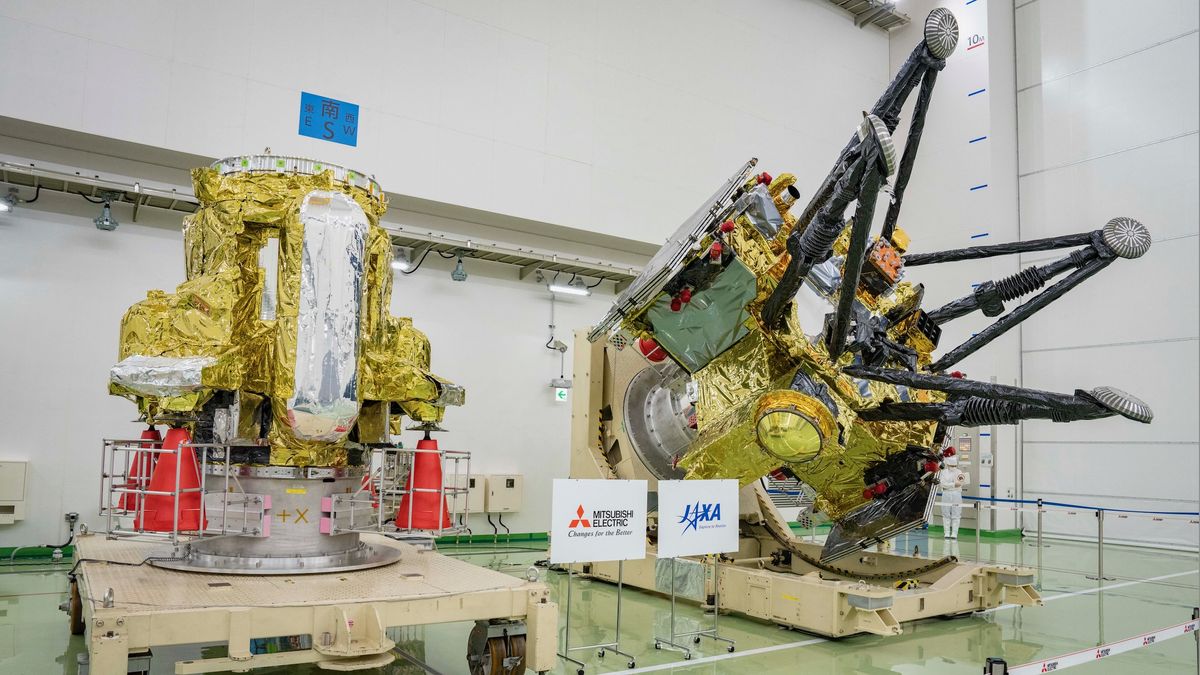
MMX launches Oct 19, 2024, on an H3 rocket from Japan's Tanegashima Space Center, arriving at Mars in August 2027.
Spacecraft components
The MMX spacecraft includes a propulsion module, exploration module with IDEFIX rover, and return module for samples.
Phobos landing
MMX will land on Phobos in late 2028 or early 2029 to collect samples using two mechanisms.
Sample collection
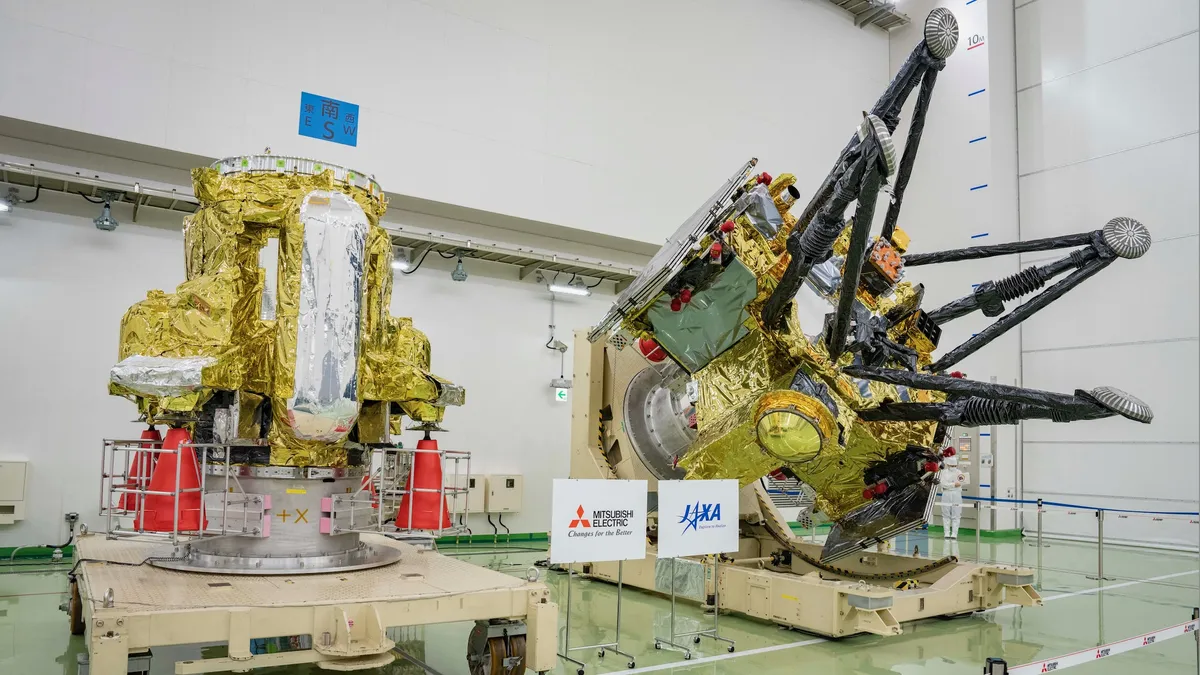
The mission collects at least 10 grams of Phobos material for return to Earth in 2031.
Phobos and Deimos origins
Scientists debate whether Phobos and Deimos formed from a Mars-impact or were captured asteroids.
Scientific instruments
MMX uses MEGANE, RAX, miniRAD, and other tools to analyze Phobos' composition and history.
International collaboration
NASA and ESA provide hardware and communications support for the MMX mission.
Sample return to Earth
The sample-return capsule lands in Australia's Woomera region in 2031 for laboratory analysis.
Scientific significance
Phobos samples could reveal Mars' early history and the solar system's formation billions of years ago.
NASA's role
NASA funds the mission and will receive 15% of returned samples for analysis.
The science
MMX aims to determine if Phobos formed from Mars or was captured from elsewhere in the solar system.
Sample analysis
Laboratory analysis of samples will reveal Phobos' composition and potential Martian origins.
Timeline
MMX lands on Phobos in late 2028, collects samples, and returns to Earth in 2031.
Key instruments
The MEGANE instrument measures Phobos' elemental composition through gamma-ray and neutron spectroscopy.
What happens next
Phobos samples will be analyzed in 2031 to understand Mars' early history and solar system formation.
At a glance
Japan's MMX mission will return the first samples from Mars' moon Phobos to Earth in 2031, helping scientists understand the moon's origin and Mars' early history.