From TIME · Rebecca Schneid · · 1m 40s
Rethinking early childhood for a changing world
Experts say we need bolder action on child development, not just rhetoric about the future.
In brief
Experts say we need bolder action on child development, not just rhetoric about the future. Early childhood shapes lifelong health and resilience, but progress requires moving beyond platitudes to concrete action on equity and community involvement. Originally reported by TIME.
Early years shape lifelong outcomes
The first years of childhood determine not just academic readiness but also lifelong health, resilience, emotional well-being, and brain development.
Move beyond rhetoric to action
Harvard's Jack Shonkoff says experts need to stop saying children are the future and start explaining what concrete steps they'll take to address disparities.
“Let's move beyond quickly on the fact that children are our future, and say what we are going to do about that.”
Three pillars for child development
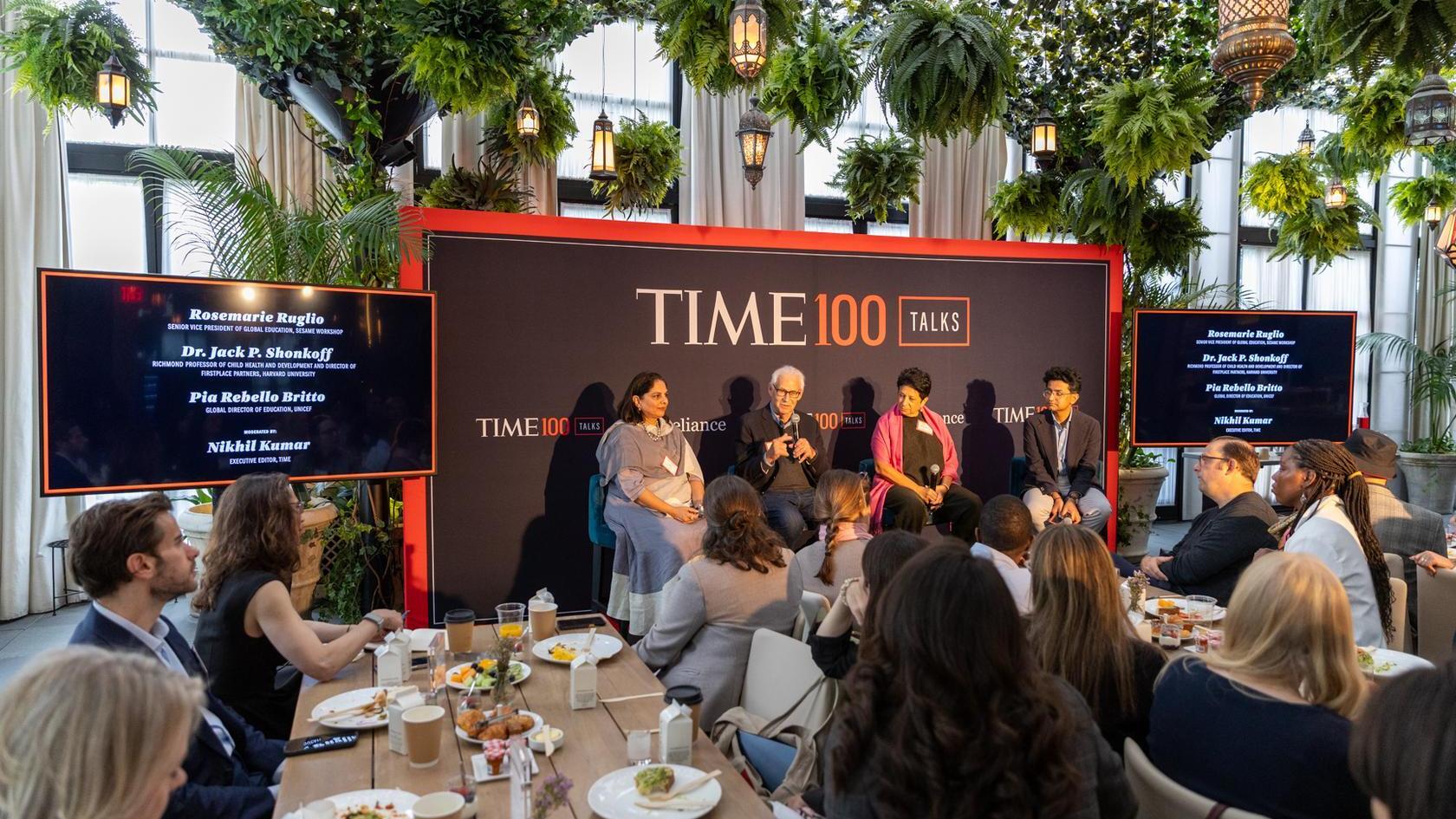
UNICEF's Pia Rebello Britto focuses on eat, play, and love: ensuring nutrition, brain-stimulating interaction, and the human trust that protects children in crisis.
“Eat, play, and love. That's the foundation of it all.”
Teaching kindness through media
Sesame Workshop teaches children cognitive skills, self-regulation, and empathy through joyful media, aiming to grow kids who are smarter, stronger, and kinder.
“Our mission is to help kids grow smarter, stronger, and kinder.”
The my children versus yours problem
Shonkoff identifies a major barrier: people prioritize their own children's welfare over others', but everyone pays a price when communities lack common cause.
“We all pay a price for that lack of finding common cause.”
Getting governments to invest
Britto says child health hasn't become a vote-getting issue or commercial incentive for governments, so UNICEF brings teachers, parents, and caregivers into policy conversations.
Community voices shape solutions
Sesame Workshop creates practical blueprints by consulting parents, teachers, and administrators rather than developing content in isolation.
“Let's just not create content in a vacuum.”
AI changes education, not connection
While artificial intelligence will reshape how children learn, Shonkoff says social connection remains non-negotiable, and Truglio warns against letting machines replace fundamental cognitive skills.
“Social connection is like hunger and thirst for humans. It's survival.”
The takeaway
Early childhood shapes lifelong health and resilience, but progress requires moving beyond platitudes to concrete action on equity and community involvement.