From TechCrunch · Kirsten Korosec · · 4m
Uber's autonomous vehicle empire: Every partner, tracked
Uber has partnered with over 30 AV companies in two years. Here's the complete list of deals building its driverless future.
In brief
Uber has partnered with over 30 AV companies in two years. Here's the complete list of deals building its driverless future. After selling its own AV division in 2020, Uber has rebuilt its autonomous future through strategic partnerships and investments across 30+ companies globally. Originally reported by TechCrunch.
Uber's AV empire rises
Uber has partnered with over 30 autonomous vehicle companies in two years, taking a global approach after abandoning its own AV program.
The rise and fall
Uber built its own AV division in 2014, recruiting from Carnegie Mellon and acquiring Otto. Then came Waymo's lawsuit, Kalanick's exit, and a fatal 2018 crash.
The great reset

In 2020, new CEO Dara Khosrowshahi sold Uber's AV unit to Aurora, keeping equity stakes. Two years later, Uber started making AV deals again.
Aurora hauls freight

Uber owns 19.7% of Aurora after selling its AV unit to them. Aurora's self-driving trucks now complete roundtrips between Dallas and Houston on Uber Freight.
Avride's dual approach
The Yandex spinout secured $375 million from Uber and Nebius. Its sidewalk robots deliver for Uber Eats, while robotaxis launched in Dallas in 2025.
Baidu goes global
Thousands of Baidu's Apollo Go robotaxis will deploy on Uber in Asia and the Middle East. Testing in London was planned for 2026 but hasn't started yet.
Sidewalk robot army

Uber partners with Coco, Cartken, and Serve Robotics for sidewalk delivery robots across U.S. cities and Japan, expanding its Uber Eats delivery options.
Cruise crashes out
Uber and GM's Cruise announced a 2024 partnership to bring robotaxis to the app. But GM killed Cruise's robotaxi business in December 2024, ending the deal.
Lucid's premium play

Uber invested $500 million in Lucid and ordered 35,000 vehicles for a premium robotaxi service. The Gravity SUVs will use Nuro's self-driving system.
Motional's long wait

Despite a 10-year partnership announced in 2022, Motional still hasn't launched driverless service. Its Hyundai Ioniq 5s run in Las Vegas with safety operators.
Nuro pivots to licensing

Nuro abandoned its custom delivery vehicle to license self-driving tech. Uber committed about $500 million total, with Nuro powering Lucid's premium robotaxis.
Nvidia powers the platform
Uber will launch a global fleet using Nvidia's Drive Hyperion platform and Alpamayo AI models, starting in LA and San Francisco in 2027, scaling to 28 cities by 2028.
Rivian's R2 robotaxi
Uber invested $300 million in Rivian and will buy 10,000 autonomous R2 SUVs. The $1.25 billion deal targets 25 cities by 2031, starting in San Francisco and Miami.
Serve's Uber roots
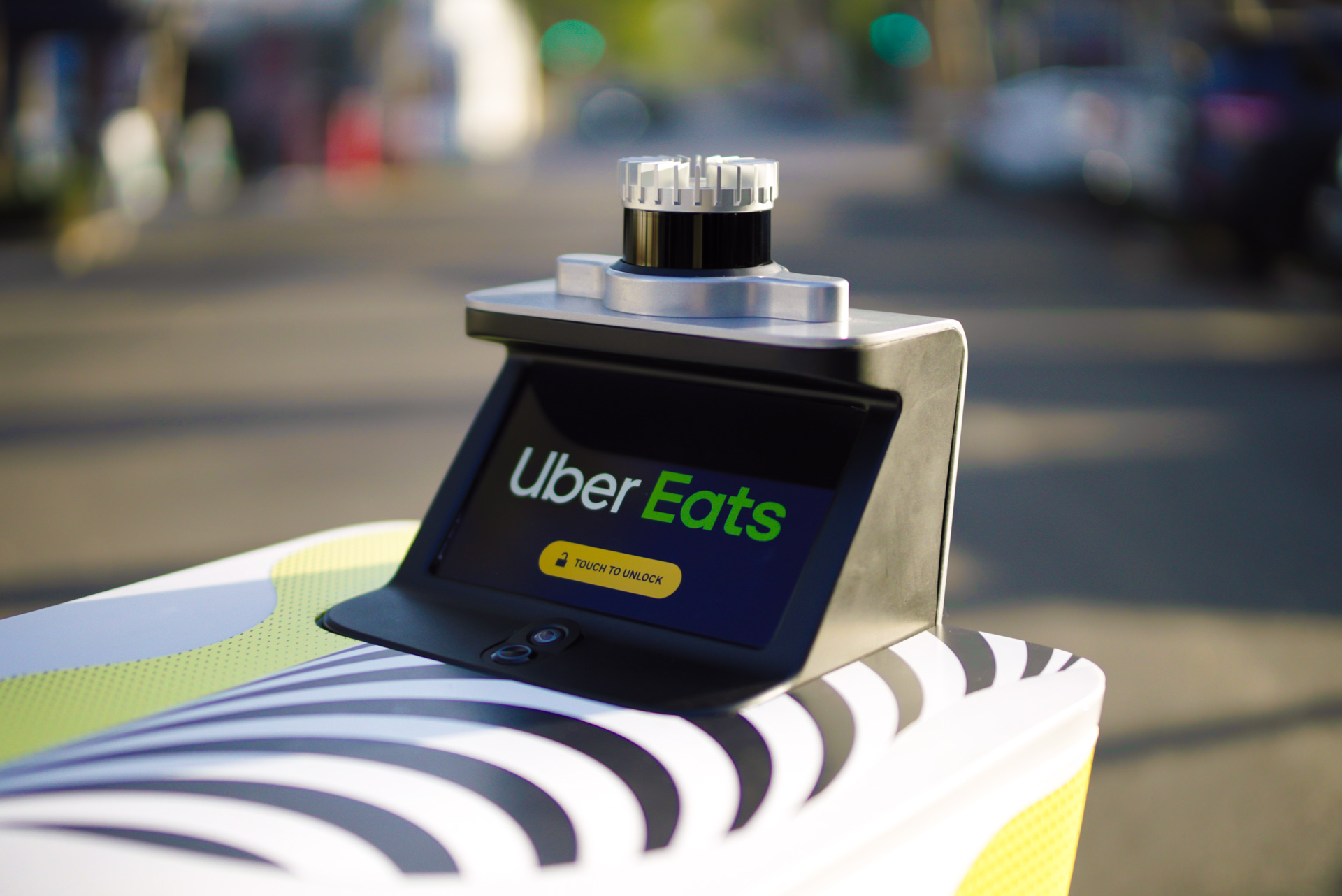
Serve Robotics spun out of Uber's Postmates acquisition in 2021. Uber invested in the company, which went public in 2024 and delivers for Uber Eats.
Waabi's billion-dollar bet
Founded by Uber's former chief scientist, Waabi raised $1 billion in 2026. Uber committed $250 million in milestone-based capital to deploy Waabi's robotaxi tech.
Waymo partnership shrinks
After launching in Phoenix, Austin, and Atlanta, the Waymo-Uber relationship is contracting. They ended Phoenix service in July 2026, and Waymo wants out by 2028.
Wayve's AI approach

Uber invested in Wayve's $1.2 billion raise, with another $300 million tied to London robotaxi deployment. Wayve's AI software will power Nissan Leafs in Tokyo.
WeRide's Middle East push
WeRide launched driverless service in Abu Dhabi in November 2025 and Dubai soon after. Uber invested $100 million more to deploy 1,200 robotaxis across the region by 2027.
Volkswagen's ID Buzz

MOIA and Uber will launch robotaxis using VW's electric ID. Buzz minivan in Los Angeles and multiple U.S. cities. Service starts in 2026 with driverless ops in 2027.
Zoox joins the party
Amazon-owned Zoox announced a March 2026 partnership to deploy its custom robotaxis on Uber's app in Las Vegas this year and Los Angeles in 2027.
The one thing
After selling its own AV division in 2020, Uber has rebuilt its autonomous future through strategic partnerships and investments across 30+ companies globally.