From TechRadar · · 3m
3D-printed drones race for speed record in Cape Town
Three teams attempt to break the fastest battery-powered quadcopter record using drones built on Bambu Lab's newest 3D printers.
In brief
Three teams attempt to break the fastest battery-powered quadcopter record using drones built on Bambu Lab's newest 3D printers. Three teams are competing today in Cape Town to break the 657.59 kilometres per hour battery-powered quadcopter speed record, with drones built on Bambu Lab's H3C and H2C 3D printers…
Three teams, one record to break
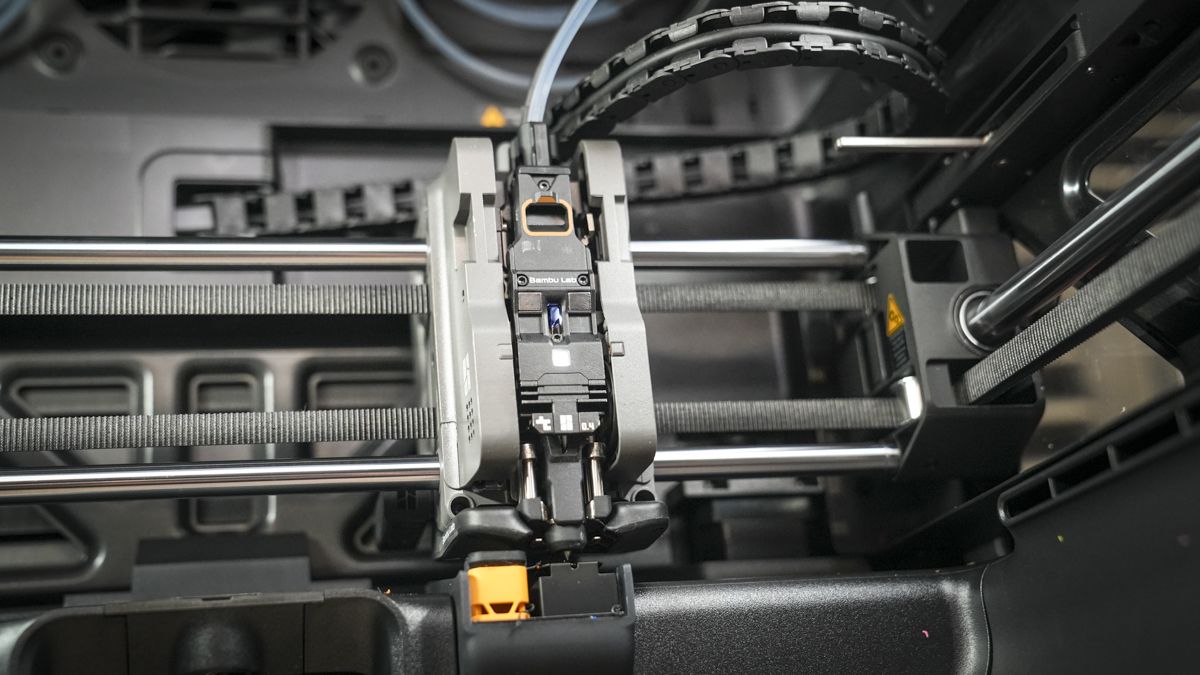
Three teams are attempting the Guinness World Records title for fastest battery-powered remote-controlled quadcopter today in Cape Town, using drones built on Bambu Lab's H3C and H2C 3D printers.
The number to beat
The official record is 657.59 kilometres per hour, set on December 11, 2025, by Cape Town father-and-son duo Luke and Mike Bell, who are also among today's challengers.
The challengers
The Bells are joined by Australian aerospace engineer Ben Biggs and John Xu, an MIT mechanical engineering student living in Boston.
The Bells' winning design
Luke Bell, an engineer and YouTuber, built the Peregreen V4 with his father and printed its airframe on Bambu Lab's H2D as one multi-material piece in PETG, PA6-CF, and TPU, then sanded and polished it.
“the printer's larger build volume and dual-nozzle system made it possible to print the body as one continuous piece”
Biggs has the fastest uncertified runs
Flying with Aidan Kelly under the Drone Pro Hub banner, Ben Biggs hit 690 kilometres per hour on a downwind pass in early 2026 and averaged about 661 kilometres per hour.
“So, we couldn't have that!”
Why Biggs's records don't count
Both of Biggs's runs beat the official figure, but neither counted because no professional observer was present. The obstacle has been logistics rather than physics.
The main idea
Three teams are competing today in Cape Town to break the 657.59 kilometres per hour battery-powered quadcopter speed record, with drones built on Bambu Lab's H3C and H2C 3D printers.
Read the TL;DR — this story on one card.