From The Conversation · Sandra Slater · · 3m
How America built a nation after winning independence
The Revolutionary War ended in 1781, but the real challenge was creating a functioning government from scratch.
In brief
The Revolutionary War ended in 1781, but the real challenge was creating a functioning government from scratch. Winning the war was easier than building a country. America's founders had to design a government, write a constitution, and gradually expand rights to all citizens over centuries. Originally reported by The…
Britain surrenders at Yorktown
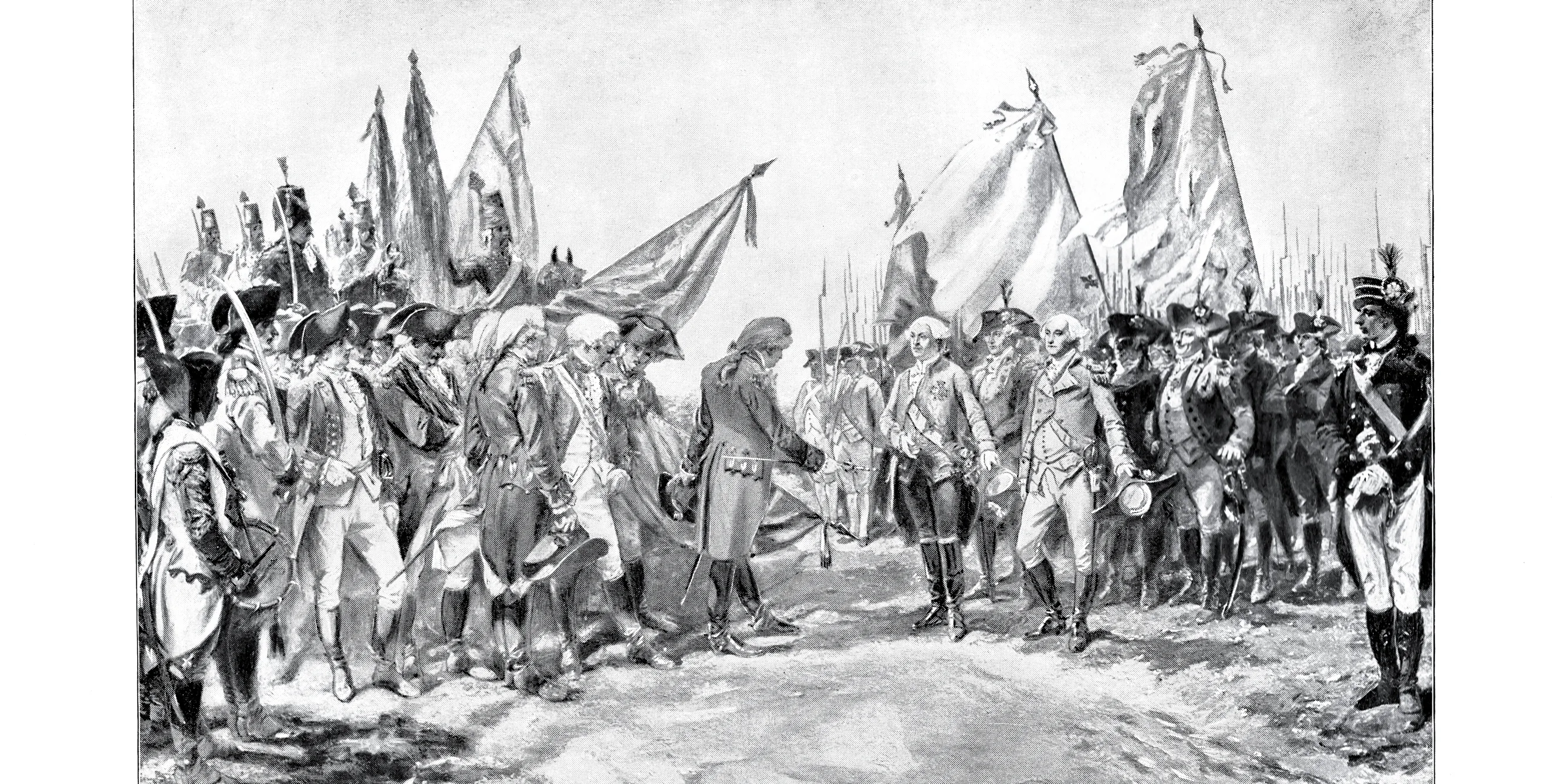
In autumn 1781, the Continental Army trapped British forces against the Virginia coast while the French navy blocked escape. The British surrendered on October 19, 1781, ending the last major battle of the Revolutionary War.
Peace treaty signed in 1783
Peace talks began in 1782 after news of the American victory reached London. The Treaty of Paris was finally signed in 1783, officially ending the war and recognizing American independence.
The aftermath was devastating
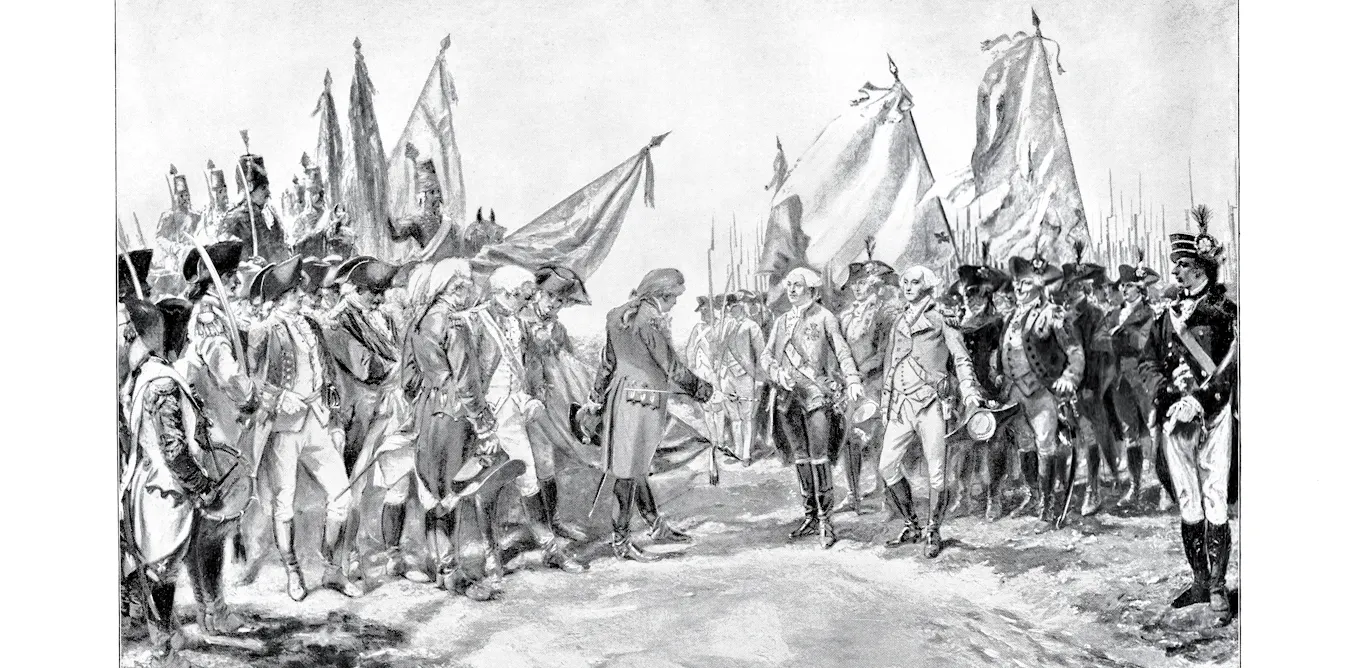
The economy was in ruins, 25,000 Americans had died, and over 60,000 Loyalists fled the country, including more than 15,000 formerly enslaved people who had fought for the British. The new nation faced chaos and uncertainty.
Articles of Confederation failed
In 1777, the states adopted the Articles of Confederation to organize the war effort. But this framework was too weak for peacetime. It had no president, no court system, and no way to handle taxes or foreign trade.
Economic crisis forced action
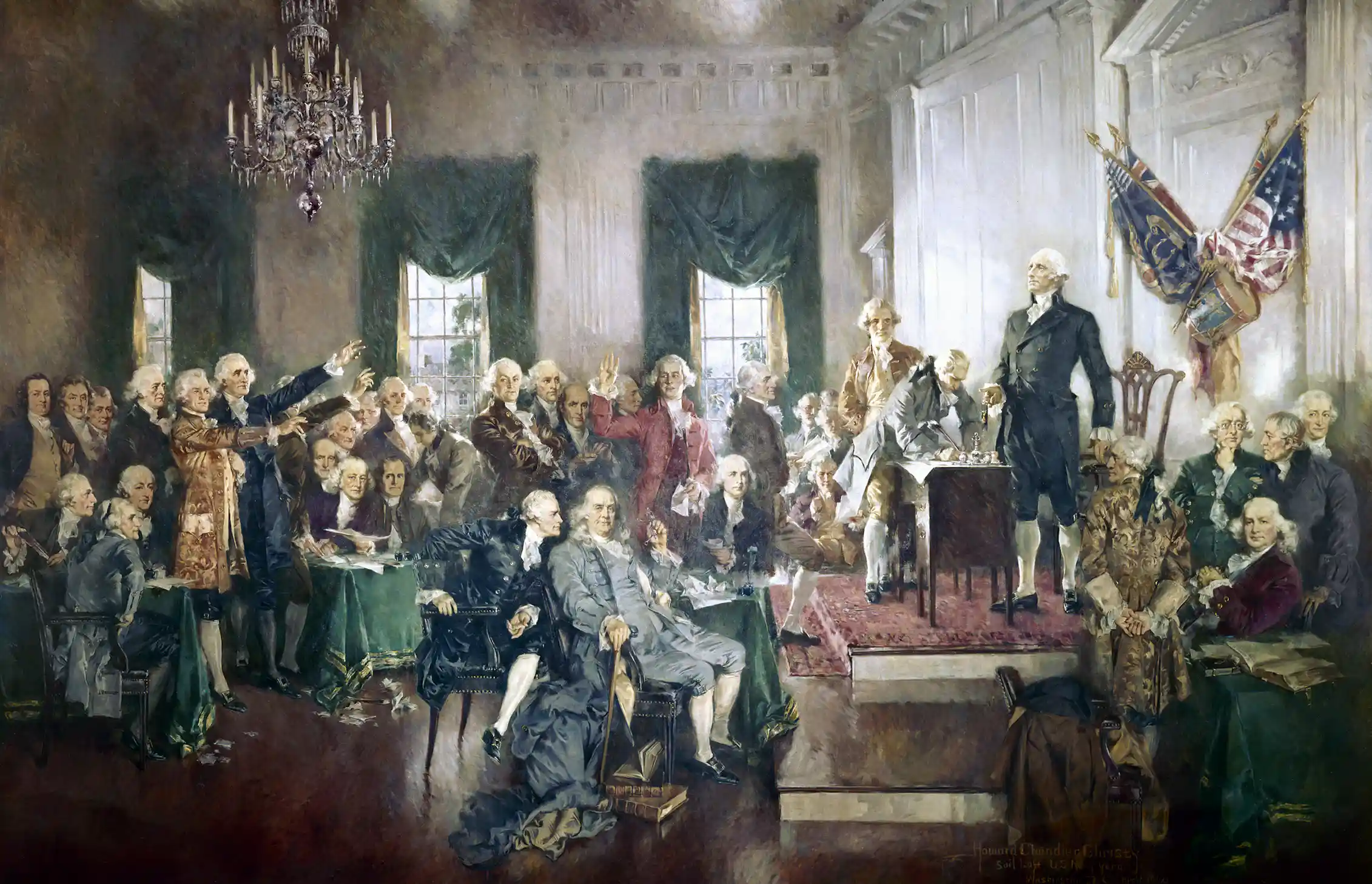
War debts, inflation, and lost trade with Britain pushed Americans into financial hardship during the 1780s. The weak government couldn't solve the crisis, so state representatives gathered in Philadelphia in 1787 to redesign the national government.
Constitution created three branches
The Constitutional Convention designed a government with checks and balances. A legislative branch made laws, an executive branch with a president led the nation, and a judicial branch with a Supreme Court upheld the law.
Bill of Rights protected freedoms
The Constitution went into effect in 1789. In 1791, the Bill of Rights was approved, guaranteeing free speech, freedom of religion, freedom of the press, the right to a fair trial, and other protections that remain law today.
Voting rights excluded most people
In 1789, only white male landowners over 21 could vote. The Naturalization Act of 1790 limited citizenship to white people only. This meant the majority of Americans, including all women and people of color, had no voice in government.
Slavery gradually ended in North
Northern states began abolishing slavery starting with Vermont in 1777 and ending with New York in 1799. But slavery wasn't fully abolished nationwide until the 13th Amendment in 1865, nearly a century later.
Black men gained voting rights late
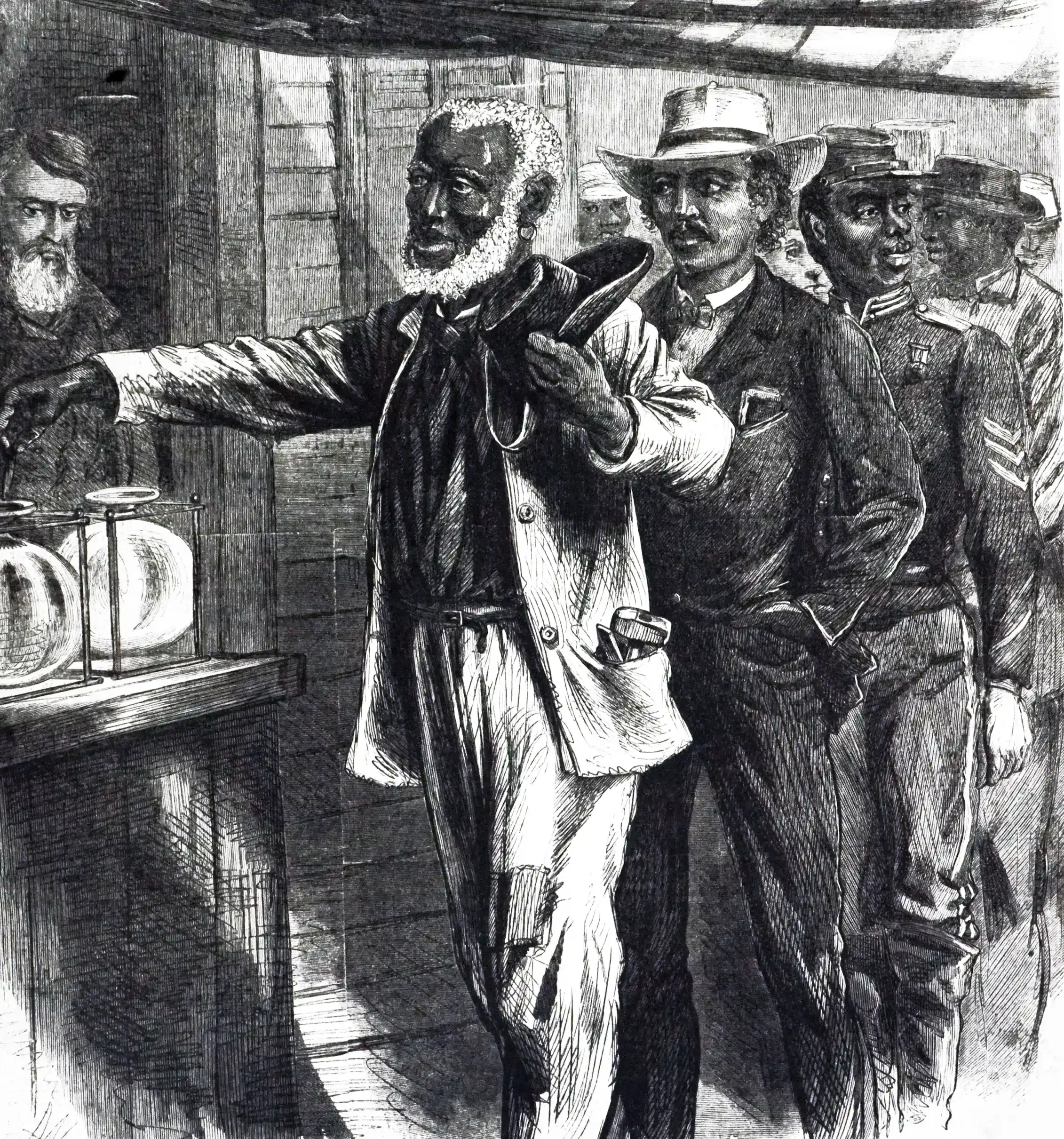
The 15th Amendment in 1870 guaranteed Black men the right to vote. However, in many places it was impossible for them to actually cast ballots until later in the 20th century due to local discrimination and violence.
Women and Native Americans waited
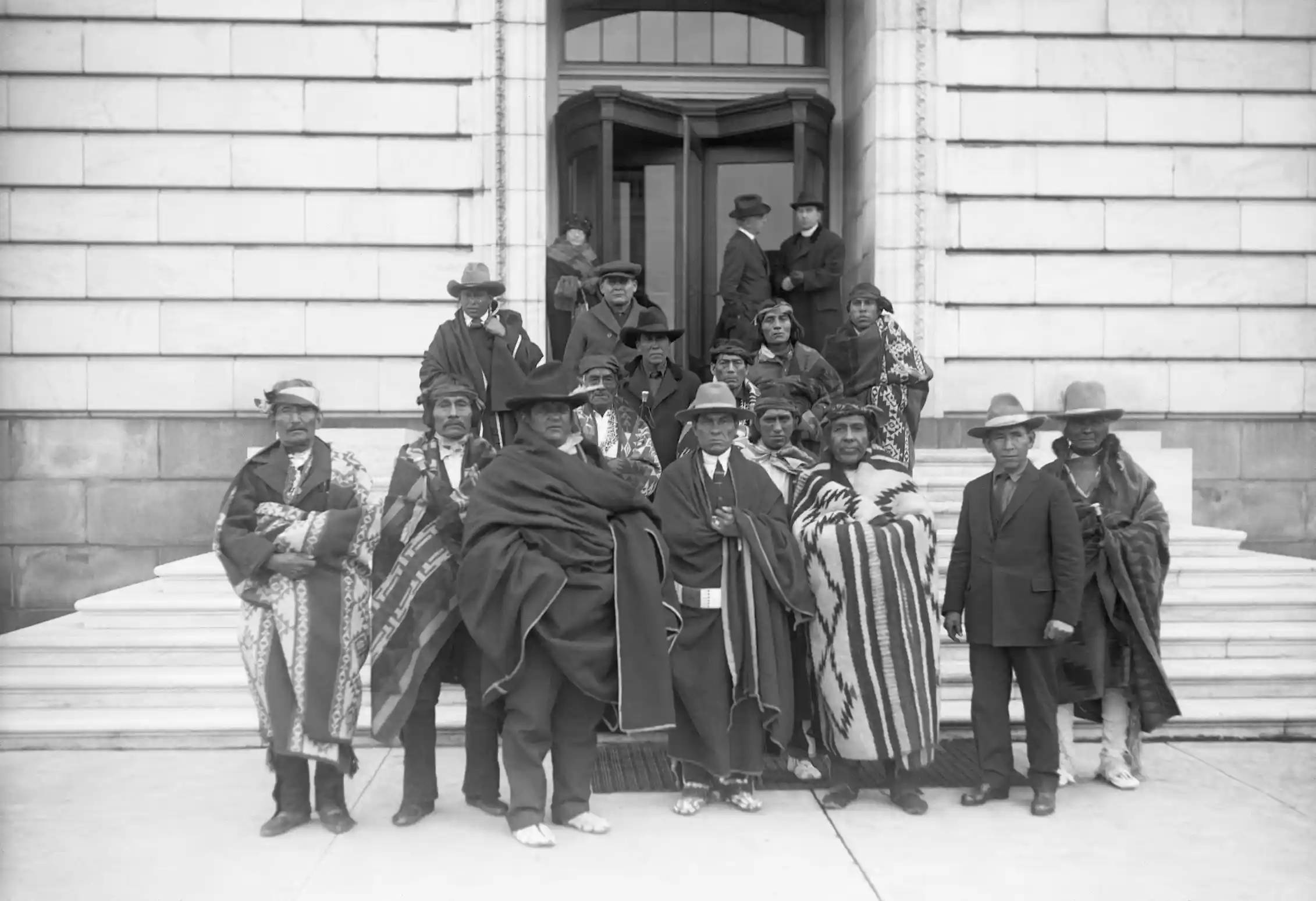
Women weren't guaranteed the right to vote until 1920. Native Americans lost lands after the Treaty of Paris extended U.S. borders to the Mississippi River and didn't become recognized citizens until 1924 with the Snyder Act.
The main idea
Winning the war was easier than building a country. America's founders had to design a government, write a constitution, and gradually expand rights to all citizens over centuries.