From The Conversation · Andrew Latham · · 2m
How red became Republican by accident
A five-week recount in 2000 turned a random graphics choice into America's political identity.
In brief
A five-week recount in 2000 turned a random graphics choice into America's political identity. The red-state/blue-state divide wasn't inevitable or ideological, it was a TV convention that stuck during Florida's recount and hardened into how we see ourselves. Originally reported by The Conversation.
Cold War reds meant communists
During the Cold War, American conservatives said "Better dead than red," meaning they'd rather face nuclear war than accept communist victory. Red was the enemy's color.
“"Better dead than red."”
Networks picked colors randomly
For decades, TV networks chose whatever colors looked good each election year. In 1976, NBC colored Republican Gerald Ford blue and Democrat Jimmy Carter red.
Reagan's landslide was all blue
In 1980, Ronald Reagan won a massive victory that painted the map almost entirely blue. Now we think of Reagan as the patron saint of the red party.
No one decided on colors
There was no founding decision by either party to claim a color. The Washington Post was still assigning red to Democrats and blue to Republicans during the 2000 campaign.
Florida recount locked it in
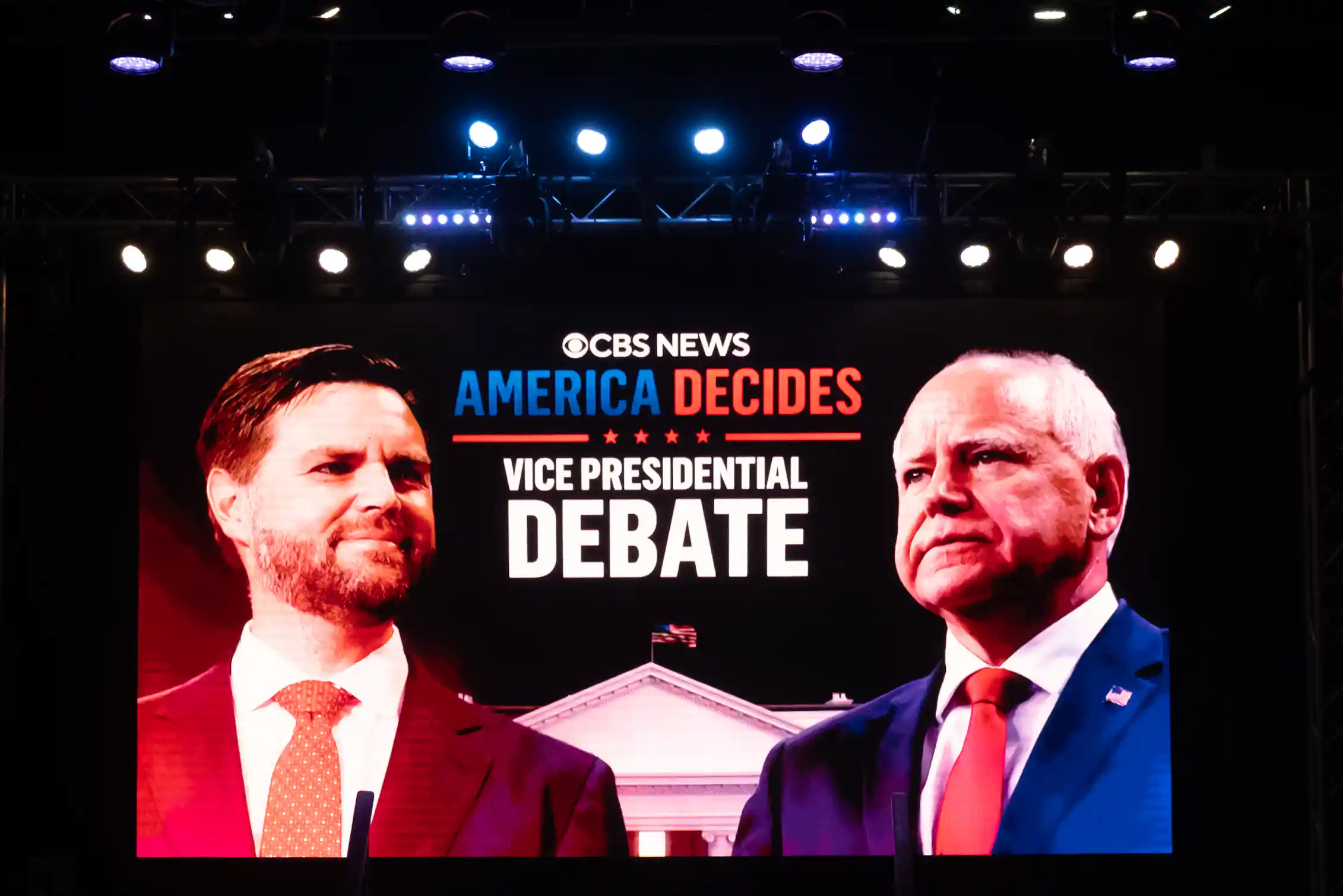
In 2000, networks happened to converge on red for George W. Bush and blue for Al Gore. The five-week Florida recount meant Americans watched the same map every night for weeks.
The map became inevitable
By the time the Supreme Court ended the recount and Bush won by 537 votes, the color scheme had become so familiar it stopped looking like a choice at all.
Colors became cultural shorthand
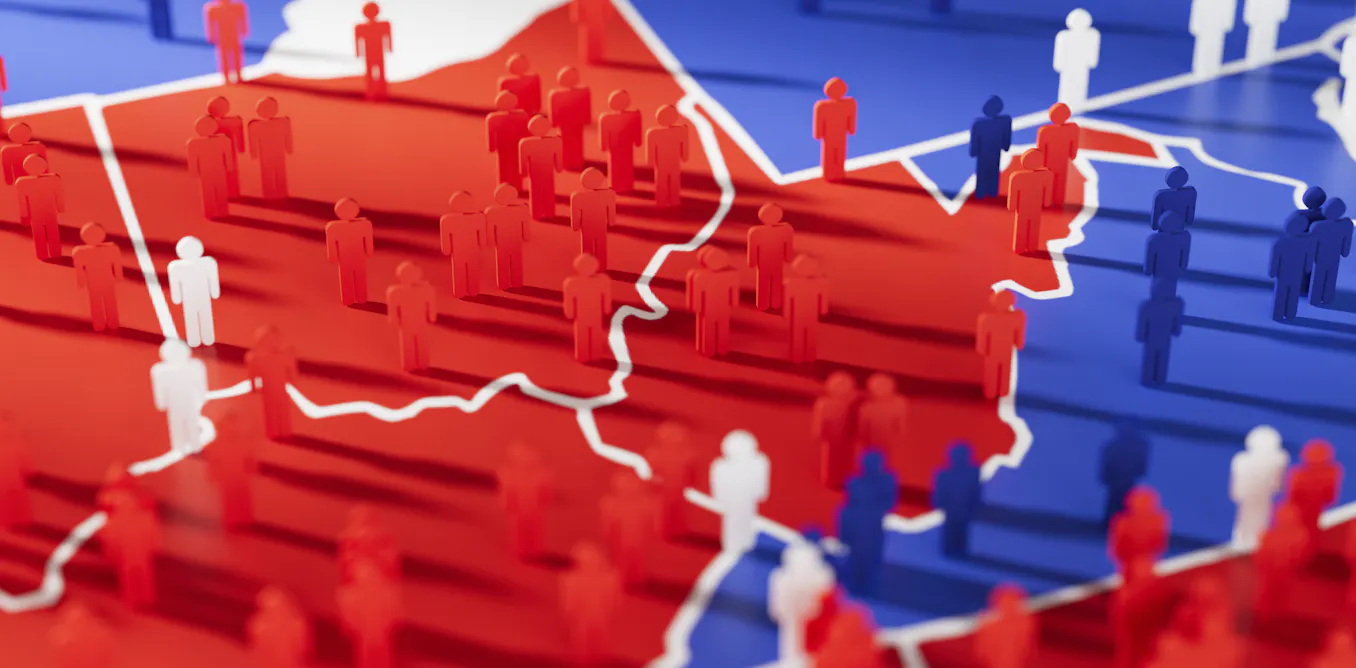
By 2004, red meant rural America, religiosity, the South and interior West. Blue meant cities, secular voters, coasts and college towns. The vocabulary hardened into identity.
“"two Americas: red and blue"”
Maps hide how close races are
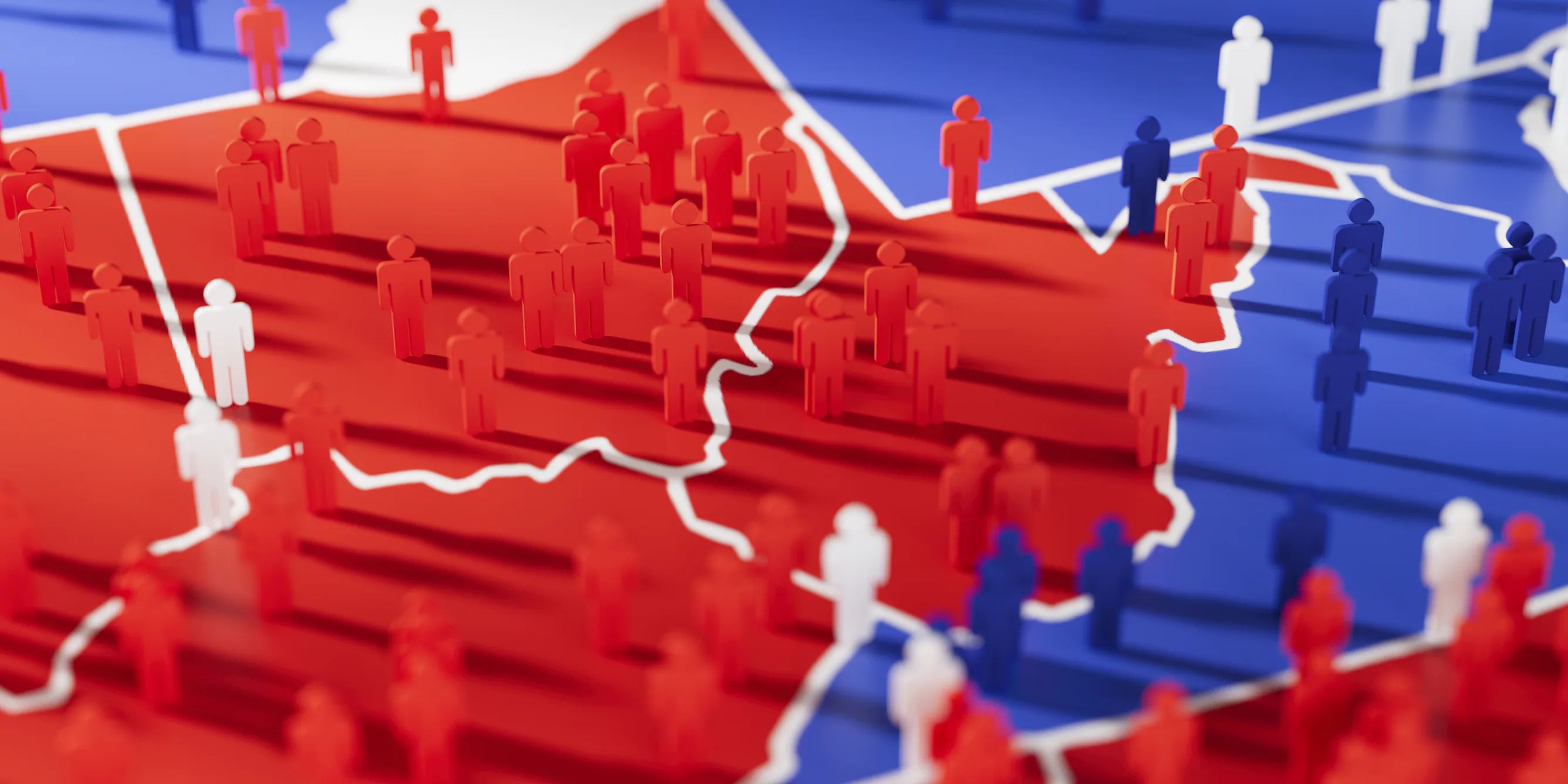
A state won by 2 percentage points gets colored the same solid shade as one won by 30. The map makes America look more neatly sorted than it actually is.
Purple maps showed the real picture
Princeton's Robert Vanderbei created "Purple America" maps after 2000, shading counties by their actual vote split. Most counties turned purple, not solid red or blue.
Purple never became the standard
Purple maps appeared in academic work and data journalism but rarely on network broadcasts or in candidates' speeches. Red and blue had already become the language.
An arbitrary choice became identity

A random graphics convention, repeated for five weeks during a recount, hardened into how Americans describe political geography, culture and identity. It was never inevitable.
The essence
The red-state/blue-state divide wasn't inevitable or ideological, it was a TV convention that stuck during Florida's recount and hardened into how we see ourselves.