From The Conversation · Peter C. Mancall · · 1m 50s
New England’s First Bible in Indigenous Language
New England’s first Bible published in an Indigenous language aimed to convert Native Americans.
In brief
New England’s first Bible published in an Indigenous language aimed to convert Native Americans. John Eliot’s 1663 Wampanoag Bible sought to convert Native Americans through literacy and Protestant Christianity. Originally reported by The Conversation.
The Eliot Bible’s Origin
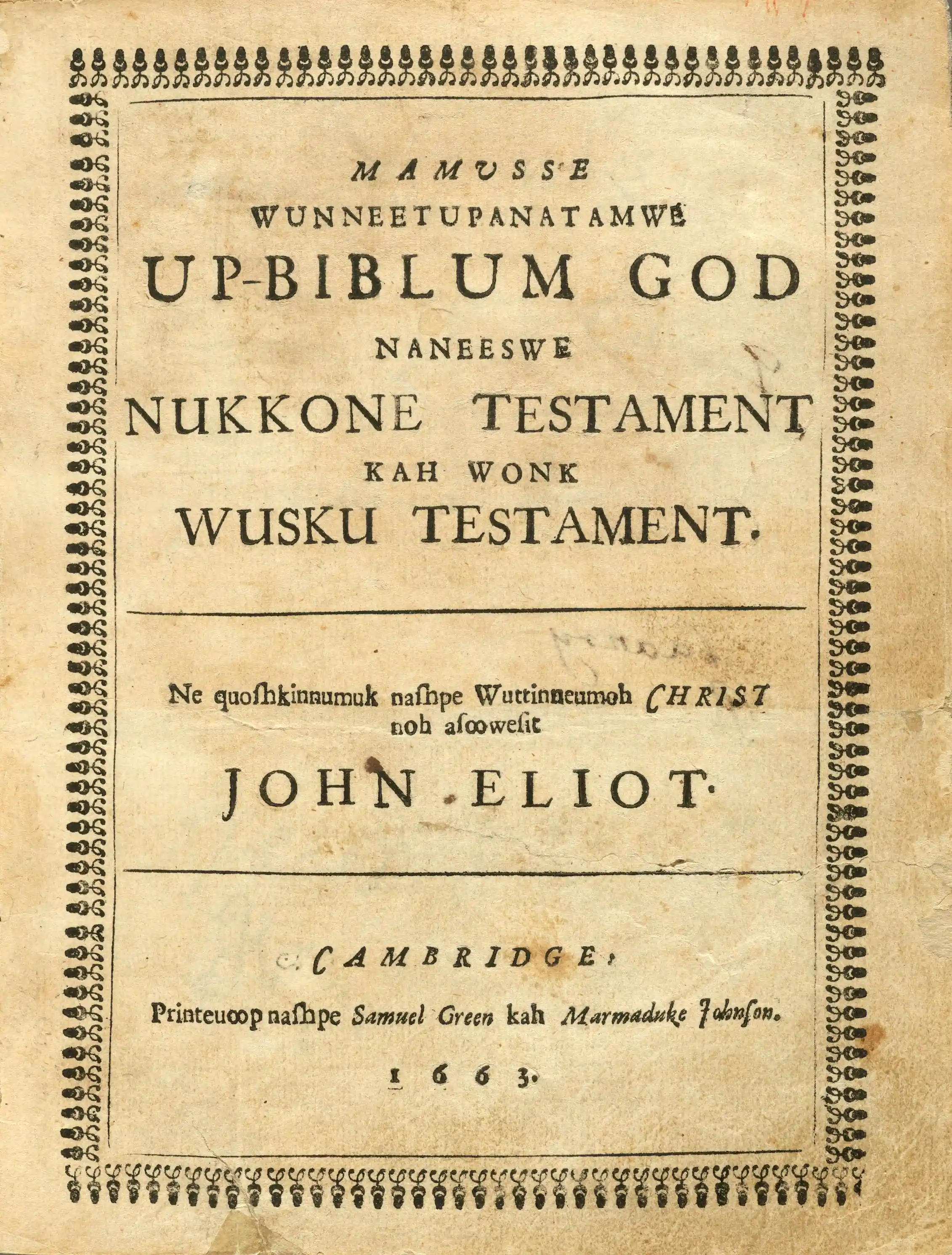
The ‘Eliot’ Bible, published in 1663, was the result of collaboration between a Puritan minister and a Montauk interpreter.
Wampanoag Language Background
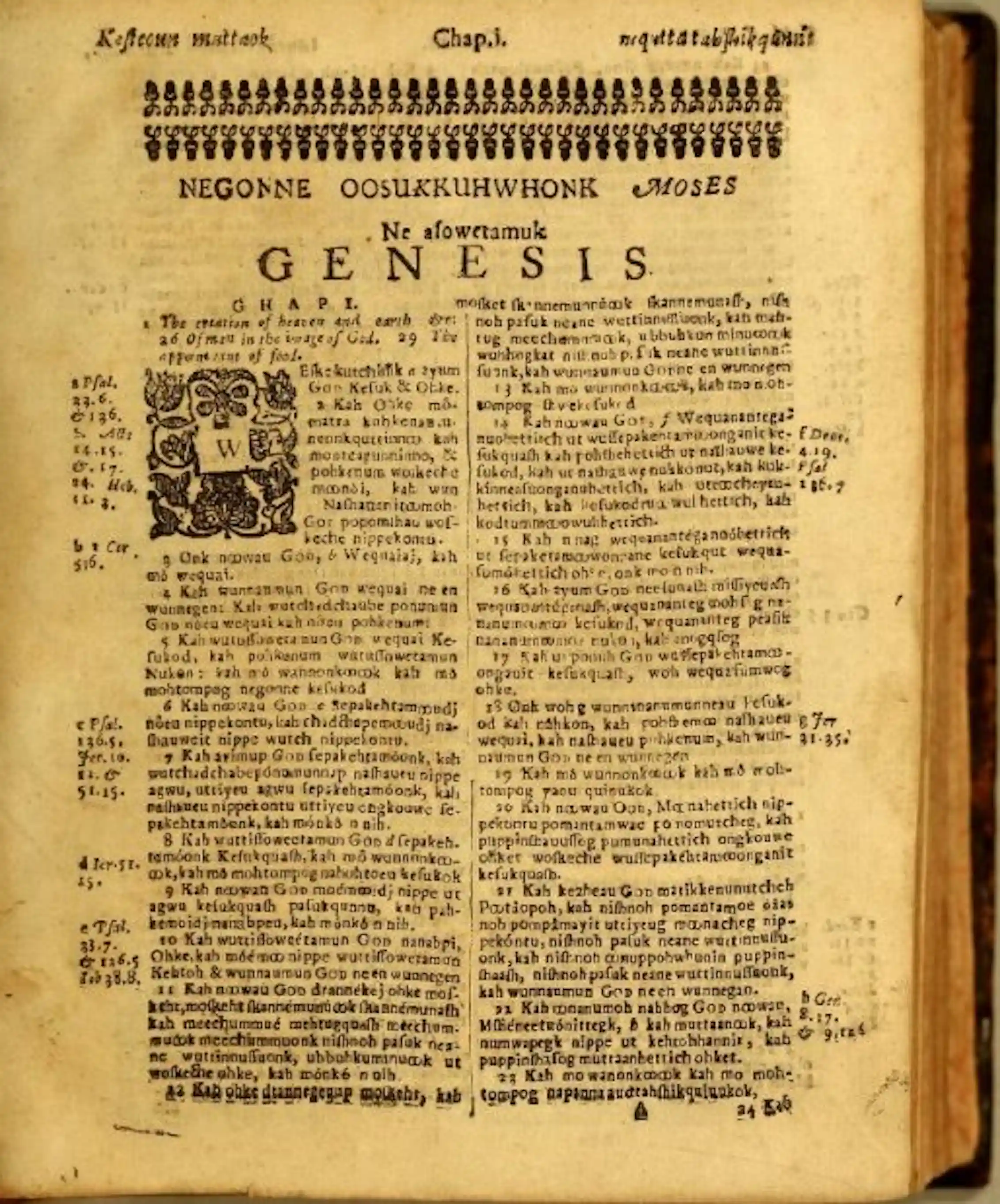
Wampanoag, an Algonquian language spoken in southern New England, was also known as Wôpanâak or Massachusett.
Puritan Printing Efforts
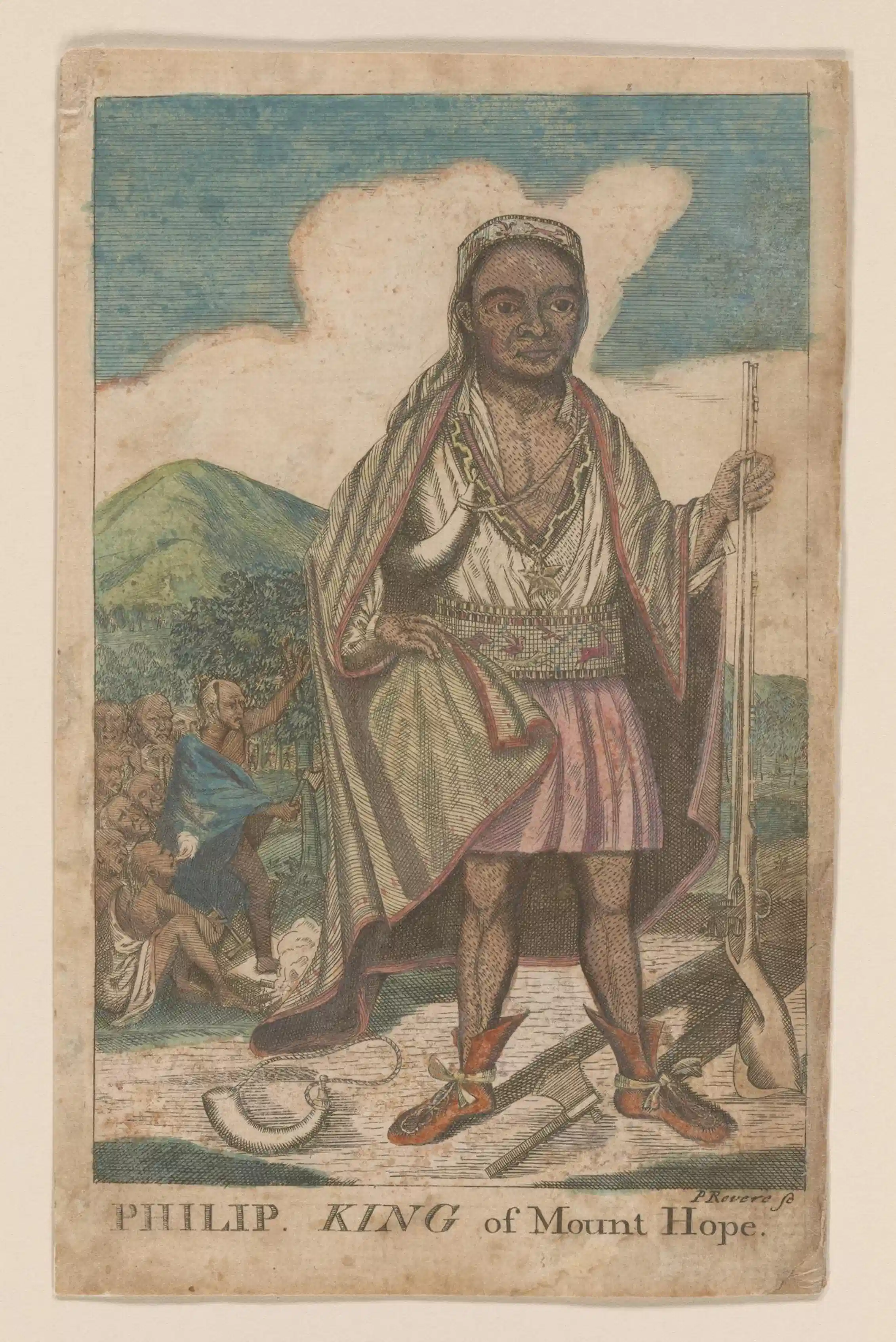
Puritans established the first printing press in Massachusetts in 1638, publishing the Bay Psalm Book in 1640.
John Eliot’s Mission
John Eliot, a Puritan minister who sailed to Boston in 1631, founded Roxbury Latin School and worked to convert Native Americans.
Cockenoe’s Role
Cockenoe, a Montauk man captured during the Pequot War, became Eliot’s interpreter for translating the Bible into Wampanoag.
The Bible’s Publication
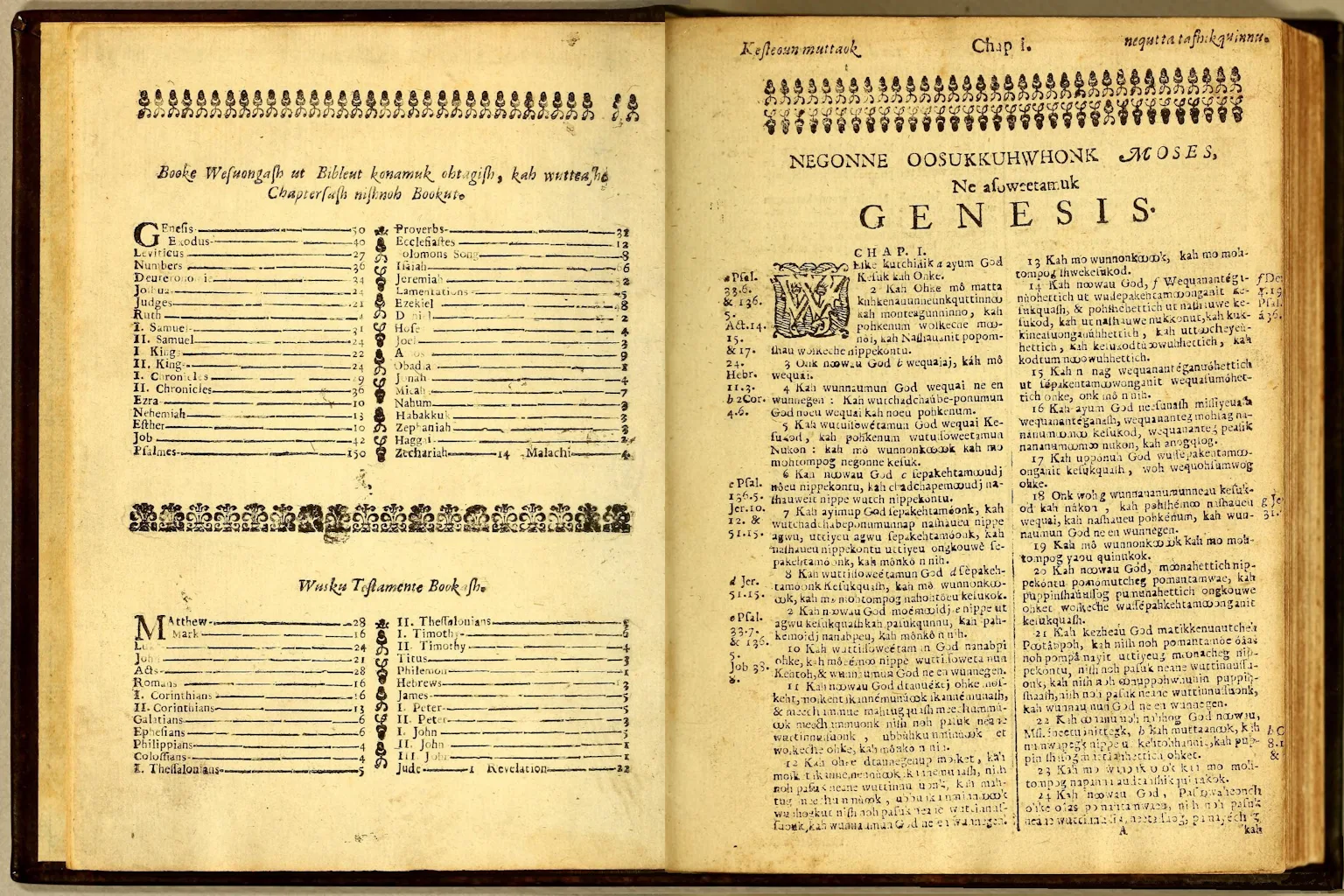
In 1663, printers Samuel Green and Marmaduke Johnson published Eliot and Cockenoe’s full Wampanoag Bible translation.
Bible’s Design
The Bible included English lines for recitation, allowing Wampanoag speakers to share the text without understanding the language.
Indigenous Collaboration
Wawaus, a Nipmuc man studying at Harvard’s Indian College, helped set type for the Bible translation.
Conversion Efforts
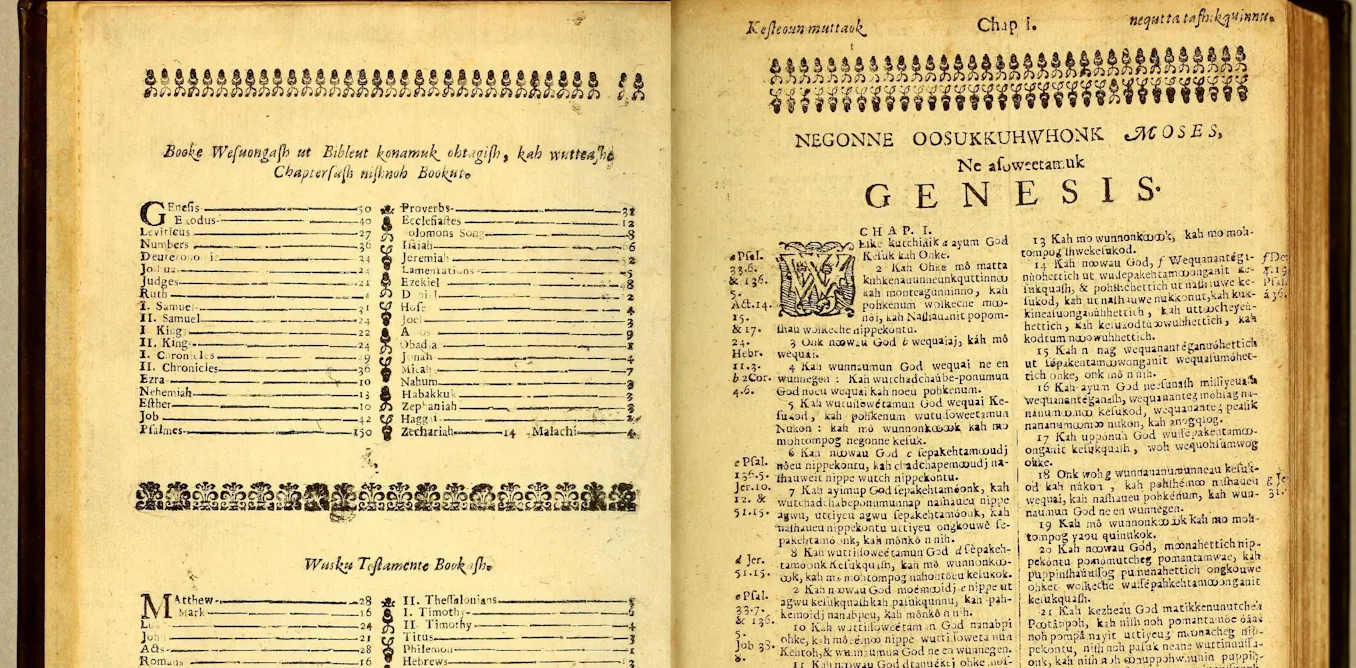
Eliot worked with missionary societies to establish towns where Native Americans would abandon traditional practices and live like colonists.
Metacom’s War
In 1675, tensions erupted into Metacom’s War, a two-year conflict that killed many Native converts in New England.
Aftermath of War
Colonial authorities rounded up Native converts, transported them to Boston harbor, and sold many into slavery.
Legacy of the Bible
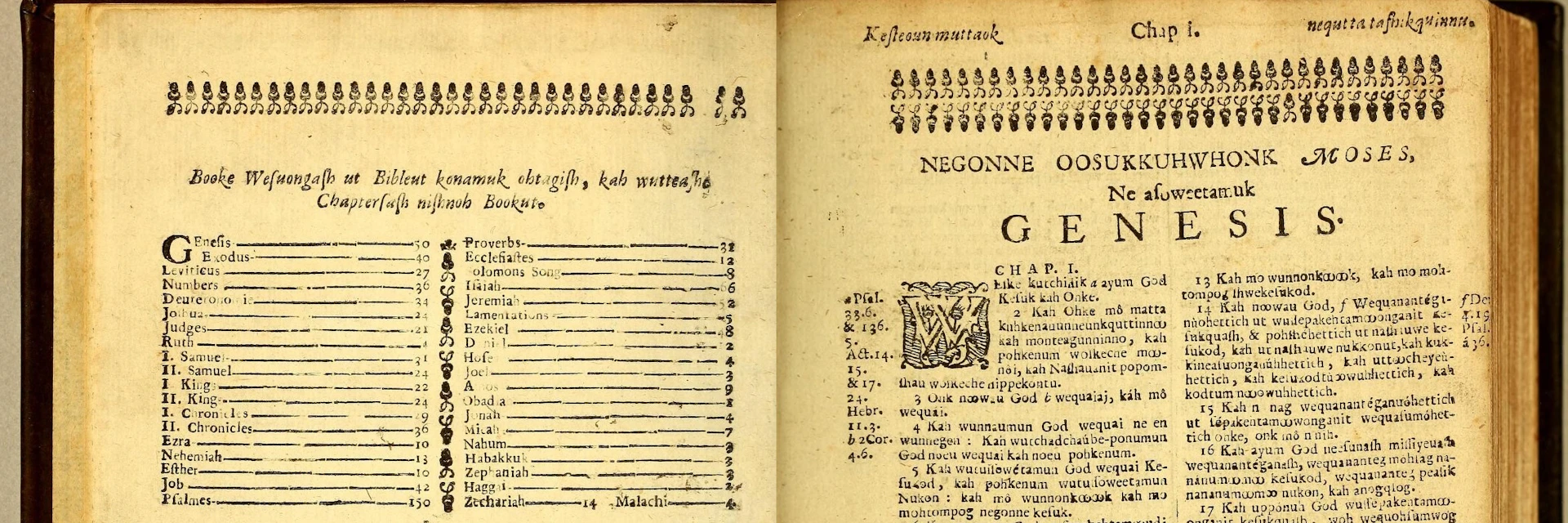
The Bible’s translation aimed to convert Native Americans but ultimately failed to eliminate Algonquian cultures.
What matters most
John Eliot’s 1663 Wampanoag Bible sought to convert Native Americans through literacy and Protestant Christianity.
Read the TL;DR — this story on one card.