From The Conversation · Peter Dziedzic · · 2m
TL;DR: Rumi's Islamic roots stripped from translations
Popular Rumi translations omit Islamic context, turning spiritual poetry into generic advice.
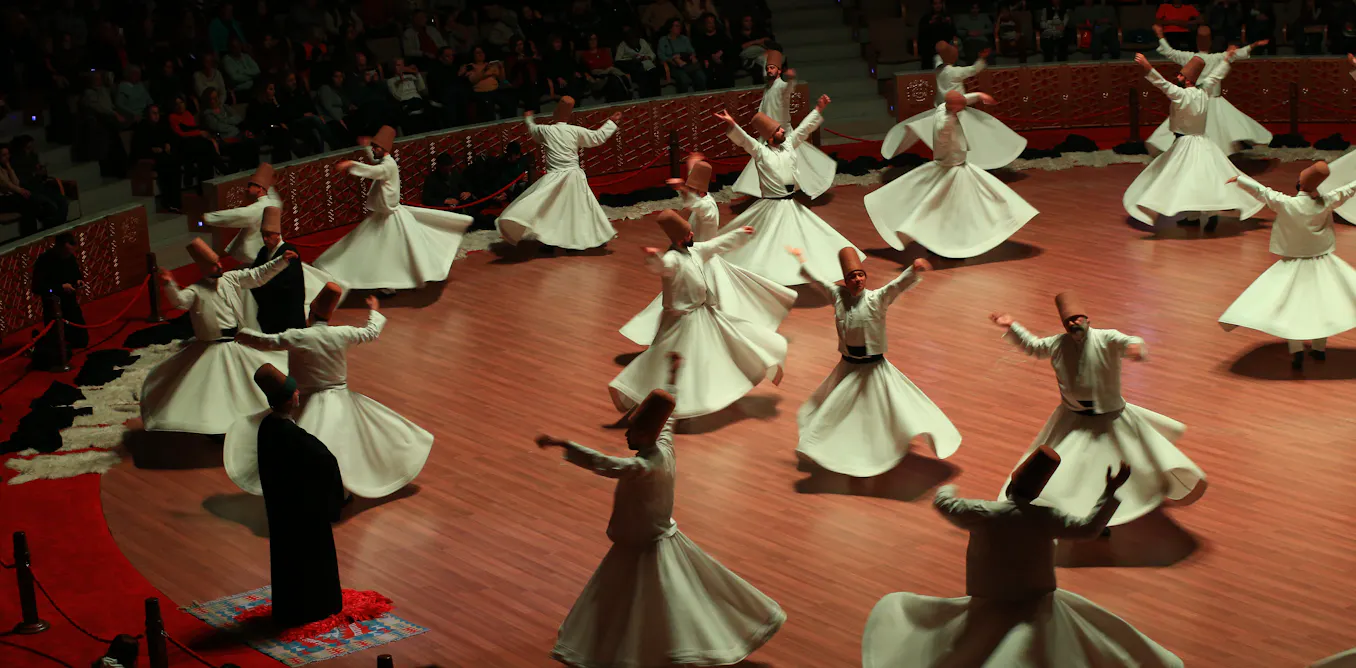
American translations of Rumi's poetry strip its Islamic roots, reducing spiritual depth to universal advice. Popular Rumi translations omit Islamic context, turning spiritual poetry into generic advice. Every December, thousands gather in Konya, Turkey to mark the death of 13th-century poet Jalal al-Din Rumi. Following Rumi’s death in 1273, his disciples formed the Mevlevi order, known as whirling dervishes in the West.
- Rumi's death anniversary
- Mevlevi order origins
- Sema ceremony
- Rumi's American presence
Read the story version — the same reporting as a swipeable deck of 14 cards.