From The New Yorker · Robin Wright · · 4m
Iran's impossible choice: deal or defiance
As war with the U.S. devastates its economy, Iran proposes peace but faces rejection and internal pressure.
In brief
As war with the U.S. devastates its economy, Iran proposes peace but faces rejection and internal pressure. Iran is economically crippled by war but trapped between diplomatic overtures that Trump rejects and hard-liners who see negotiation as weakness. Originally reported by The New Yorker.
Iran's president arrives exhausted

Mahmoud Pezeshkian traveled to New York this week looking drained after seven months of war with the U.S. and Israel. He's been running his government from underground to avoid assassination.
A historic visit amid conflict
This is the first time a U.S. president at war with America has been allowed to visit. The U.S. Secret Service and NYPD protected Pezeshkian alongside his Revolutionary Guards security detail.
Iran proposes seven-day peace deal
Iran offered to lift the blockade on its ships and open the Strait of Hormuz to international shipping if the U.S. lifts sanctions. The deal would also include a ceasefire in Lebanon and release twelve billion dollars in frozen assets.
Envoys call talks encouraging

U.S. envoys Steve Witkoff and Jared Kushner met with Iranian officials for three hours of indirect talks mediated by Qatar. Witkoff called the meetings constructive and successful.
“encouraging, constructive and successful”
Trump threatens annihilation
On the same day, Trump said from the U.N. floor that he might "annihilate the Islamic Republic" if Iran doesn't agree to dismantle its nuclear program entirely. He later rejected Iran's proposal.
“annihilate the Islamic Republic, and do it quickly”
Iran's strategic gambit
Experts say Iran engineered a win-win scenario: if Trump accepts, Iran gets favorable terms; if he rejects, Iran can blame Washington for blocking diplomacy.
Pezeshkian refuses to yield
At the U.N., Pezeshkian angrily displayed photos of Supreme Leader Khamenei and victims of U.S. strikes on a school and sports hall that killed over 170 people, mostly children.
U.N. investigates potential war crimes
The U.N. reported this month that attacks on the school and sports hall, along with the assassination of Khamenei, could be considered war crimes under international law.
Iran's economy is collapsing
Iran's economy has shrunk ten percent since the war began. Oil exports fell eighty percent. The rial plummeted from six hundred thousand to the dollar to 2.3 million. Inflation hit eighty-five percent.
Electricity cuts and airline sanctions
Electricity cuts are now common across Iran. New U.S. sanctions on all major Iranian airlines just took effect, further strangling the economy.
Iran's only leverage: the strait
With oil reserves no longer a bargaining chip, Iran's main leverage is controlling the Strait of Hormuz, through which roughly twenty percent of global energy transits.
Pezeshkian's bare-bones visit
Forced to cut costs, Pezeshkian stayed at the Iranian Ambassador's town house instead of a luxury hotel. Meetings were held in a small conference room with no ballroom or elaborate arrangements.
Two sides learned opposite lessons
Iran believes it should front-load concessions like economic relief before reopening the strait. Trump's team believes Iran should be economically strangled first to force concessions on nuclear disarmament.
The war costs both sides dearly
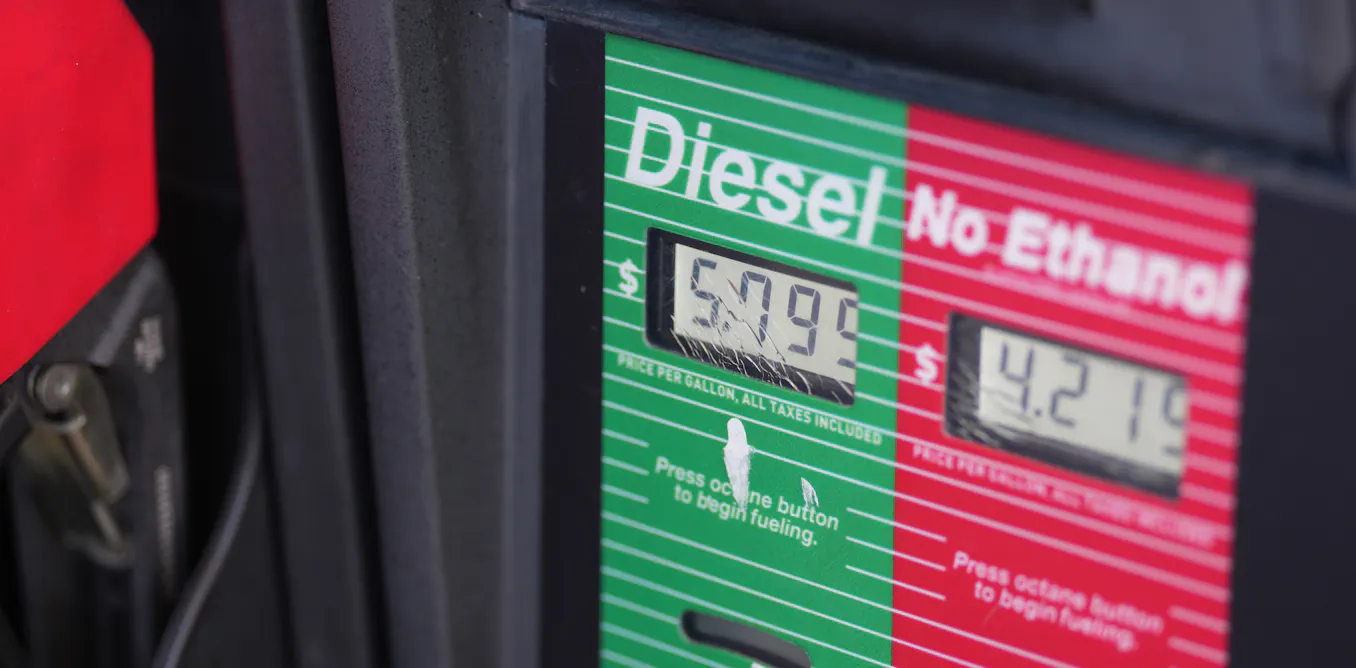
The Pentagon reported the war has cost forty-four billion dollars so far. Outside estimates exceed one hundred billion. Gas prices average four dollars fifty a gallon; diesel costs six dollars fifty.
U.S. bases no longer viable
Former C.I.A. director David Petraeus said some critical U.S. bases in the Middle East are no longer viable because Iran has effectively targeted them, including Al Udeid Air Base in Qatar.
Iran's hard-liners oppose diplomacy
Conservative media outlets warn that Pezeshkian's trip signals weakness. Kayhan newspaper said New York is not a place for negotiations, and the Revolutionary Guards-linked Fars News Agency said he shouldn't have gone.
“New York is not a place for smiles and negotiations”
Iranian presidency is dangerous
Since the 1979 Revolution, every Iranian president has faced dark fates: impeachment, political isolation, travel bans, house arrest, or silencing from public speech.
Netanyahu vows to continue fighting
Israeli Prime Minister Benjamin Netanyahu, facing reelection next month, vowed to continue military operations in Lebanon until Hezbollah is disarmed. He called the wars a "battle against the barbarians."
“battle against the barbarians”
Republican opposition to the war
Senator John Kennedy called Iran's leaders "reptiles" and compared Iran, China, Russia, and North Korea to "the same hooker in different dresses." Trump faces growing opposition within his own party.
“the same hooker in different dresses”
Nuclear deal would take years
The Obama administration needed over two years to negotiate the 2015 nuclear accord with six major powers. Genuine progress on Iran's nuclear program will likely drag out far longer.
Here's the gist
Iran is economically crippled by war but trapped between diplomatic overtures that Trump rejects and hard-liners who see negotiation as weakness.