From The New Yorker · Jon Lee Anderson · · 3m
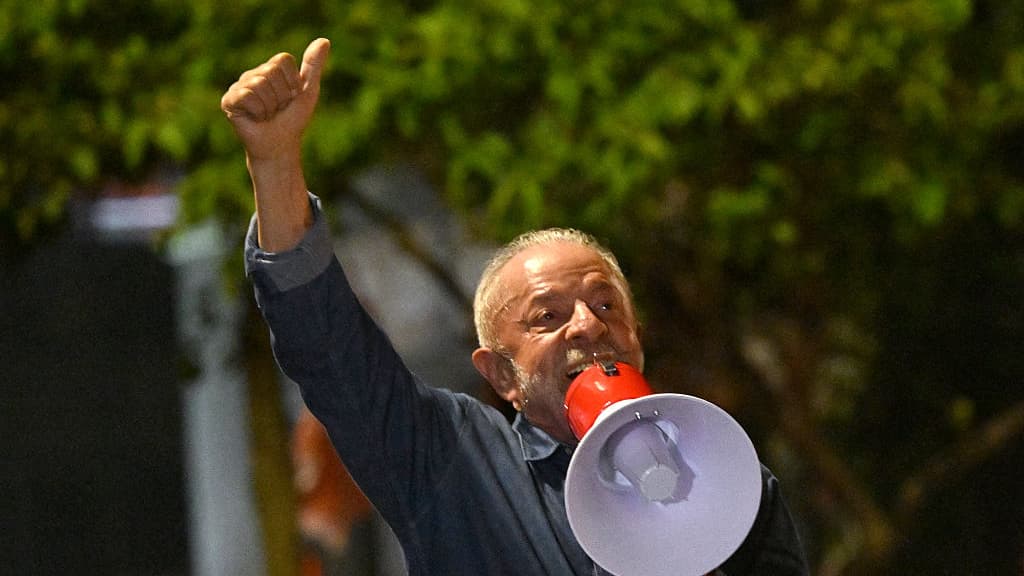
Lula's victory signals a shift against the global far right
Brazil's president-elect defeats a far-right candidate by millions of votes, bucking a trend of strongmen across Latin America and the world.
In brief
Brazil's president-elect defeats a far-right candidate by millions of votes, bucking a trend of strongmen across Latin America and the world. Luiz Inácio Lula da Silva won Brazil's presidential election, defeating far-right candidate Flávio Bolsonaro by more than four million votes, reversing a global trend of…
Lula wins by millions

President Luiz Inácio Lula da Silva won Brazil's presidential election, beating far-right candidate Flávio Bolsonaro by more than four million votes.
Bolsonaro's confused response
Flávio Bolsonaro rejected the results, then seemed to accept them. He made a social-media statement describing himself as Brazil's legitimate president, then deleted it, then restored an edited version.
Institutions acknowledge Lula
All of Brazil's major institutions and political parties have acknowledged that Lula won. Most nations in the hemisphere have also recognized his victory, with the exception of Argentina, run by MAGA-friendly President Javier Milei.
Trump hedges his bets

Donald Trump suggested the election could have been rigged, but also declared, I like Lula. Perhaps he was cautious because Brazil is the biggest economy in Latin America, or fears a knock-on effect.
“I like Lula”
A pattern of far-right gains
In 2016, Brits voted to leave the European Union, revved up by a nativist web campaign.
Trump's 2016 victory
About a month after Colombia's vote, Trump reached the White House with a campaign that relied heavily on nativism, racism, and misogyny, as well as blatantly false accusations against his opponent.
Bolsonaro follows Trump's path
In two thousand eighteen, right-wing former Army captain Jair Bolsonaro, Flávio's father, was elected President of Brazil. His campaign played on fears of gender ideology, inundating voters with WhatsApp messages claiming his opponent promoted pedophilia.
Ideological soulmates in office
Bolsonaro and Trump espoused anti-environment, pro-development views and fanned hatred of Black people, women, and trans people.Both were extraordinarily cavalier with COVID-nineteen.The U.S.
Bolsonaro's coup attempt
After losing reëlection to Lula in two thousand twenty-two, Bolsonaro flew to Florida and conspired with allies to plot a coup.
Bolsonaro convicted, Flávio runs
Bolsonaro was convicted of conspiracy and sentenced to twenty-seven years in prison, later remanded to house arrest.Unable to run this year, his son Flávio, a lawyer and legislator in his forties, became the far-right candidate.
Janones's digital army
In a three-week social-media campaign, tech-savvy politician André Janones enlisted millions of Brazilians to serve in Lula's Army.
Meta's algorithm interference
Brazil's electoral court imposed an injunction on Meta after Lula's campaign provided evidence the company had doctored algorithms to favor Bolsonaro in search results.Meta denied this but acknowledged technical issues and promised to fix them.
Flávio flees to Florida
After losing, Flávio surreptitiously crossed into Argentina, boarded a private jet, and fled to Florida ahead of Brazilian police investigating money laundering. He had covert assistance from the Milei government and the Trump Administration.
Brazil's inclusive future
Erika Hilton, a thirty-three-year-old Black trans woman and former sex worker, became the most-voted-for female congressional candidate in Brazil's history.
The big picture
Luiz Inácio Lula da Silva won Brazil's presidential election, defeating far-right candidate Flávio Bolsonaro by more than four million votes, reversing a global trend of far-right electoral gains.