From TradingView · · 2m
Intel stock quadrupled, then fell 29% from its peak
After a 310% gain in a year, Intel faces questions about how much further it could drop in a market shock.
In brief
After a 310% gain in a year, Intel faces questions about how much further it could drop in a market shock. Intel historically falls twice as hard as the S&P 500 during market shocks, and its recent strength doesn't change that pattern. Originally reported by TradingView.
Intel quadrupled, then dropped 29%
Intel stock returned 310.5% over the past year but now trades about 29% below its 52-week high near $100. The question is how much more could fall in a market shock.
Recent drop doesn't tell full story
Intel fell 5.6% on September 10, but was still up 11.4% over the past week. The company hasn't provided a specific reason for the wider slide from its high.
Intel raised $20 billion in August

The company sold new stock at $95 a share for general corporate purposes and growth opportunities. The offering price is below where the stock currently trades.
Massive spending plans ahead
Intel plans more than $20 billion in capital spending for 2026, with 2027 expected to be significantly higher. Management says server CPU demand far outpaces supply.
The business is actually improving
Revenue is up 7.5% to $57.03 billion, compared to a three-year average of just 1.9% growth. Operating margin of 7.6% is the best in three years.
“The operating margin over the same twelve-month period is 7.6%, which is Intel's best in three years.”
Intel falls harder than the market
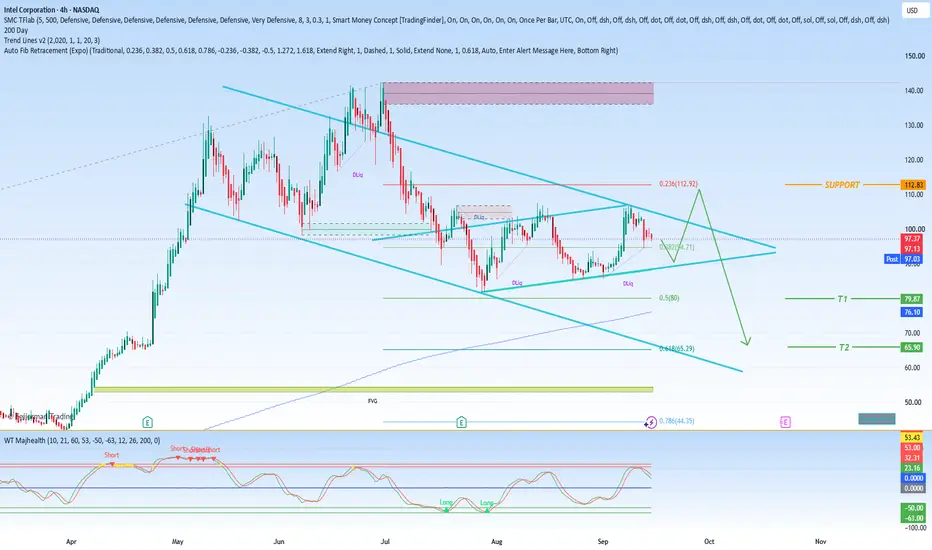
During the 2022 inflation shock, Intel dropped 52% while the S&P 500 fell 24%. Intel's decline was more than twice as deep as the index.
Recovery takes a long time
Intel has needed a median of five months to regain its pre-shock high. The slowest recovery after 2022 took about 39 months.
Better fundamentals won't prevent drops
Faster growth and improved margins can support a recovery but don't erase Intel's historical tendency to drop harder than the broader market during shocks.
History suggests larger downside risk
There's no fundamental reason yet to expect Intel would fall less than it has in past shocks. Growth may help the rebound, but it doesn't remove the risk.
“The key takeaway is not that Intel will fall by a specific percentage. It is that the stock's own history shows a larger downside in market shocks.”
The takeaway
Intel historically falls twice as hard as the S&P 500 during market shocks, and its recent strength doesn't change that pattern.