From WIRED · Paulina Rowińska · · 1m 50s
Mathematicians Solve 20-Year Graph Sandwich Problem
Three mathematicians prove a 20-year-old graph sandwich conjecture, enabling faster analysis of network structures.
In brief
Three mathematicians prove a 20-year-old graph sandwich conjecture, enabling faster analysis of network structures. Mathematicians resolved a 20-year graph sandwich conjecture by creating a recipe that simultaneously builds regular and binomial graphs, allowing properties of one to transfer to the other. Originally…
Graph Sandwich Conjecture

In 2004, two mathematicians hypothesized a powerful kind of sandwich to understand graph properties.
“The notion is so beautiful”
Graph Sandwich Concept
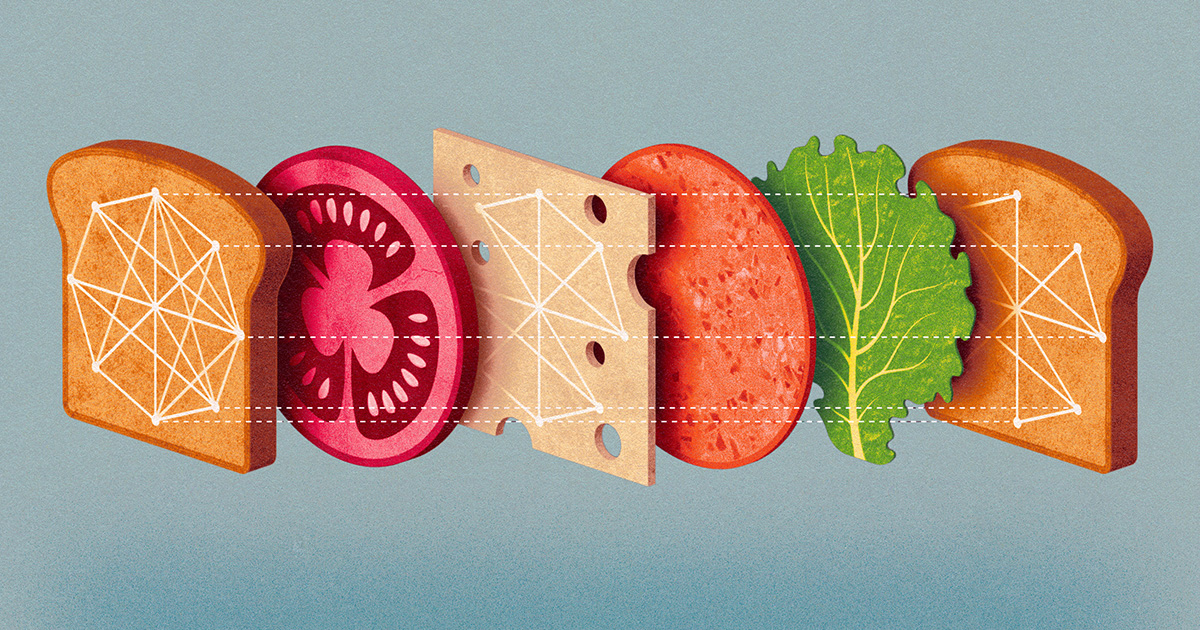
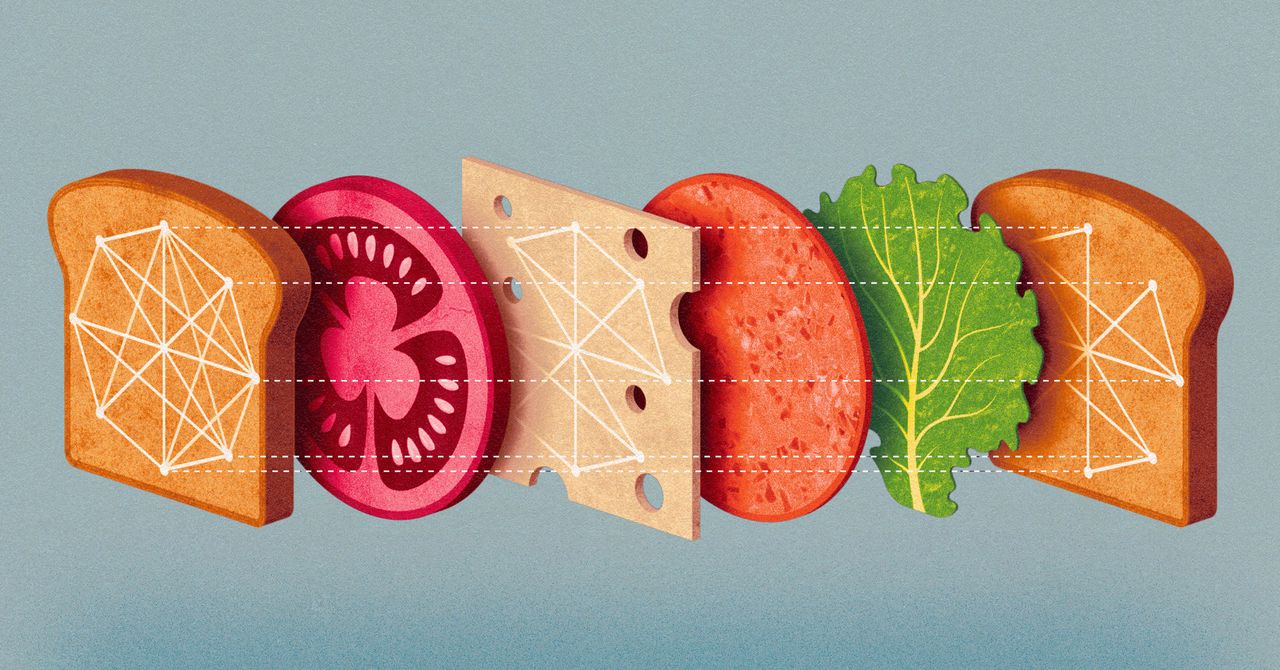
They sandwiched a complex graph between two simpler graphs to prove shared properties.
Random Graph Models
Edgar Gilbert created a random graph model for telephone networks at Bell Labs in the late 1950s.
Regular Graph Challenge

Regular graphs are harder to analyze than random binomial graphs despite better real-world modeling.
Kim and Vu's Sandwich
Jeong Han Kim and Van Ha Vu created a recipe to build both graphs simultaneously in the early 2000s.
Sandwich Requirements
The sandwich needs a regular graph containing a binomial graph and a binomial graph containing the regular graph.
2023 Proof Breakthrough
In 2023, three mathematicians developed a recipe to build the sandwich layer by layer.
Recipe Mechanics
They start with two vertex sets, build binomial graph with weighted coin flips, then add edges to regular graph.
Reverse Process
They reversed the process to build the upper sandwich layer by removing edges from complete graphs.
Proof Impact
The proof allows mathematicians to transfer properties between regular and binomial graphs without re-proving.
Consequence
Mathematicians can now rewrite scores of results about regular graphs in a single streamlined proof.
What to remember
Mathematicians resolved a 20-year graph sandwich conjecture by creating a recipe that simultaneously builds regular and binomial graphs, allowing properties of one to transfer to the other.
Read the TL;DR — this story on one card.