From WIRED · Karl Mathiesen · · 4m
War game shows solar geoengineering could spark global arms race
A simulation of international talks on sun-dimming technology revealed how distrust, national interest and fossil fuel influence could derail any global agreement.
In brief
A simulation of international talks on sun-dimming technology revealed how distrust, national interest and fossil fuel influence could derail any global agreement. A UN-style war game in London showed that geopolitical competition and fossil fuel interests could prevent international agreement on governing solar…
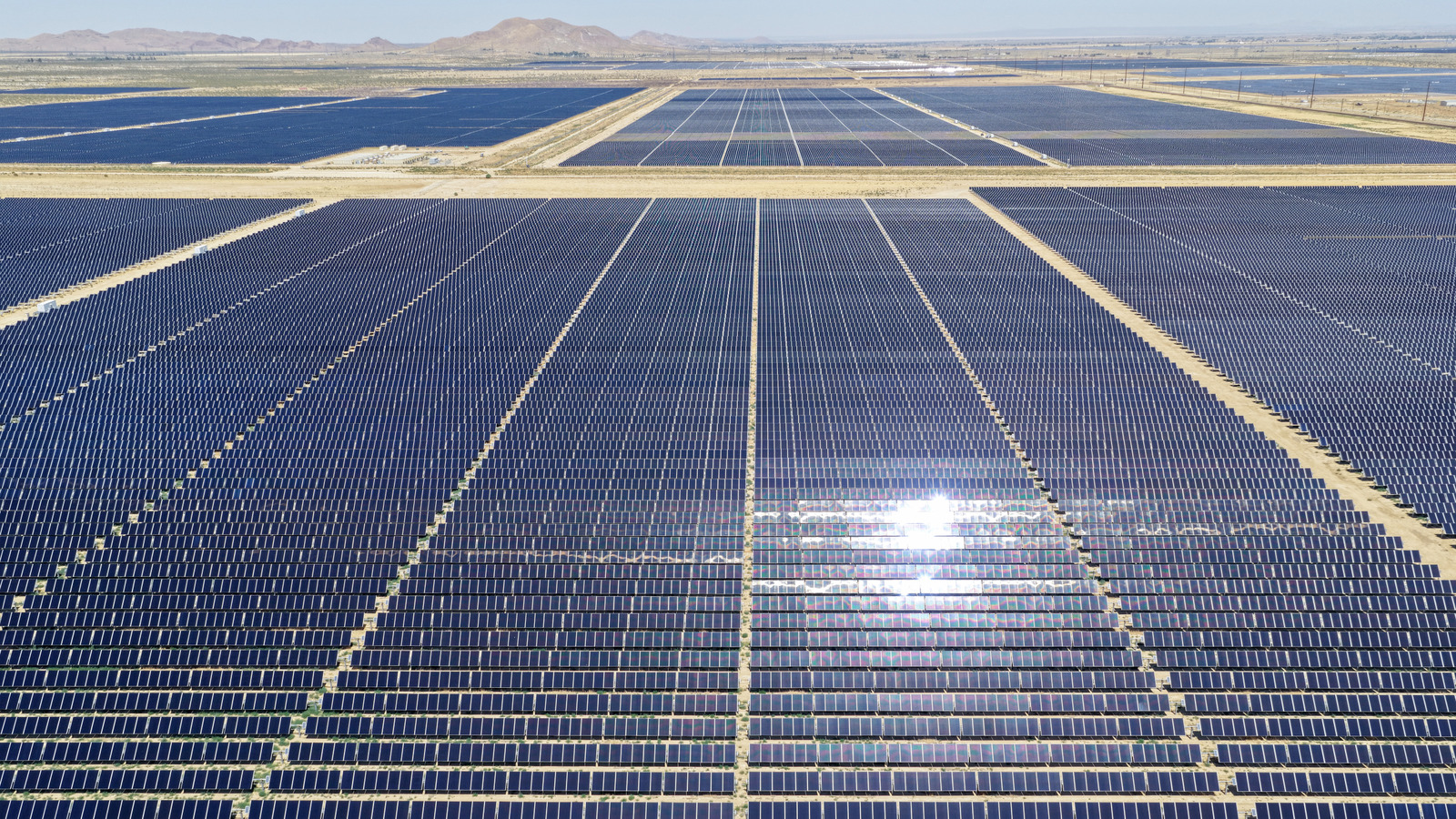
A technology that could cool the planet
Solar radiation modification uses particles sprayed into the atmosphere to reflect sunlight and reverse global warming, mimicking volcanic eruptions that cool the planet by half a degree or more.
But the risks are vast and unequal
Models predict drying in sub-Saharan Africa and more intense tropical storms in the Atlantic. The cooling effect lasts only as long as the technology continues; after that, global temperature could shoot back up unpredictably.
Private companies are moving fast

Last year, US-Israeli startup Stardust Solutions raised sixty million dollars. In May it released details of inventions it claims would let humans dial down global temperature as desired.
Elon Musk backs the technology
In August, Elon Musk, whose company SpaceX might deliver geoengineering interventions, wrote on X: space satellites to control temperature and massive geo-engineering will be needed or it will be game over.
“Space satellites to control temperature and massive geo-engineering will be needed or it will be game over.”
Decisions needed sooner than expected
Cynthia Scharf, a former UN advisor, told WIRED the world must decide how to govern this technology much sooner than most policymakers imagine. It's in the next decade, easily, not fifteen years from now.
“It's not 15 years from now; it's in the next decade, easily.”
A war game in London tests global response
In September, Danielle Young, an assistant professor in international relations at Leeds University, arranged a simulation at Queen Mary University of London. A couple dozen foreign-relations experts, scientists, military personnel and former government officials participated.
The game's setting and timeline
The simulation was titled Exploring Geopolitical Tipping Points and Climate Cooling Strategies. It unfolded over simulated meetings at three points in time: the present, September twenty twenty-seven, and September twenty twenty-eight.
Distrust dominates from the start
In the first session, the US and China both said they could not sign a deal that constrained their research or favored their rival.
“worse than no deal at all is any deal that favors China.”
Suspicion spirals into accusations
The Russian team received an intelligence report of a US research plane near the Bering Strait.The US accused Russia of disinformation.Meanwhile, the US became convinced China was conducting research.
The talks collapse in mutual suspicion
The US demanded an international investigation. Finger-pointing continued and countries abandoned the talks. The Canadian representative called it a humiliating defeat. But the Chinese were not actually conducting experiments in the game.
“humiliating defeat.”
A victory built on false intelligence
Nielsen was pumped at the end of the session, calling it a humungous victory for the Americans.But Danielle Young, the researcher who designed the scenario, revealed the Chinese were not conducting experiments.
The risk of an arms race
Nielsen said the first session reflected the likelihood of a geoengineering arms race. Neither the US nor China would lightly cede control over the global thermostat. Distrust and poor communication are a significant risk.
Science gets sidelined by politics
Dr.Colleen Golja was assigned to provide technical advice but was largely ignored as political posturing dominated.She was frustrated by how little anyone cared about the science.
“I was just so surprised about how little anyone actually cared about the science.”
Climate disasters barely register
In later sessions, organizers tried to nudge talks back toward climate realities.Participants received frequent notifications of climate disasters.These barely registered.
Fossil fuel interests sabotage scientific voice
During the last day, an NGO called the Climate Futures Cooperative offered Golja money to fund a monitoring network.But it was actually backed by the fossil fuel industry.
No agreement reached despite multiple proposals
At no point did the countries in the game agree to a deal, despite multiple proposals.
Strategic competition, not climate concerns
In their final report, the researchers running the simulation concluded that strategic competition and state sovereignty drove the simulations, not climate concerns. The work was sponsored by the UK government-funded Advanced Research and Invention Agency.
“strategic competition and state sovereignty drove the simulations, not climate concerns.”
Real-world echoes of the simulation
In March, two papers from conservative US think tanks urged the Trump administration to take the lead on solar radiation modification and counter China's threat.One invoked a new term: weather sovereignty.
Golja abandons global science for local action
After the simulation, Golja reevaluated her path.She plans to return to her small coastal town in Connecticut to help local climate groups build seawalls and coastal erosion buffers.
“To try and make a difference where it feels like I actually have traction.”
The big picture
A UN-style war game in London showed that geopolitical competition and fossil fuel interests could prevent international agreement on governing solar geoengineering, a technology that could cool the planet but carries vast unknown risks.