
From Phys · · 2 min
How Trees Use 'Muscles' to Fix Their Posture
Scientists discover that trees use specialized tension wood like antagonistic muscles to actively realign bent stems.
In brief
Scientists discover that trees use specialized tension wood like antagonistic muscles to actively realign bent stems. Trees possess proprioception, an internal sense of their own shape, allowing them to activate muscle-like wood on either side of a stem to correct posture. Originally reported by Phys.
Trees fix their own posture
When young trees get bent or tilted, they don't just stay crooked. They actively detect stem curvature and pull themselves back into alignment over a few weeks.
Plants have an internal sense
Animals rely on proprioception to know where their body parts are in space. In 2012, researchers discovered that plants also possess this internal sense of self-shape.
The mystery of posture control
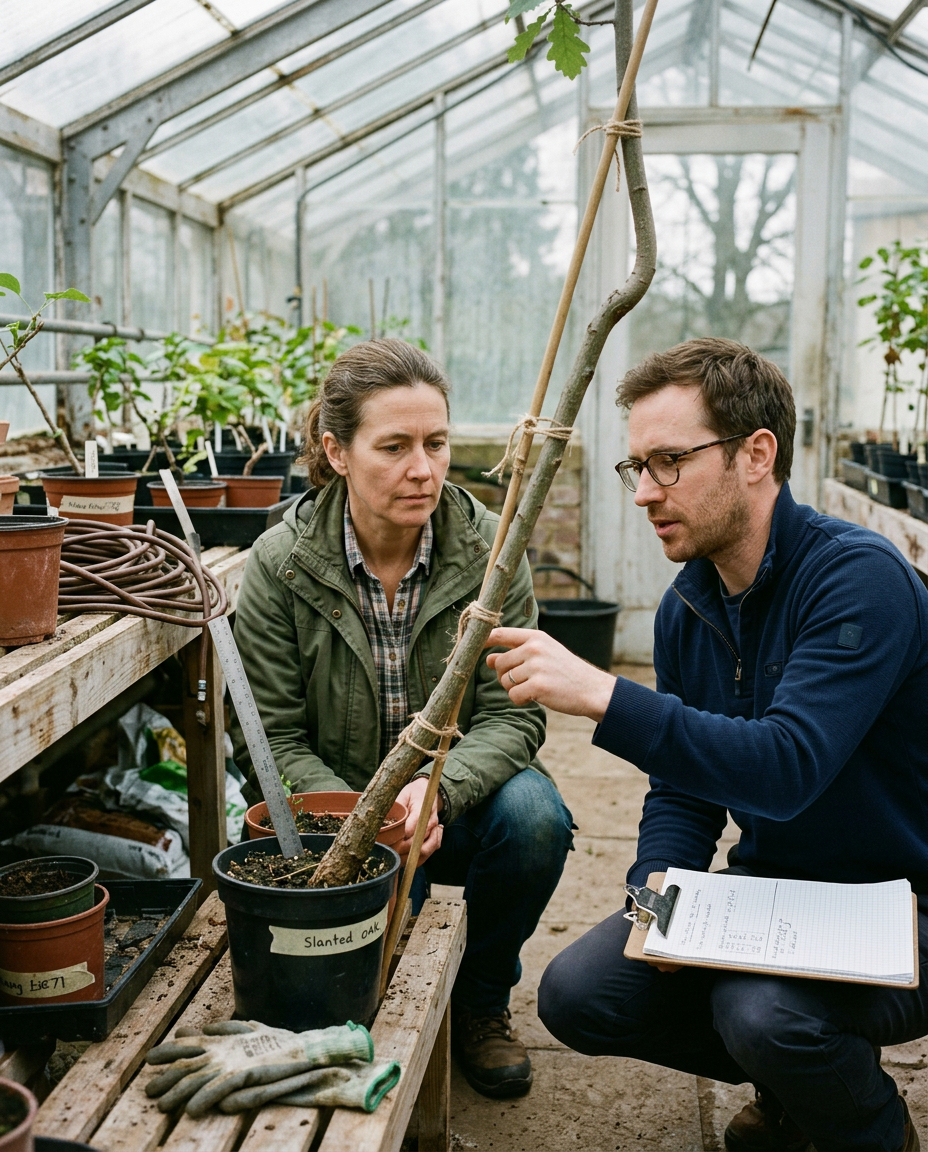
While scientists knew plants could sense their shape to stay upright, the exact biological mechanism governing this internal self-awareness remained unknown for years.
Meet tree tension wood
Trees produce a specialized tissue called tension wood. This wood contracts like a biological muscle, exerting strong pulling forces across the stem.
Isolating the self-sensing mechanism
To figure out how proprioception works alone, scientists had to isolate it from external cues like gravity and incoming sunlight.
The ultimate sensory isolation chamber
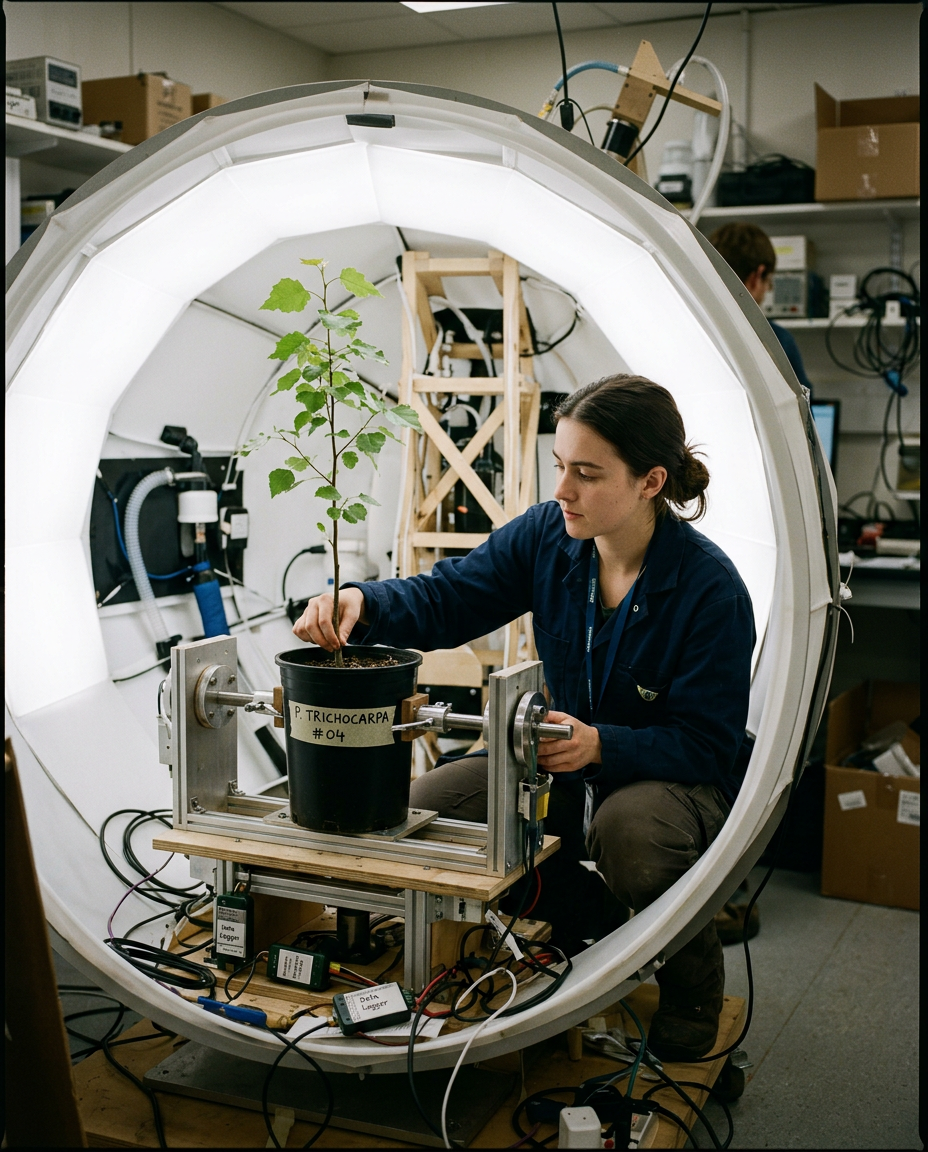
Researchers placed young poplars inside a rotating horizontal platform enclosed in a sphere lit uniformly from all directions, eliminating gravity and light direction cues.
Step one of the experiment
First, young poplar trees were laid horizontally under normal conditions. Over ten days, the stems curved upward toward vertical posture.
How the initial bend formed
Tension wood grew along the top side of the stem. As it contracted, it pulled the stem upward into a pronounced curve.
Entering sensory deprivation
Once curved, the bent trees were placed into the isolated rotating device, where they could no longer sense gravity or light direction.
An unexpected realignment
Over the next few weeks inside the device, the bent stems gradually straightened back out into perfectly direct lines.
A surprise on the opposite side
Anatomical checks revealed that tension wood stopped forming on top and began growing on the opposite side of the stem.
Working like antagonistic muscles
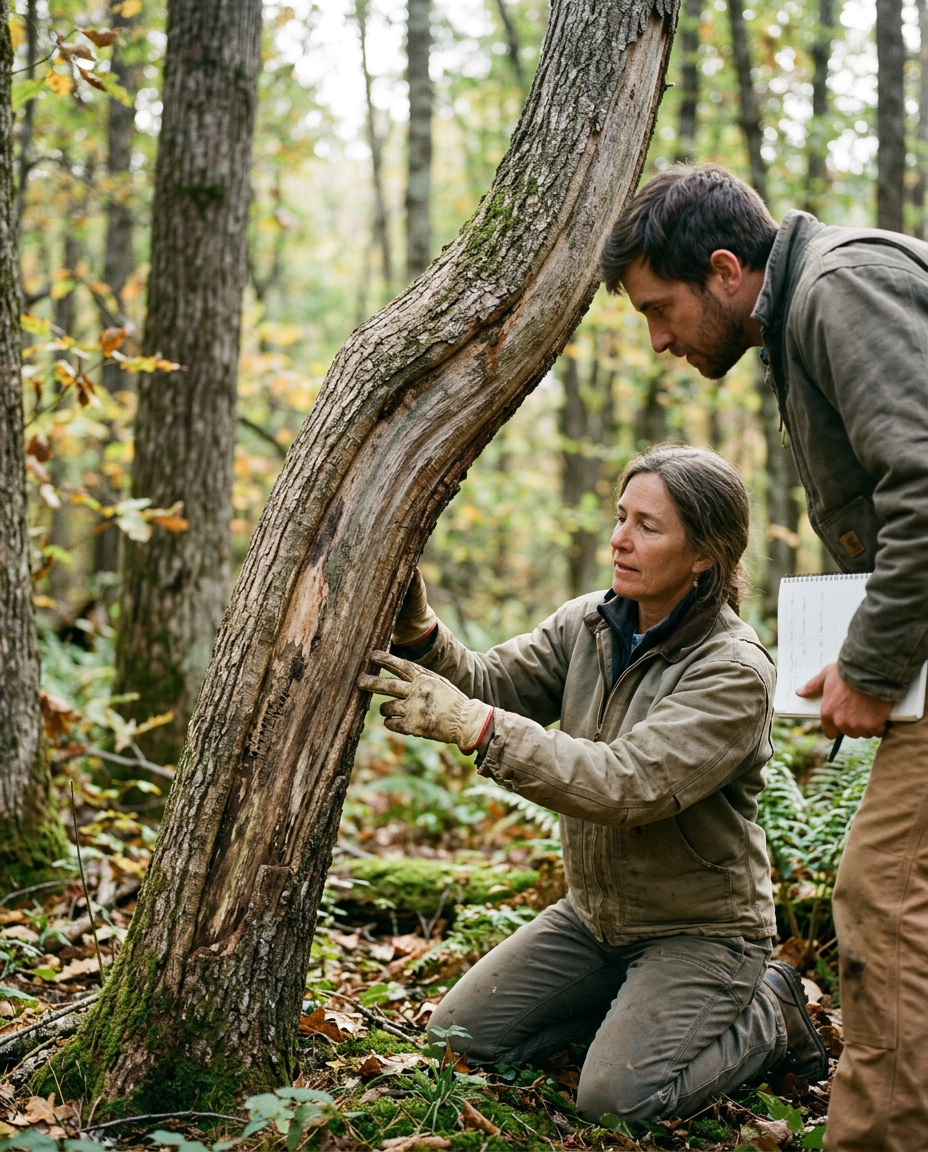
This opposite layer of tension wood pulled in reverse, acting like an opposing muscle to undo the curve and restore straightness.
“It appears to function as an antagonistic muscle, generating a pulling force in the opposite direction.”
A complete sensorimotor loop
The study proves plants integrate environmental inputs with self-shape sensing, creating a biological feedback loop to control posture.
“What we have uncovered is a genuine sensorimotor loop operating in the woody parts of trees!”
Surviving extreme weather events
This active self-correction helps forests survive severe disturbances like heavy storms, mudslides, and landslides.
Preventing fallen agricultural crops

Understanding plant proprioception could help breeders select crop varieties that resist lodging, where heavy winds flatten crop fields before harvest.
Producing higher quality timber
Uncontrolled tension wood creates high internal stress that warps harvested lumber. Managing this process will help grow straighter, higher-quality wood.
“Poor coordination in the successive activation of tension wood results in excessive internal tension, which can affect wood quality.”
What to remember
Trees possess proprioception, an internal sense of their own shape, allowing them to activate muscle-like wood on either side of a stem to correct posture.