From The Verge · Andrew J. Hawkins · · 1 min
Inside Tesla’s Muted Cybercab Launch
Tesla finally rolled out its long-promised Cybercab, but secretive events and stark limitations show how far it lags behind rivals.
In brief
Tesla finally rolled out its long-promised Cybercab, but secretive events and stark limitations show how far it lags behind rivals. Tesla is betting its trillion-dollar valuation on camera-only robotaxis, despite trailing competitors like Waymo in both fleet size and real-world deployment. Originally reported by The…
A secretive Cybercab debut
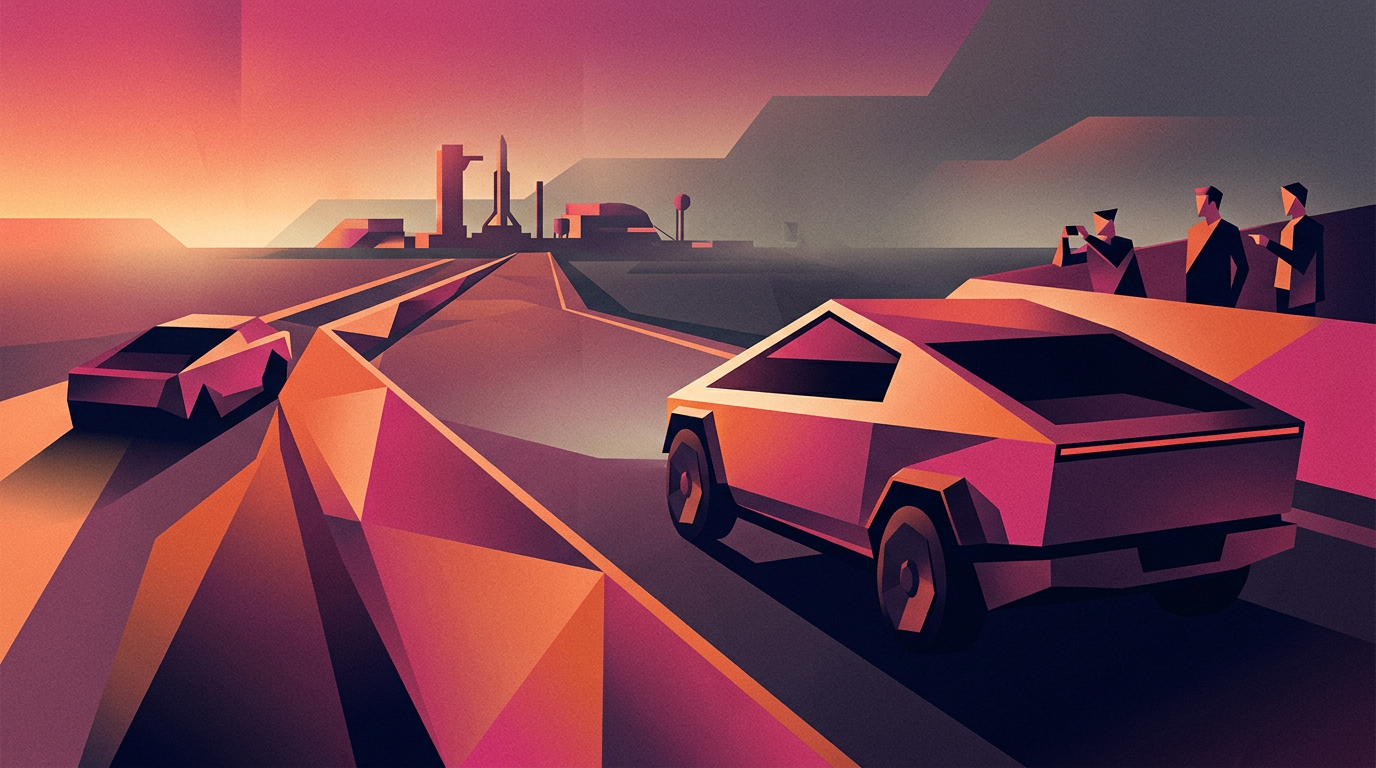
Tesla officially launched its Cybercab in Austin at a closed-door event with no livestream, no press, and non-disclosure agreements that frustrated creators.
“It was an unusually muted event, with no livestream, no journalists, and a very short invite list”
Strict rules and small fleets
Tesla registered 45 Cybercabs in Texas for testing and content, while launching a Robotaxi website that bans passengers under 13 years old.
“children under the age of 13 are currently banned from riding in the Cybercab.”
Far behind Waymo's scale
Tesla operates just 256 unsupervised autonomous vehicles across six cities, compared to Alphabet’s Waymo running around 4,000 vehicles in 14 cities.
“By comparison, Alphabet’s Waymo is currently operating approximately 4,000 vehicles across 14 cities.”
Missing prices and release dates
Two years after Elon Musk teased a $30,000 price tag for the Cybercab, Tesla has offered no official release date or purchasing timeline.
“the company still has yet say when the Cybercab would go on sale.”
Ditching steering wheels and lidar
The two-seater features gullwing doors and eight cameras, completely omitting steering wheels, pedals, radar, and lidar sensors used by rivals.
“The vehicle lacks traditional controls, like steering wheel, pedals, and mirrors — as well as sensors commonly found on other robotaxis, like radar and lidar.”
Tesla's lightest design yet
Built for maximum efficiency, the Cybercab weighs 3,113 pounds, about 700 pounds lighter than a Model 3, and features a compact 48kWh battery pack.
“The Cybercab is also the lightest, most range-efficient vehicle Tesla has ever produced.”
Years of missed deadlines
Musk previously claimed 50 percent of the US population would have access to Tesla robotaxis by late 2025, but service remains limited to Texas and Florida.
“He claimed that 50 percent of the US population would have access to Tesla’s robotaxis by the end of 2025.”
Broken promises and lawsuits
Tesla faces legal action after retracting a 2016 claim that every vehicle produced had the hardware required for full autonomy.
“Tesla is currently facing multiple lawsuits from customers and regulators claiming it has misled the public about its self-driving capabilities.”
Unsupervised driving remains delayed
Tesla's Full Self-Driving software remains a supervised Level 2 system, with unsupervised capability delayed until late 2026 at the earliest.
“During Tesla’s first quarter earnings call this year, Musk promised that 'unsupervised' FSD would be available to customer vehicles by the end of 2026”
A trillion-dollar AI gamble
As EV sales slow down, investors are relying on robotaxis and AI capabilities to justify Tesla’s $1.18 trillion market valuation.
“Analysts view robotaxis as one of the primary justifications for Tesla’s $1.18 trillion valuation, and the key that will unlock the company’s future.”
The takeaway
Tesla is betting its trillion-dollar valuation on camera-only robotaxis, despite trailing competitors like Waymo in both fleet size and real-world deployment.


