From 24/7 Wall St. · Trey Thoelcke · · 1m 30s
AI Buildout Collision: $1 Trillion Spending Meets Energy Wall
Hyperscalers commit $1 trillion to AI but face 3-year energy bottleneck.
In brief
Hyperscalers commit $1 trillion to AI but face 3-year energy bottleneck. AI infrastructure spending hits $1 trillion next year as power constraints and permitting delays threaten to halt deployment. Originally reported by 24/7 Wall St..
Hyperscalers Lock In Trillion-Dollar AI Spending
Hyperscalers have locked in a trillion dollars for AI infrastructure, but three separate warnings from finance, energy, and hardware insiders point to the same crisis forming just ahead of the spending wave.
Physics Wall: Energy Runs Out in Three Years
An AI hardware founder said the industry has roughly three years before compute demand outruns available power.
“We’re going to run out of energy pretty fast, in like three years or so is my estimate”
Permitting Wall: Public Opposition to Data Centers
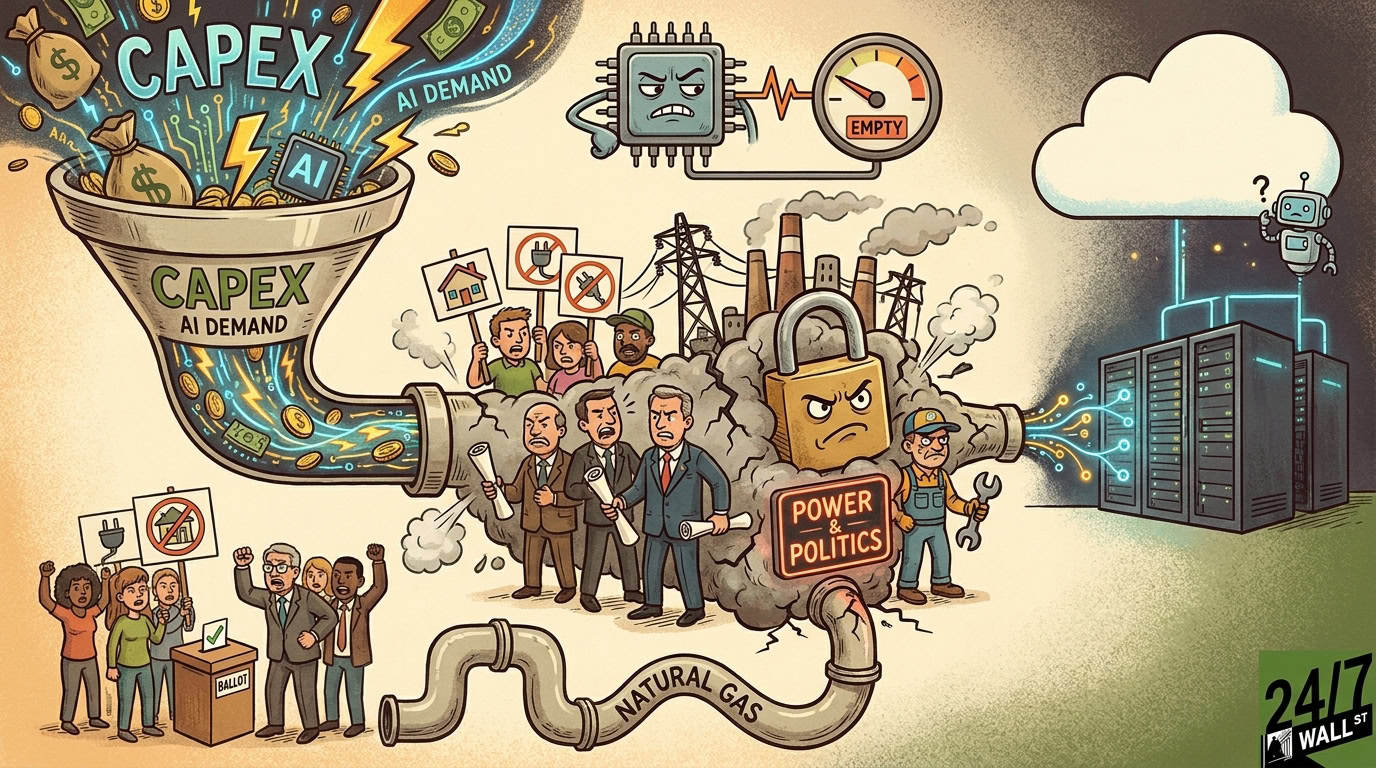
A U.S. natural gas producer executive said 80% of the public is unfavorable towards data centers and Americans’ energy bills are up over 40% even as the country produces more oil and natural gas than ever.
“80% of the public is unfavorable towards data centers”
Capex Locked In: $1 Trillion Next Year
The $1 trillion hyperscaler capex figure for next year matters precisely because it is not conditional. Land is optioned, accelerators are pre-ordered, power purchase agreements are signed, debt is placed.
Energy Bills Rise for Households
National regular gasoline is $4.16 a gallon, above the $4 threshold that shows up in every consumer sentiment survey. Residential electricity is next.
What to Watch Next
Three signals over the next two quarters will tell the story: PJM and ERCOT interconnection queues, local siting votes in Loudoun County, Virginia, and Dallas exurbs, and residential utility bill increases in census divisions flagged by the EIA.
The one thing
AI infrastructure spending hits $1 trillion next year as power constraints and permitting delays threaten to halt deployment.