From the Guardian · · 3m
Germany's firewall against the far right just cracked
The AfD took 44% in Saxony-Anhalt, and the chancellor who promised to stop them is the one on the ropes.
In brief
The AfD took 44% in Saxony-Anhalt, and the chancellor who promised to stop them is the one on the ropes. Shunning the far right stopped working, and no strategy has replaced it. Merz survives mainly because nobody else wants his job. Originally reported by the Guardian.
A 9.0 political earthquake
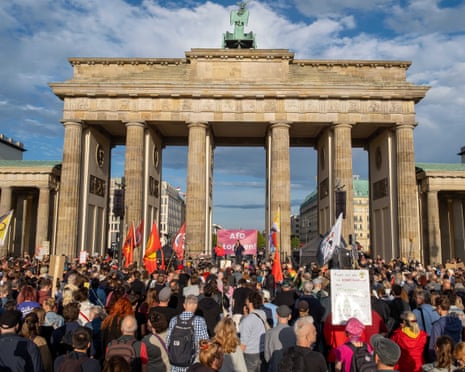
German commentators reached for disaster language after the far-right AfD won last weekend's vote in Saxony-Anhalt. Panic and helplessness spread through the political establishment.
“A cataclysm. A 9.0 earthquake. A five-alarm fire.”
Three seats from total power

The AfD took nearly 44% of the vote, falling three seats short of an absolute majority. Its lead candidate Ulrich Siegmund is hunting for partners to form a government.
The first since the Nazis
If Siegmund pulls it off, it would be the first rightwing extremist state government in Germany since the Nazi period. Nobody yet knows whether he can.
Democracy's last shot

Friedrich Merz's centre-right government was once billed as the final barrier to an extremist takeover. Now his own survival is in question, with two more state polls this month.
“This is the worst defeat for the CDU in years - decades”
Europe is watching
Whether Merz lasts until the 2029 general election matters beyond Germany. France, Spain, Italy and Poland all hold elections next year, facing the same anti-democratic pressure.
Wrong man, wrong moment
Critics call the 70-year-old former BlackRock executive ham-fisted, short on empathy and erratic in his messaging. Sixteen months in, he still cannot sell hard choices to voters.
Cuts nobody accepted
Merz is planning cuts to state pensions and healthcare. Political scientist Thomas Biebricher says he has failed to explain the sacrifices and win public acceptance for them.
“He is unable to explain the many reforms - and the sacrifices they entail”
Merkel's warning

His old CDU rival called the result a real turning point in the republic's history and said it broke her heart. Her advice: emotions now count more than facts.
“This is a turning point - a real turning point - in the history of the federal republic”
That's not how it feels
The CDU campaigned on falling joblessness and rising household wealth in the poor eastern state. Siegmund's answer: that may be so, but that's not how it feels.
“That may be so, but that's not how it feels.”
From euro protest to mass party

The AfD started in 2013 opposing bailouts, radicalised during the 2015-16 refugee influx, and has now pivoted to deindustrialisation, identity, affordability and crime to win far beyond the east.
The firewall that failed

Mainstream parties shunned the AfD to keep it in permanent opposition. That strategy is now widely seen as broken, letting the party snipe from the sidelines at slow change.
No magic bullet

Biebricher warns that swapping chancellors fixes nothing. Russia, crumbling infrastructure, an ageing welfare base, Chinese competition in carmaking and shaky supply chains all remain.
“None of that simply goes away the moment you have someone who communicates better.”
The poisoned chalice
Neither North Rhine-Westphalia's Hendrik Wust nor Bavaria's Markus Soder wants the job right now. The crisis is so deep it is keeping Merz in place.
“Merz has now reached a stage where the crisis - which he himself constantly exacerbates - is stabilising him”
Admit, forgive, get up

Berlin and Mecklenburg-Western Pomerania vote on 20 September with the AfD polling strongly. Merz says he is staying, quoting a letter that told him not to give in to despair.
“Admit mistakes, forgive, get back on your feet, shape the future.”
The key point
Shunning the far right stopped working, and no strategy has replaced it. Merz survives mainly because nobody else wants his job.





