From Engadget · James Trew · · 3m
HoverAir Versa review: two devices, real tradeoffs
A handheld gimbal camera that converts into a drone sounds perfect, but neither mode beats dedicated rivals.
In brief
A handheld gimbal camera that converts into a drone sounds perfect, but neither mode beats dedicated rivals. HoverAir's five hundred thirty-nine dollar Versa combines a gimbal camera and mini drone in one device, offering convenience for creators who want both, but each mode has real compromises versus dedicated…
Two devices in one
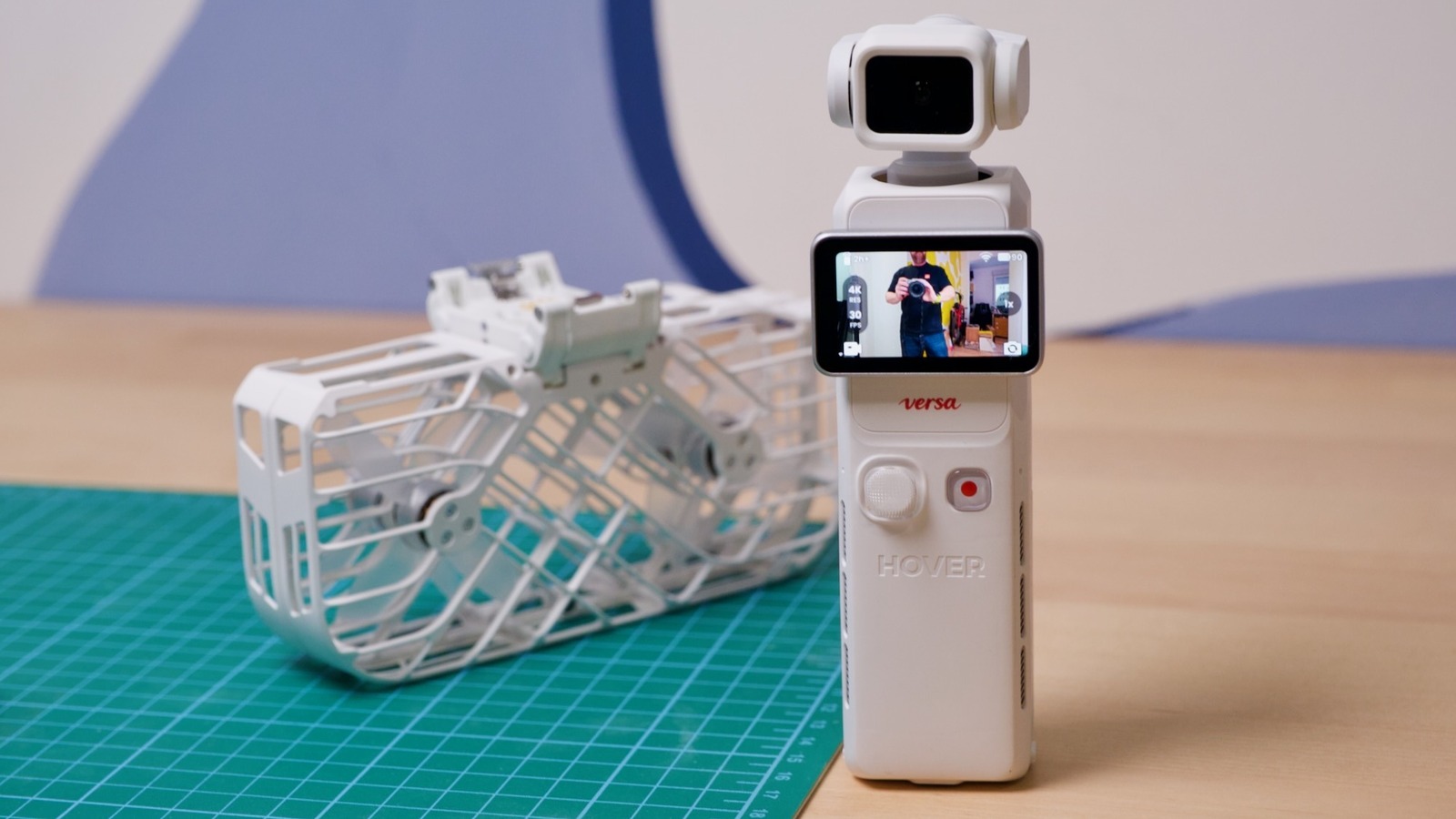
The HoverAir Versa is a handheld gimbal camera that snaps onto a magnetic accessory to become a mini drone. It costs five hundred thirty-nine dollars.
A new category
HoverAir's first handheld camera combines the portability of a gimbal with the ability to fly. The company launched its debut Passport selfie drone over ten years ago.
US availability unclear
An FCC take-backsie has left the Versa's US availability unclear. The drone feature faces the same legal tangles that cleared shelves of DJI products in the US.
Camera specs
The Versa shoots four K at sixty frames per second with a one slash one point three inch sensor.It has a three axis gimbal, two times zoom, and seventeen point five stops of dynamic range.
Handheld mode design
The Versa has a one point six four inch display and a nineteen millimetre equivalent lens with an f two point zero aperture. The design is boxy, likely for aerodynamics.
Color balance issues
The Versa's footage is sharp and gimbal-stabilised, but colour balance feels less natural than DJI and Insta360 rivals. Outdoors, sky blue is heavily saturated; indoors, white walls take a beige hue.
Drone mode conversion
Attaching the flight kit is simple. In drone mode, the Versa has swappable batteries, downward sensors for position hold, and palm takeoff and landing. There is zero obstacle avoidance.
Flight modes and tracking
The Versa flies via preset modes: hover, follow, orbit. It uses software to track your path from behind, but has no idea what is behind it when tracking from the front.
Creative drone features
The Versa includes vertical shooting mode, cinematic shots like Dolly zoom, AI framing, and a three D worlds option that creates a VR style three dimensional model you can export with three D emojis.
As a pocket camera
At five hundred thirty-nine dollars, the Versa competes with the Insta360 Luna Pro at six hundred dollars. The Luna Pro shoots eight K video, has a larger one inch sensor, and superior slow-mo modes.
As a mini drone
The cheapest Versa bundle costs six hundred forty-nine dollars. The DJI Neo two costs three hundred dollars on Amazon. HoverAir's X one Pro Max costs six hundred ninety-nine dollars.
Accessory ecosystem
The Versa launches with an ND filter kit, magnetic tripod accessory, and handheld controller. It supports external USB microphones and includes noise cancellation that eliminates propeller noise.
Storage limitation
The Versa has fifty five gigabytes of internal storage, expandable by SD card. One small issue: SD cards under sixty four gigabytes are not supported.
The verdict
If you want only a drone or only a camera, the Versa does not make a strong economic case.
“If you were considering buying something like a Pocket 4/Luna Pro and a small drone, then suddenly the economics and the compromises look a little more favorable.”
Who should buy it
The Versa appeals to creators and gadget-dads on vacation who want one device for both handheld and aerial shots. The flying upgrade is a genuine selling point, but real tradeoffs exist in both modes.
At a glance
HoverAir's five hundred thirty-nine dollar Versa combines a gimbal camera and mini drone in one device, offering convenience for creators who want both, but each mode has real compromises versus dedicated competitors.