From Foreign Affairs · Scott Singer · · 4m
China's robot bet could win the AI race
Beijing is building physical AI while Washington focuses on software, risking American technological dominance.
In brief
Beijing is building physical AI while Washington focuses on software, risking American technological dominance. China is prioritizing AI-powered robots as a path to economic and military advantage, while the US focuses on software and risks falling behind in the physical world. Originally reported by Foreign Affairs.
Chinese robot breaks speed record

The Chinese humanoid robot Tiangong Ultra ran one hundred metres in nine point three nine seconds in August, nearly two-tenths faster than Usain Bolt's world record.
Beijing's AI strategy differs from Washington
While Washington and Silicon Valley focus on scaling large language models, Beijing combines software and hardware to develop robots with advanced AI cognition and autonomous physical movement.
Robots could transform the economy
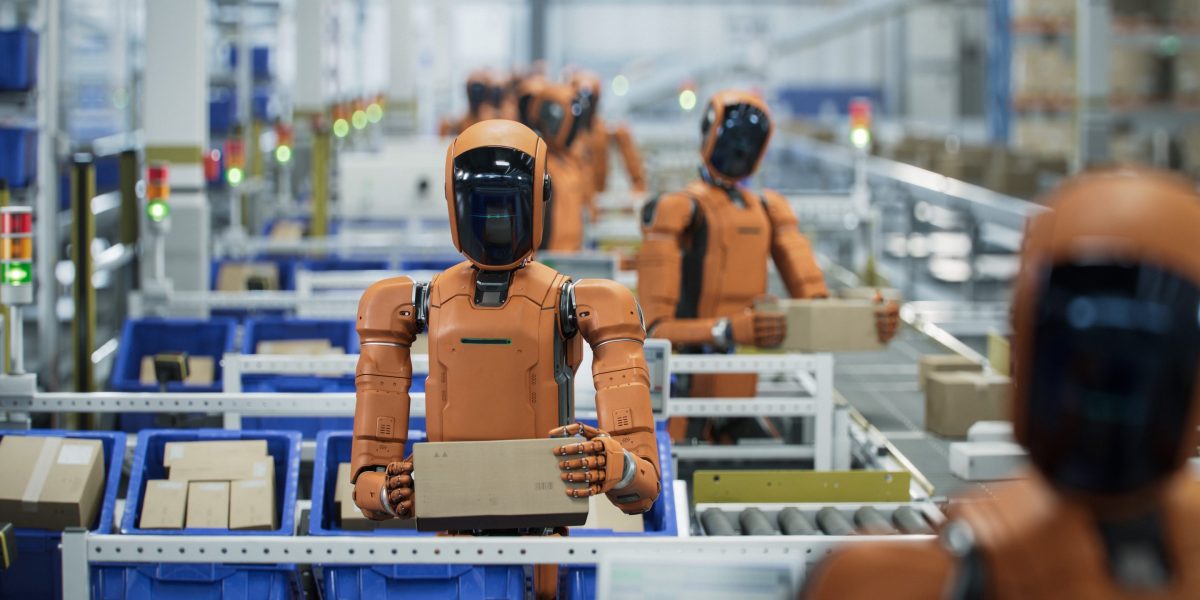
AI-powered robots, described in China as embodied AI, could operate factories, perform manual labour, and eventually replace human soldiers, becoming a general-purpose technology like electricity.
Beijing sees multiple strategic benefits
Robots could ease demographic pressures from an aging population, supercharge military capabilities through automated reconnaissance and combat, and unlock artificial general intelligence.
US lead in software may not matter
If China's bet on physical AI is correct, the United States' lead in frontier models would matter far less than capacity to build robots, deploy them, and generate training data.
Embodied AI named priority through twenty thirty
Beijing placed embodied AI among industries of the future alongside six G and quantum technology, naming it a priority in the fifteenth Five-Year Plan through twenty thirty.
China controls key supply chain chokepoint
Chinese companies produce about eighty percent of the world's LiDAR sensors, the technology underpinning three-dimensional mapping and autonomous navigation in robots and self-driving vehicles.
Military applications in South China Sea
In February, the Chinese Institute of Command and Control assessed that embodied AI could enable unmanned systems to share information and carry out precision strikes, enhancing People's Liberation Army coordination.
Chinese researchers see AGI pathway
Zhang Bo at Tsinghua University argues intelligence requires learning from the physical world. Zhou Bowen at Shanghai AI Lab says AI models need robotics to understand physical environments.
China pursues software and hardware simultaneously
Leading Chinese labs like DeepSeek and Z.ai scale large language models as aggressively as American counterparts while also developing AI in the physical world, where they outpace everyone.
Provincial governments drive robotics boom
Beijing, Guangdong, Shanghai, and Zhejiang established venture capital funds, subsidy schemes, and training facilities to support local AI-powered robotics companies competing for national leadership.
Unitree raises nearly one billion dollars
In August, Unitree, one of China's largest humanoid robot producers, went public on the Shanghai Stock Exchange, raising nearly one billion dollars with shares jumping more than four hundred fifty percent.
Commercial robot sales accelerating
More than two-thirds of Unitree's four-legged robot sales in the first nine months of twenty twenty-five were for consumer and industrial uses, up from less than one-third in twenty twenty-two.
Silicon Valley focused on software only
Silicon Valley concentrated on self-reinforcing software improvements for digital tasks, assuming advances will eventually translate to real-world capabilities without separate physical world investment.
Physical economy requires different approach
Even advanced AI models cannot work production lines, harvest fields, or extract minerals without enormous quantities of data about physical interactions that digital systems alone cannot capture.
US faces manufacturing and talent gaps
Compared with China, the United States has far fewer companies building complete robots, faces higher production costs, and has acute shortages of engineering talent in robotics sectors.
FCC bans advanced foreign robot imports
In July, the US Federal Communications Commission banned imports of advanced foreign robots to create market space for US companies, though exempting robots for product development and Chinese components.
Ukraine offers battlefield training data
Ukraine has amassed millions of annotated battlefield images and video frames from its war with Russia and signalled willingness to share this data with partners to train AI systems.
Washington must prioritize robotics now
Integrating AI into the physical world will unlock profound economic and military advantages. If Washington does not make leadership in this technology a national priority, China will reap the benefits.
“the United States may soon find itself developing the world's best AI models while China reaps the benefits of bringing the models to life”
The one thing
China is prioritizing AI-powered robots as a path to economic and military advantage, while the US focuses on software and risks falling behind in the physical world.


/file/attachments/2999/41_389608.png)