From TechCrunch · TechCrunch Events · · 1m 30s
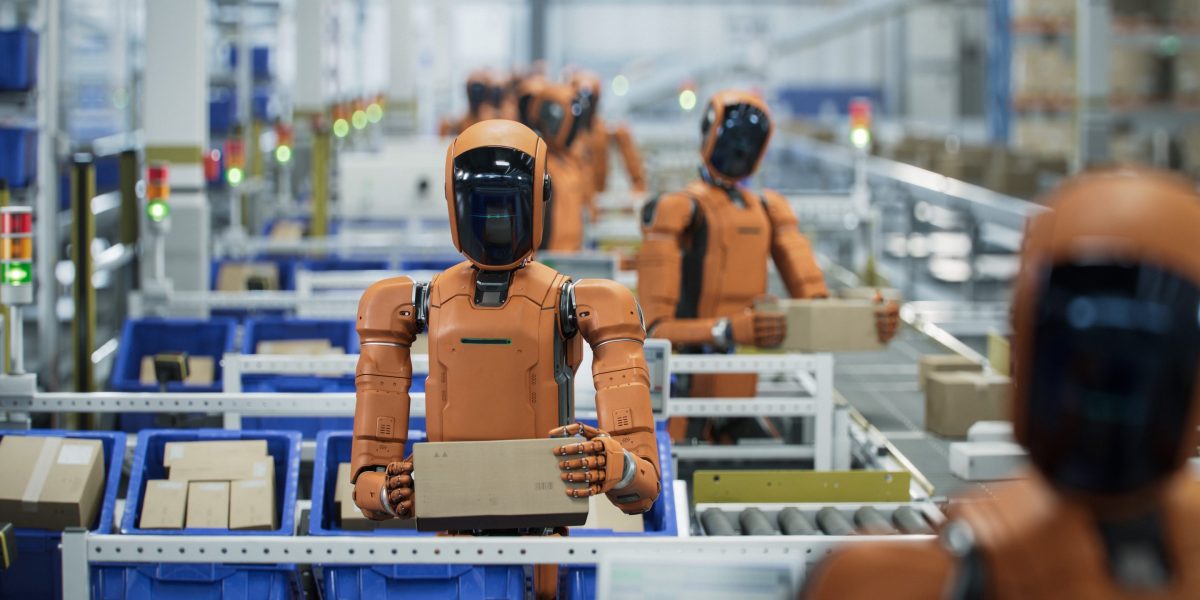
Why robots haven't had their ChatGPT moment yet
Nvidia's Les Karpas explains the biggest bottleneck holding back physical AI and what it'll take to break through.
In brief
Nvidia's Les Karpas explains the biggest bottleneck holding back physical AI and what it'll take to break through. Robotics lacks the internet-scale datasets that powered AI's breakthrough, forcing startups to create synthetic data and simulation workarounds. Originally reported by TechCrunch.
ChatGPT changed everything for AI
When ChatGPT launched in November 2022, it pushed AI beyond hype into daily reality. Robotics is still waiting for that breakthrough.
Les Karpas speaks at Disrupt

Nvidia's Global Head of Physical AI will explain what's blocking robotics' big moment at TechCrunch Disrupt 2026 in San Francisco.
The data problem is massive
Nobody has an internet-wide dataset for physical AI like OpenAI and Anthropic had for language. That's the core limitation.
“Nobody has an internet-wide dataset for physical AI in the way OpenAI, Anthropic, and others had for language.”
Self-driving cars had an advantage
Waymo and competitors built datasets through years of accumulated road miles, expanding market by market.
Startups are manufacturing scale artificially

A growing ecosystem is trying to solve the data gap through simulation, synthetic data, and foundation models trained across many robot forms.
Karpas has a unique vantage point
As Nvidia Inception's Physical AI head, he coordinates with startups across robotics, automotive, manufacturing, and smart cities.
His background spans multiple industries
Karpas has been an architect, manufacturing engineer, startup CEO, and venture capitalist at companies from iRobot to Cirque du Soleil.
Join 10,000 tech leaders in October

Disrupt runs October 13-15 at Moscone West. Tickets save up to $200 before September 25, with group discounts up to 30%.
The short version
Robotics lacks the internet-scale datasets that powered AI's breakthrough, forcing startups to create synthetic data and simulation workarounds.