From The Conversation · Jesse Liu · · 2m
How CERN built a cosmic rainstorm in a lab
Physicists smashed oxygen into protons at the LHC to watch the first instant of a particle shower that normally happens miles above your head.
In brief
Physicists smashed oxygen into protons at the LHC to watch the first instant of a particle shower that normally happens miles above your head. Cosmic ray showers were only ever modelled, never watched up close. The LHC's first oxygen-proton collisions finally gave physicists real data to check those models against…
Particles are passing through you

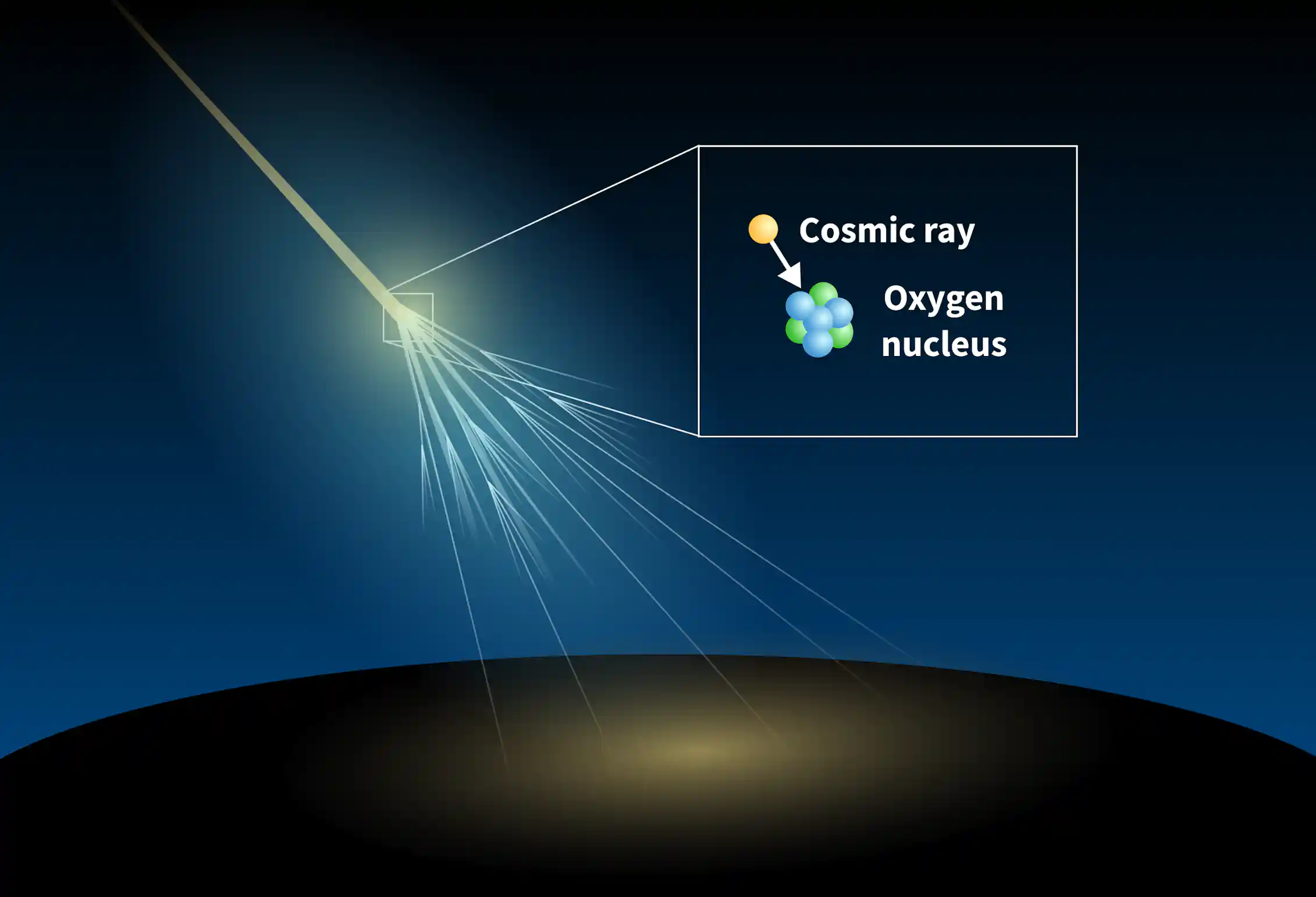
Right now, particles from space are crossing your body at nearly light speed. They are the fallout of cosmic rays hitting atoms high in the atmosphere and shattering them.
“Every second, particles zip through your body at nearly the speed of light.”
A century of not knowing
Researchers have watched these showers since the early 1900s, but still cannot say precisely how one forms. The answer turned out to be findable underground, not overhead.
Found by balloon
Victor Hess rode hot air balloons up several kilometres and found radiation climbing instead of falling. He concluded it came from space, and won the 1936 Nobel Prize.
They handed us antimatter
Cosmic radiation carried particles nobody had catalogued: antimatter, muons, pions, kaons. Short-lived cousins of the electron and proton that helped build modern particle physics.
Nobody knows where they start
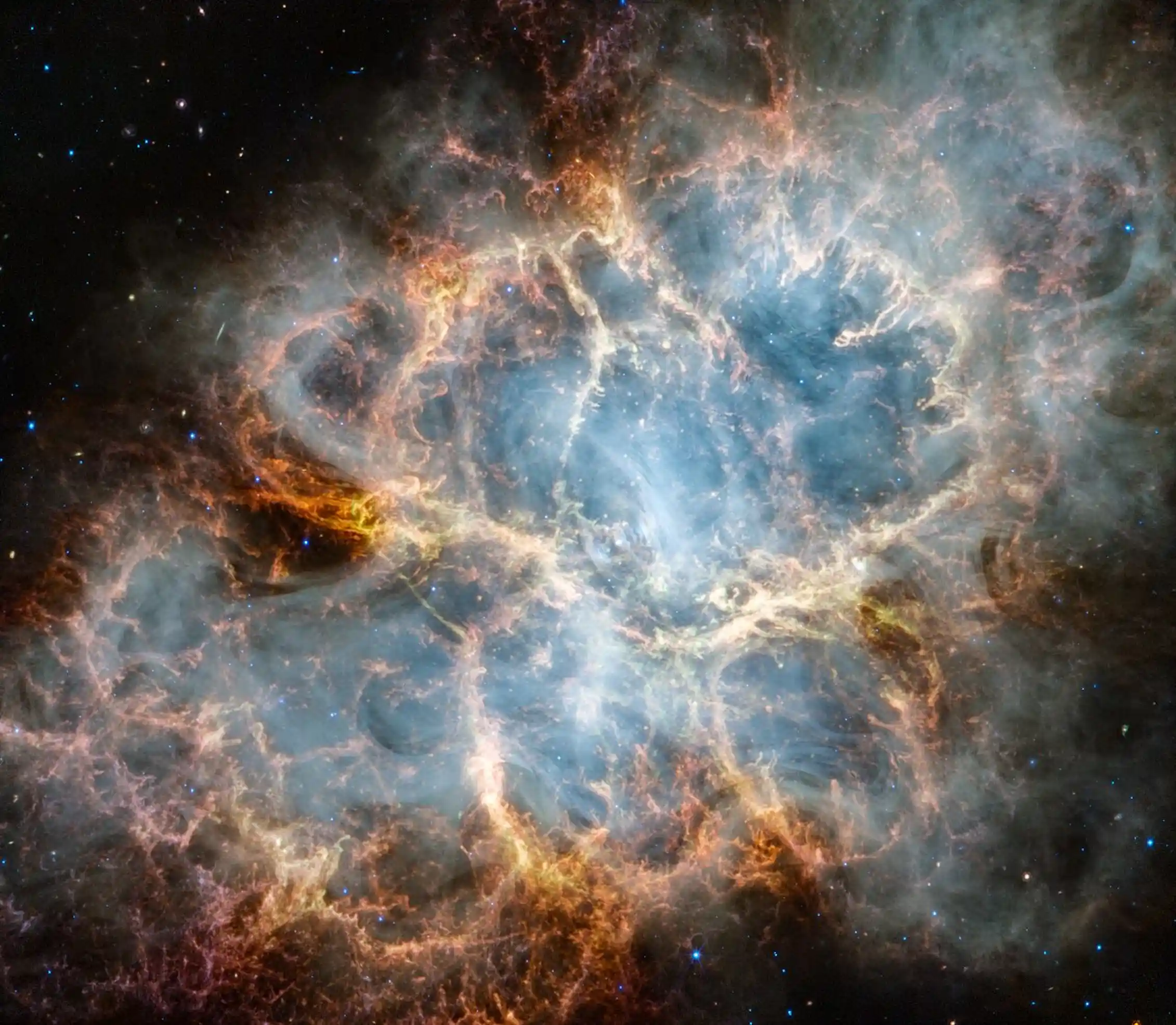
Cosmic rays are fast-moving atomic nuclei, mostly hydrogen. The origin is still open, though evidence points to exploding stars and supermassive black holes flinging them out.
“Where do they come from? How do they reach such high energies?”
Cosmic rays as X-ray machine
They date ancient artifacts, map magma chambers inside live volcanoes, and reveal sealed rooms in Egyptian pyramids, all by measuring how rock deflects the incoming particles.
The models disagree
Showers are usually read by hundreds of cameras strung across miles of Utah desert, then interpreted through simulations. Different simulations predict different showers, and no data settled it.
Oxygen beams, July 2025
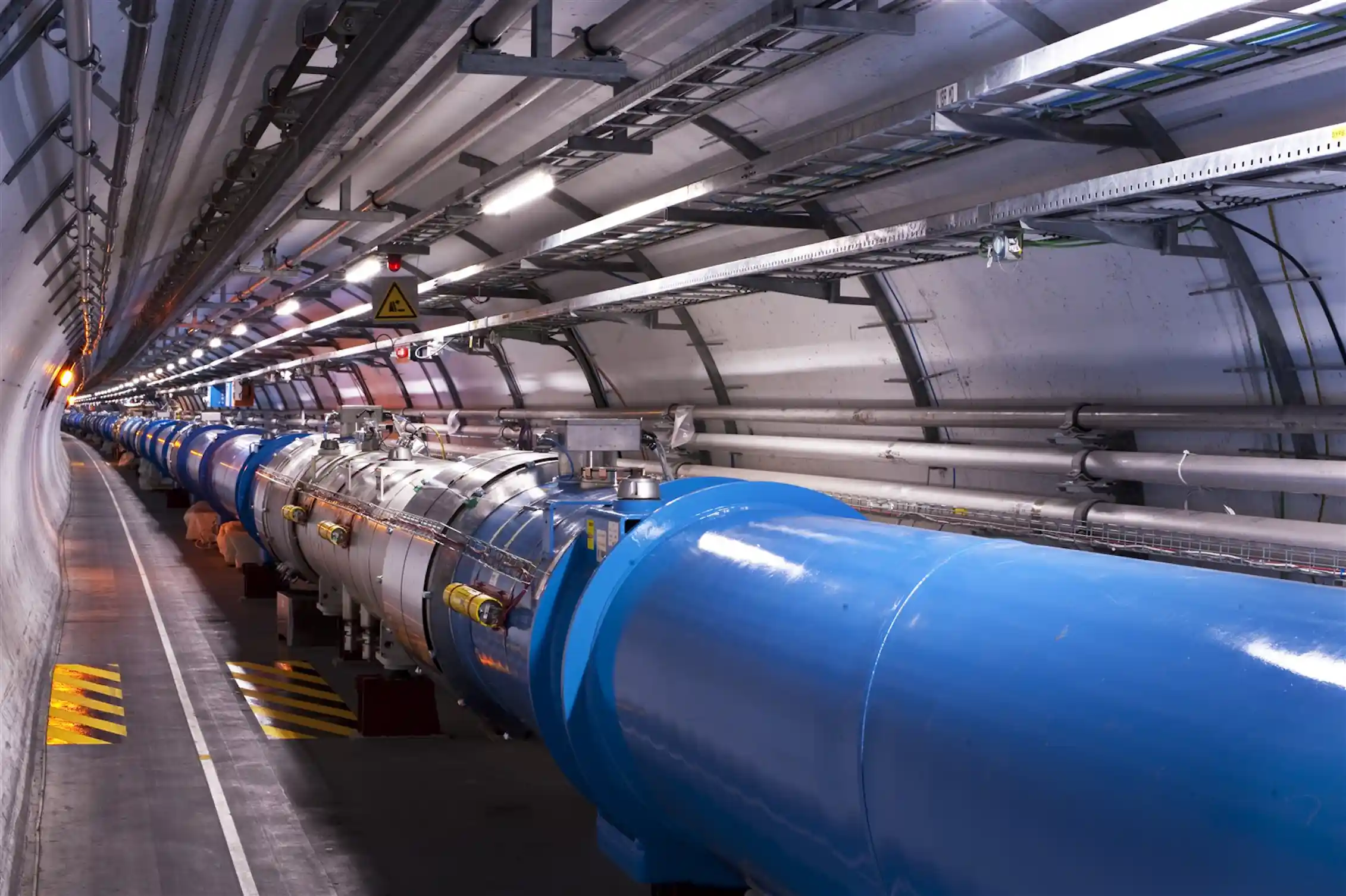
On July 1, 2025, the Large Hadron Collider collided oxygen atoms with protons for the first time. The proton played the cosmic ray, the oxygen played the atmosphere.
“For a few days, they recreated cosmic rainstorms in the lab.”
A camera the size of a field
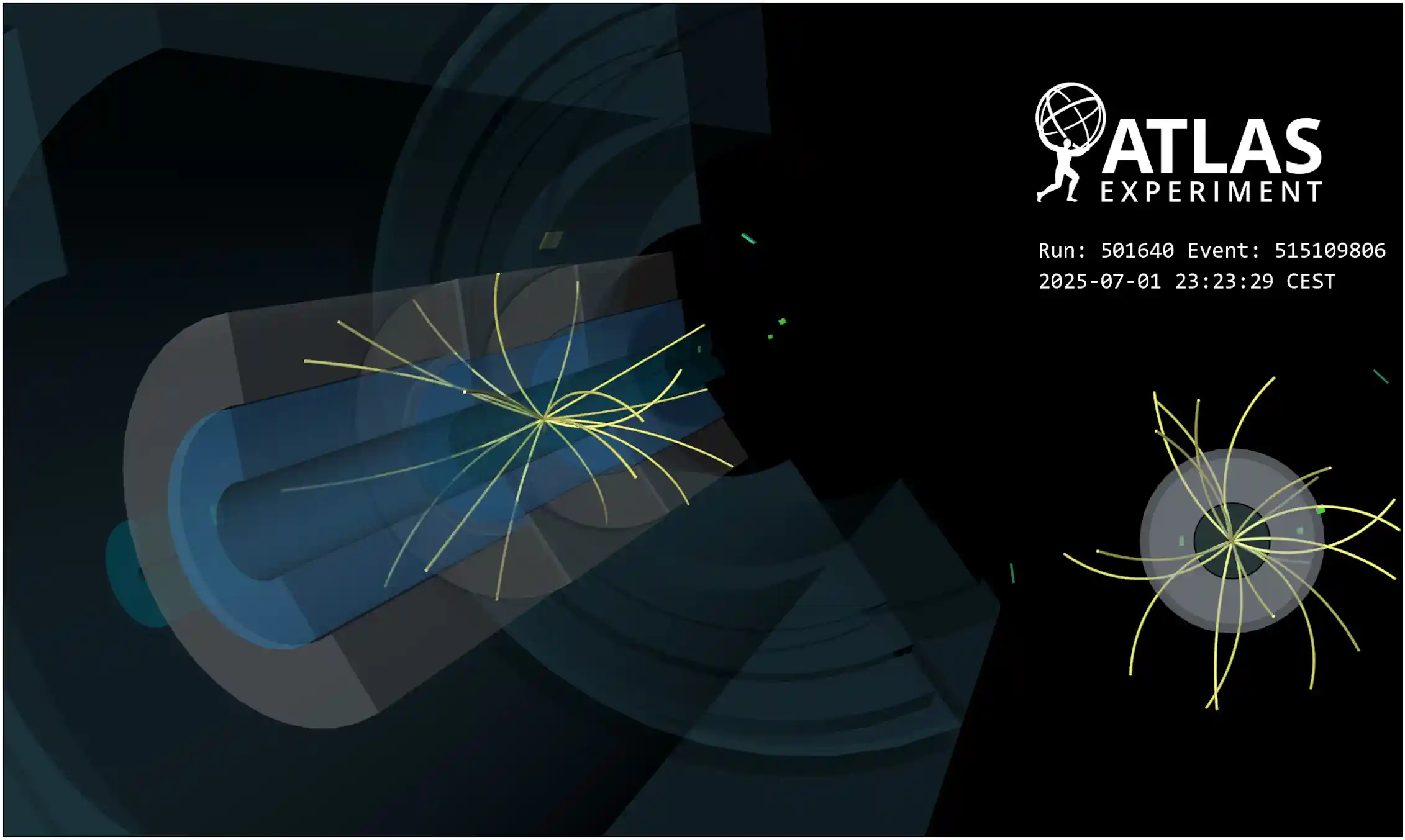
ATLAS, the football-field-sized detector, fires off more than 200 million photos a day using silicon sensors much like the one in your phone.
Ten times sharper than predicted

The team measured how many particles came out and at what energies, over 10 times more precisely than the models. That should reveal what high-energy cosmic rays are actually made of.
In short
Cosmic ray showers were only ever modelled, never watched up close. The LHC's first oxygen-proton collisions finally gave physicists real data to check those models against.