From The Conversation · Andrea Richard · · 1m 10s
Nobel Prize Honors Particle Accelerator Pioneers
Cockcroft and Walton's 1932 particle accelerator breakthrough earned them a Nobel Prize 75 years ago, shaping physics, medicine, and art research.
In brief
Cockcroft and Walton's 1932 particle accelerator breakthrough earned them a Nobel Prize 75 years ago, shaping physics, medicine, and art research. John Cockcroft and Ernest Walton won the 1951 Nobel Prize for their 1932 particle accelerator that transformed nuclear physics, medicine, and art research. Originally…
Early 1930s atomic research
In the early 1930s, scientists discovered the atom's dense nucleus with orbiting electrons.
Nobel Prize recognition
John Cockcroft and Ernest T.S. Walton received the Nobel Prize in 1951 for their particle accelerator work.
First particle accelerator
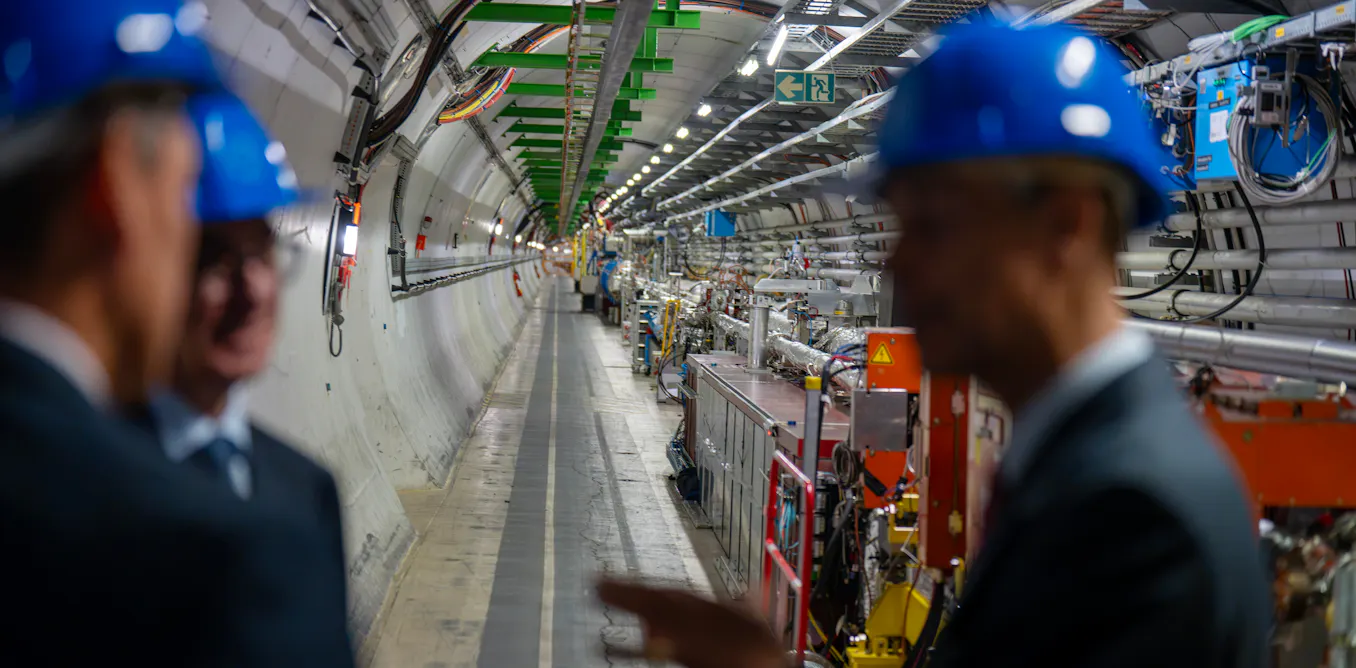
Cockcroft and Walton built the first machine accelerating hydrogen atoms to 800,000 volts in 1932.
Lithium collision experiment
They directed accelerated protons at lithium targets to produce two alpha particles.
Accelerator applications
Particle accelerators now enable cancer treatment, radiopharmaceutical production, and art authentication.
Louvre's accelerator
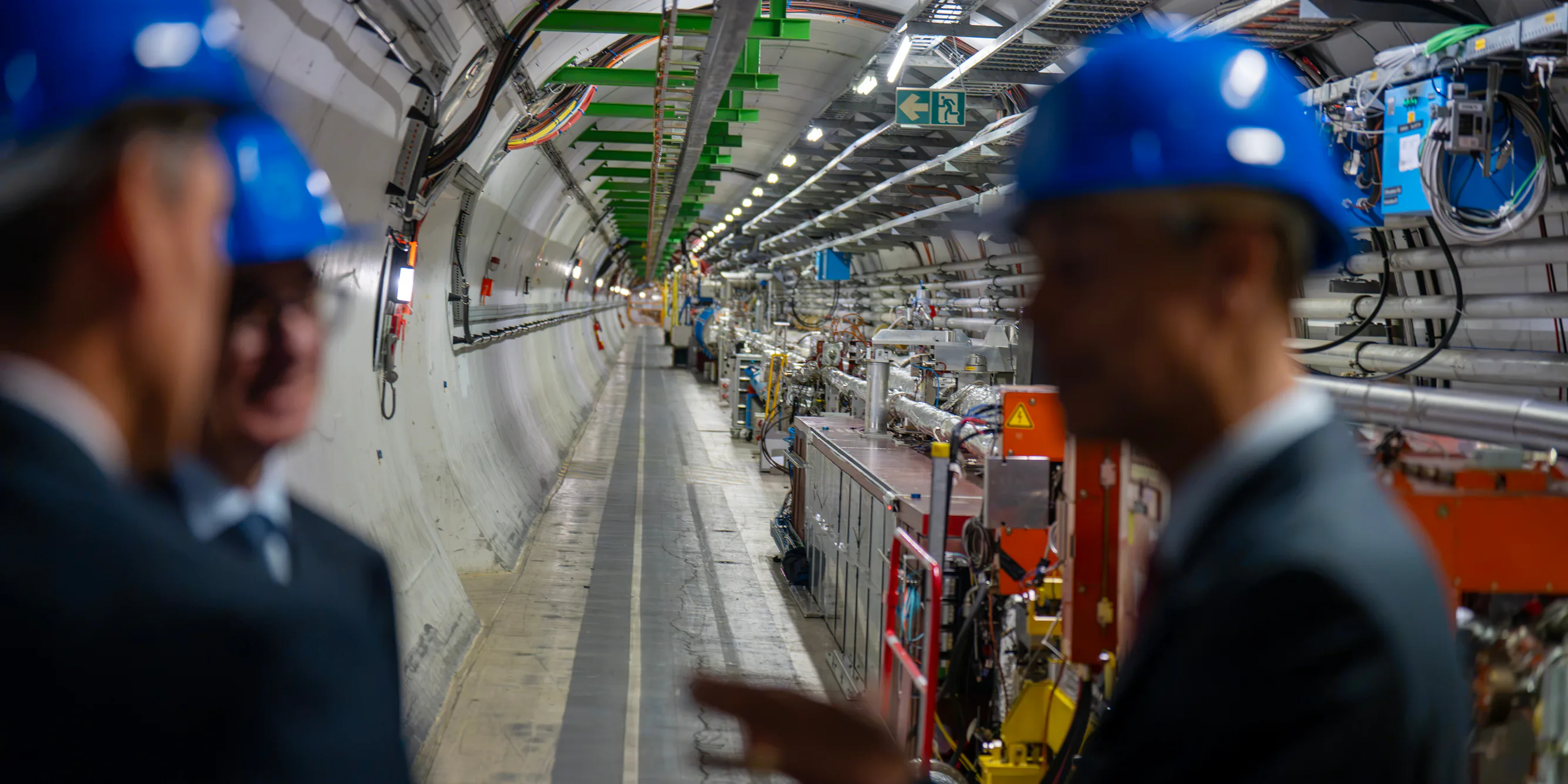
The Louvre museum in Paris has a dedicated accelerator installed in 1988 for cultural heritage research.
Satellite radiation protection
Accelerators test satellite electronics against cosmic ray damage in space.
Legacy of discovery
Cockcroft and Walton's work laid the foundation for modern physics, medicine, and art research advancements.
The headline
John Cockcroft and Ernest Walton won the 1951 Nobel Prize for their 1932 particle accelerator that transformed nuclear physics, medicine, and art research.





