From The Verge · David Pierce · · 4m
Google's bet on the ultimate Android laptop
After 16 years of ChromeOS, Google is betting everything on Googlebooks, laptops that merge Android's app ecosystem with AI-powered features.
In brief
After 16 years of ChromeOS, Google is betting everything on Googlebooks, laptops that merge Android's app ecosystem with AI-powered features. Google is abandoning its web-only laptop vision and building high-end devices that treat Android phones as the center of your computing life. Originally reported by The Verge.
Google's 2010 web-only dream
Sundar Pichai announced Chrome OS in late 2010, betting that laptops needed only a browser and cloud storage. The vision was that hardware wouldn't matter anymore.
ChromeOS succeeded, but not as a laptop
Chrome OS became a hit in education and elsewhere, but never convinced people to abandon traditional laptops. Google's partners kept making cheap, disposable devices.
Google's hardware chief sees a new path

Rick Osterloh, Google's head of hardware, greenlit a new project because he saw it as a focusing move. Google had been maintaining two separate operating systems for too long.
Android conquered everything but laptops
Android dominates phones, tablets, TVs, and cars with a familiar interface and huge app ecosystem. Laptops remained the one device category where Google couldn't unify its platform.
AI changed the laptop calculus
Google realized that AI models need powerful hardware to run locally. High-end PCs became surprise winners in the AI revolution, proving that devices still matter.
Google flips its hardware philosophy

A generation ago, Eric Schmidt said the future was disposable hardware. Googlebooks represent Google's new belief that great devices are worth paying for.
A decade of failed merger attempts
Google spent years trying to merge ChromeOS and Android, including attempts to run Android apps on ChromeOS and a project called Fuchsia. Nothing stuck until 2024.
Android finally matured enough
By early 2024, Android had evolved into a truly cross-platform operating system. Developers embraced multiple screen sizes, and Google built a modular stack supporting phones, wearables, TVs, and cars.
“The key thing that had changed was just the rapid pace of evolution that Android itself has gone under.”
The winning idea emerges

Two Googlers asked: What if we brought the best of ChromeOS to Android instead of the other way around? This question, asked at the right time, sparked Project Aluminium.
Combining Android with ChromeOS strengths
Google could build an Android laptop that natively runs all Android apps while keeping ChromeOS's best features: excellent multitasking, fast boot times, and easy updates.
Users want their phone on their laptop

The Aluminium pitch identified that users starting with Android phones expect their laptops to look and work like their phones. They want widgets, homescreens, and perfect sync across all devices.
AI built into the operating system
Google decided Gemini and other AI tools should be core to the OS, not just separate apps. Users should be able to build software with prompts and get easier ways to run it on their devices.
Magic Pointer reimagines the cursor

Google's most novel feature lets you invoke an AI bot by wiggling your cursor over text or images. It changes how you interact with your computer without changing the ergonomics.
“The mouse pointer? That thing seems pretty stupid.”
Google teams finally talk to each other
The Aluminium team discovered other Google groups solving similar problems: Android Automotive needed fast user switching, Android Wear was improving Bluetooth, XR was working on multi-window support.
One unified Google experience
Instead of each team inventing new solutions, Googlebook integrated disparate Android ideas into a single platform. The name itself signals Google's goal: unifying phones, cars, and laptops.
“We realized pretty quickly that this is about the whole Google experience.”
Hardware must be genuinely great
Magic Pointer needs a responsive trackpad, AI needs processing power and memory, and the keyboard, battery, and screen all must be excellent. Cheap hardware won't work.
Five partners launch first devices

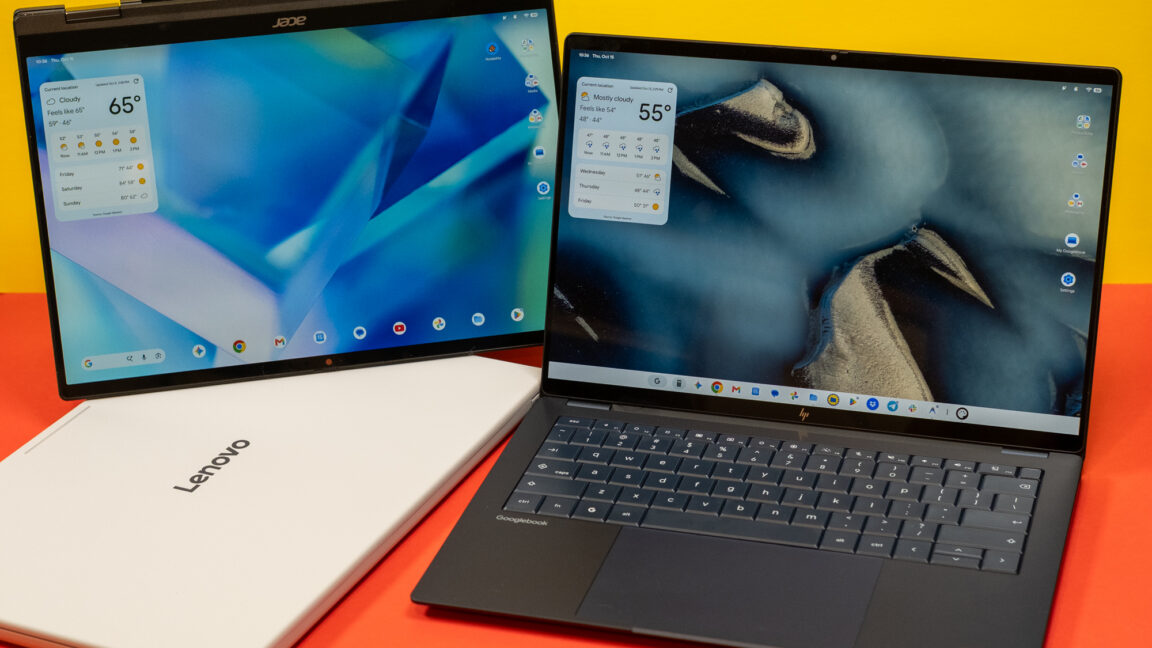
Google pitched the concept to PC makers and phone manufacturers. Acer, Asus, Dell, HP, and Lenovo are launching the first five Googlebooks, with many more partners waiting in the wings.
Priced like MacBook Air, not Chromebook
Googlebooks cost between eight hundred ninety-nine and one thousand two hundred ninety-nine dollars. Google is betting that AI enthusiasm and the need for powerful hardware justify the premium price.
Google won't get a third chance
After failing to convince people that web-only laptops and cheap Chromebooks were the future, Google is betting everything on high-end devices that sync perfectly with Android phones.
“I still fundamentally believe it will always be your central computer.”
Sixteen years of Android led here

Googlebooks represent the culmination of Android's evolution. Their first job is to run the apps you know and sync perfectly with your Android devices. The AI features are the bonus.
The key point
Google is abandoning its web-only laptop vision and building high-end devices that treat Android phones as the center of your computing life.