From Ars Technica · · 2m
Neutrino identity swaps may explain missing supernovae
New models show that flavor-changing neutrinos could stall stellar explosions, solving a cosmic mystery.
In brief
New models show that flavor-changing neutrinos could stall stellar explosions, solving a cosmic mystery. When neutrinos change identity inside dying stars, they transfer less energy to the shock wave, potentially preventing explosions and creating more black holes than expected. Originally reported by Ars Technica.
How supernovae actually work
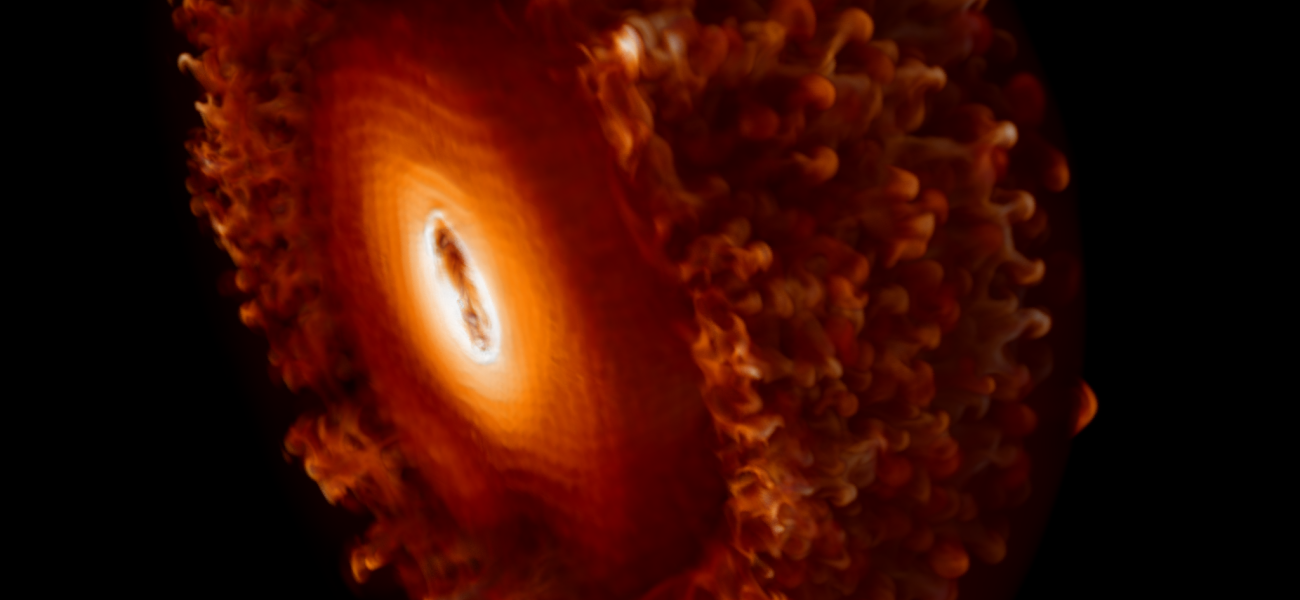
Large stars collapse when they run out of fuel. The energy from this collapse blows the rest of the star apart.
The supernova mystery deepens
We observe fewer supernovae than star formation rates predict. Red supergiants especially seem to explode less often than they should.
Black holes have a mass gap
Gravitational wave observations reveal fewer black holes at certain masses than expected. This hints at something missing in our models.
Models can't agree on explosions
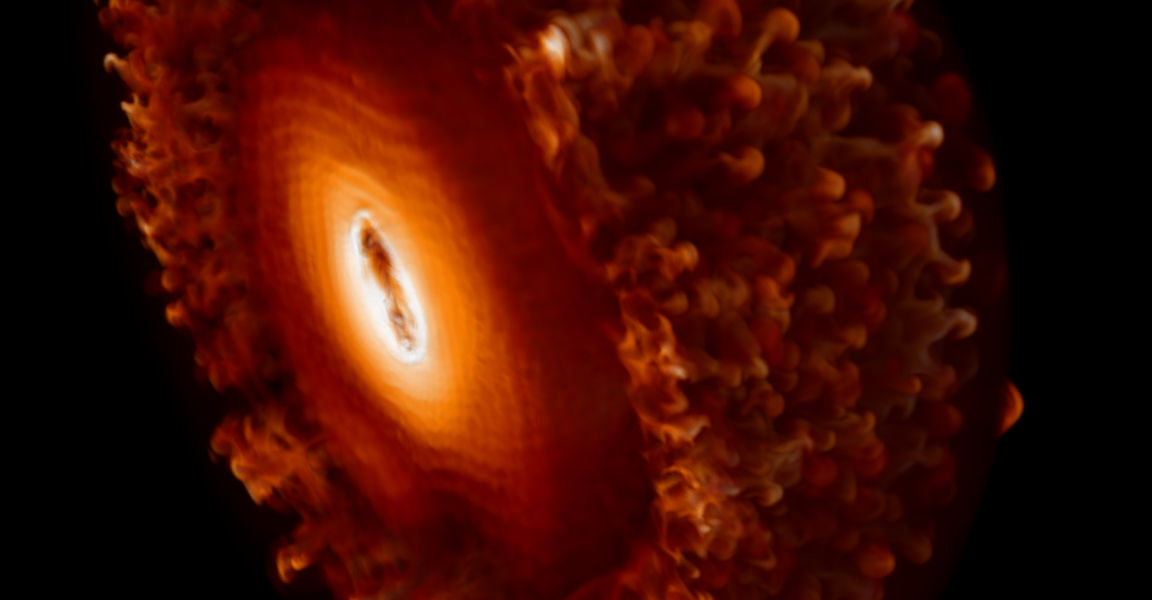
As physicists add more sophisticated physics to supernova simulations, they swing between everything exploding or nothing exploding.
Neutrinos power the explosion
Dying stars produce massive numbers of neutrinos. These particles transfer energy to stalled shock waves, allowing them to escape and destroy the star.
Neutrinos change their identity
There are three neutrino flavors: electron, muon, and tau. Each particle exists in a superposition of all three and oscillates between them.
Identity matters for energy transfer
Neutrinos interact with matter differently depending on their flavor. Current models ignore this, treating all neutrinos the same.
“By modifying the relative spectra of electron neutrinos, electron antineutrinos, and heavy-lepton neutrinos, [flavor oscillation] affects charged-current heating”
A simplified model tests the idea
Researchers from Copenhagen simulated flavor changes as instantaneous, dividing neutrino energy evenly among six types as they travel through the star.
Nearly 200 stars simulated
The team modeled dying stars ranging from nine to 120 solar masses. They tested three different density cutoffs for the shock wave.
Less energy reaches the shock
Flavor oscillations shift energy into heavier neutrinos. This means less energy transfers to the shock wave, sometimes stalling the explosion entirely.
Red supergiants fail to explode
Stars with 15 to 30 solar masses, including red supergiants, are especially prone to failed explosions. This matches the observed shortage.
More and bigger black holes
When explosions fail, outer star material falls onto the remnant. This creates more black holes and pushes them into higher mass ranges.
The model needs more physics
This simplified approach neglects convection and detailed neutrino physics. But it shows flavor oscillation could profoundly affect supernovae.
The bottom line
When neutrinos change identity inside dying stars, they transfer less energy to the shock wave, potentially preventing explosions and creating more black holes than expected.