From The Conversation · Tyce DeYoung · · 1m 50s
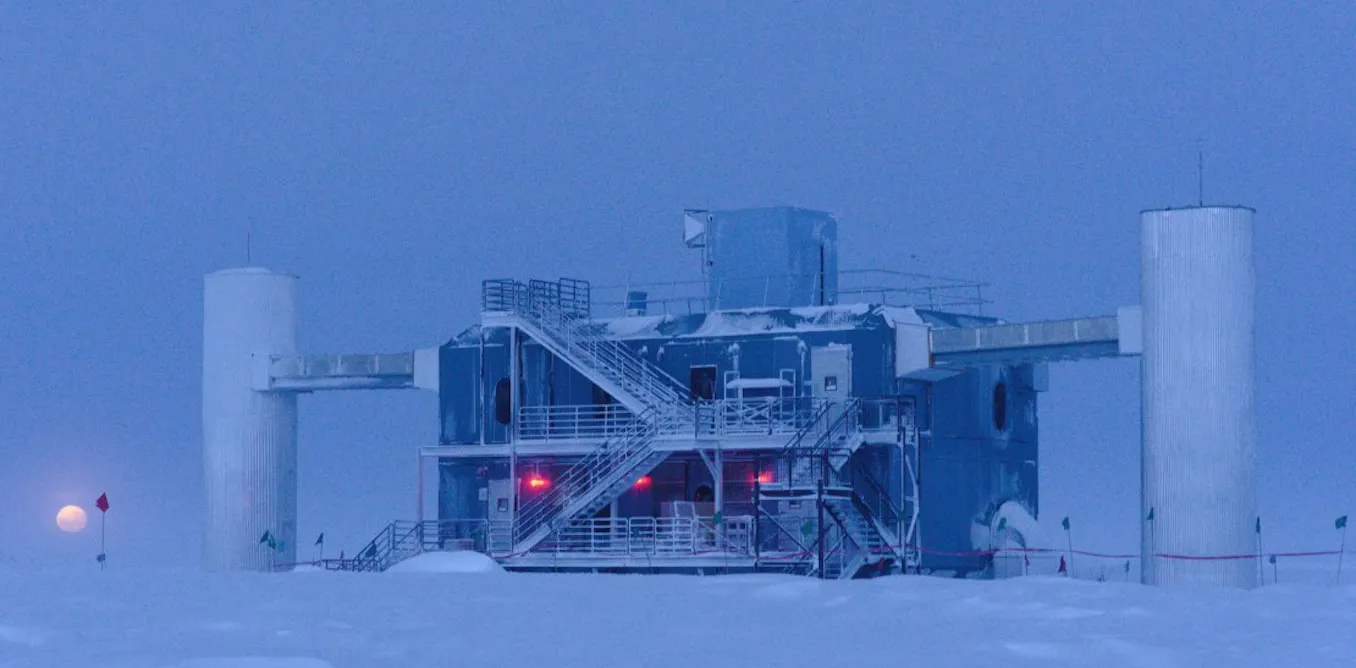
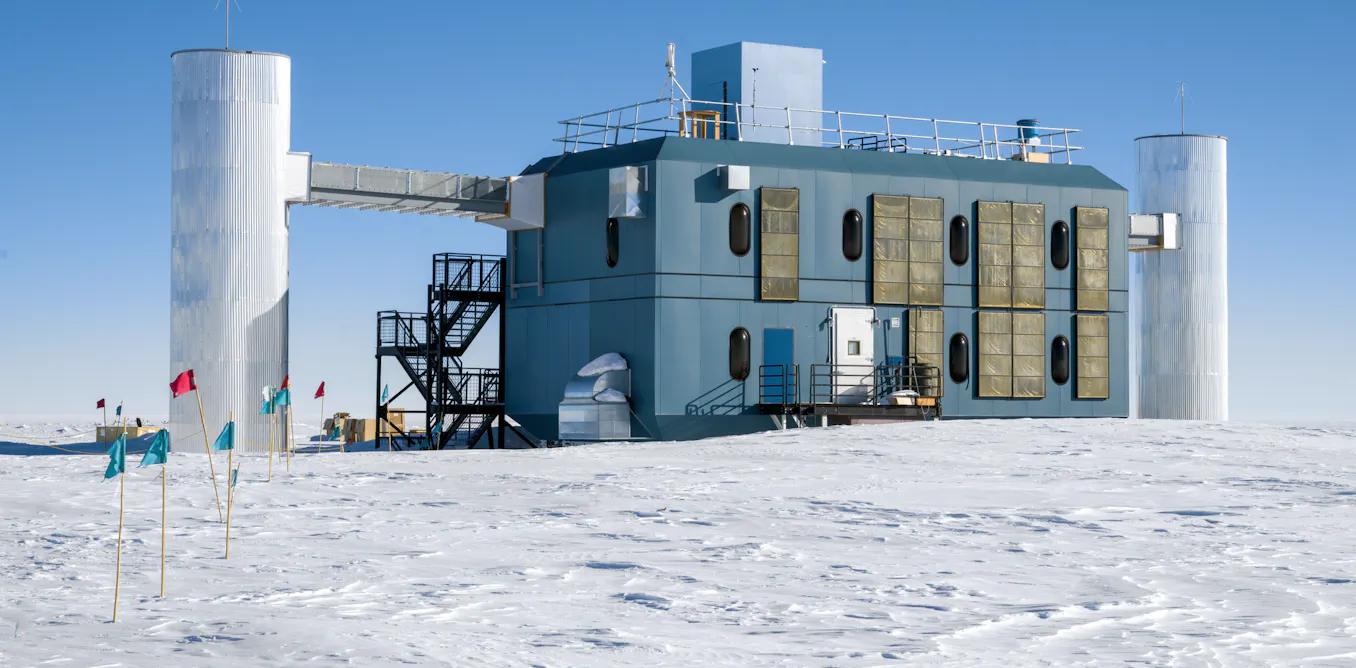
IceCube Telescope in Antarctic Ice
How a cubic kilometer of Antarctic ice catches ghost particles from space.
In brief
How a cubic kilometer of Antarctic ice catches ghost particles from space. IceCube Neutrino Observatory detects cosmic neutrinos using Antarctic ice to trace their origins. Originally reported by The Conversation.
IceCube Observatory Location
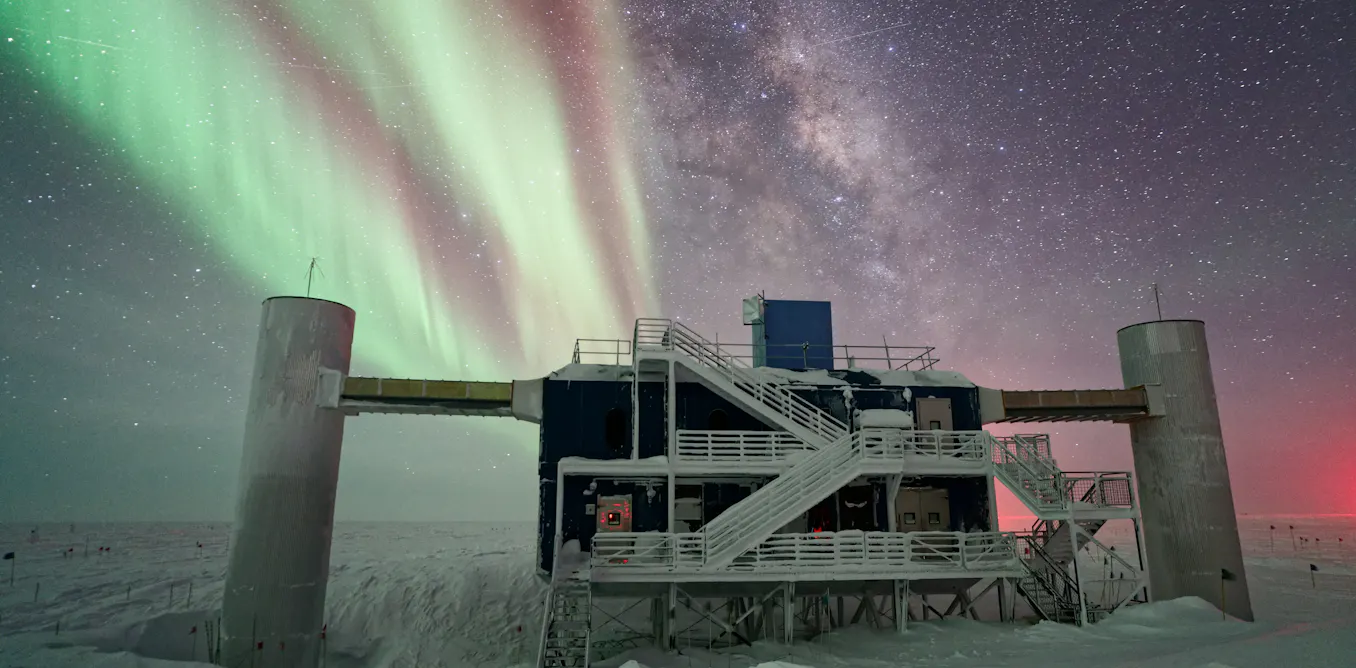
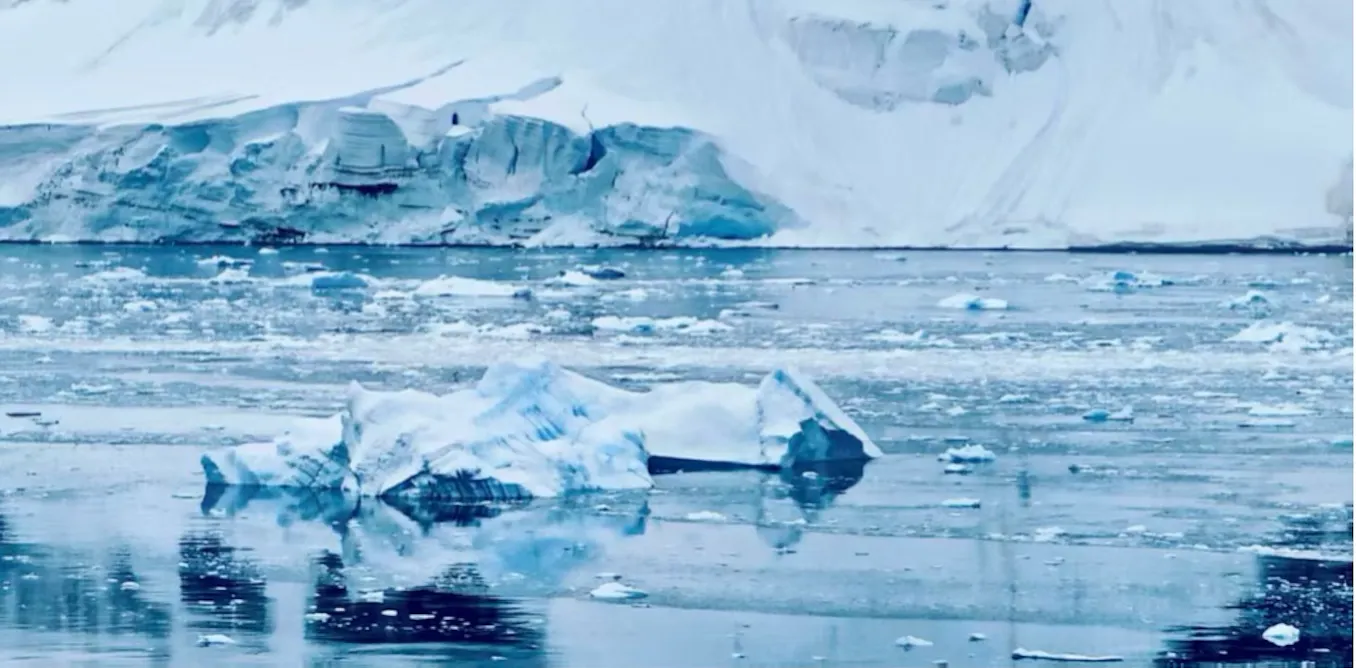
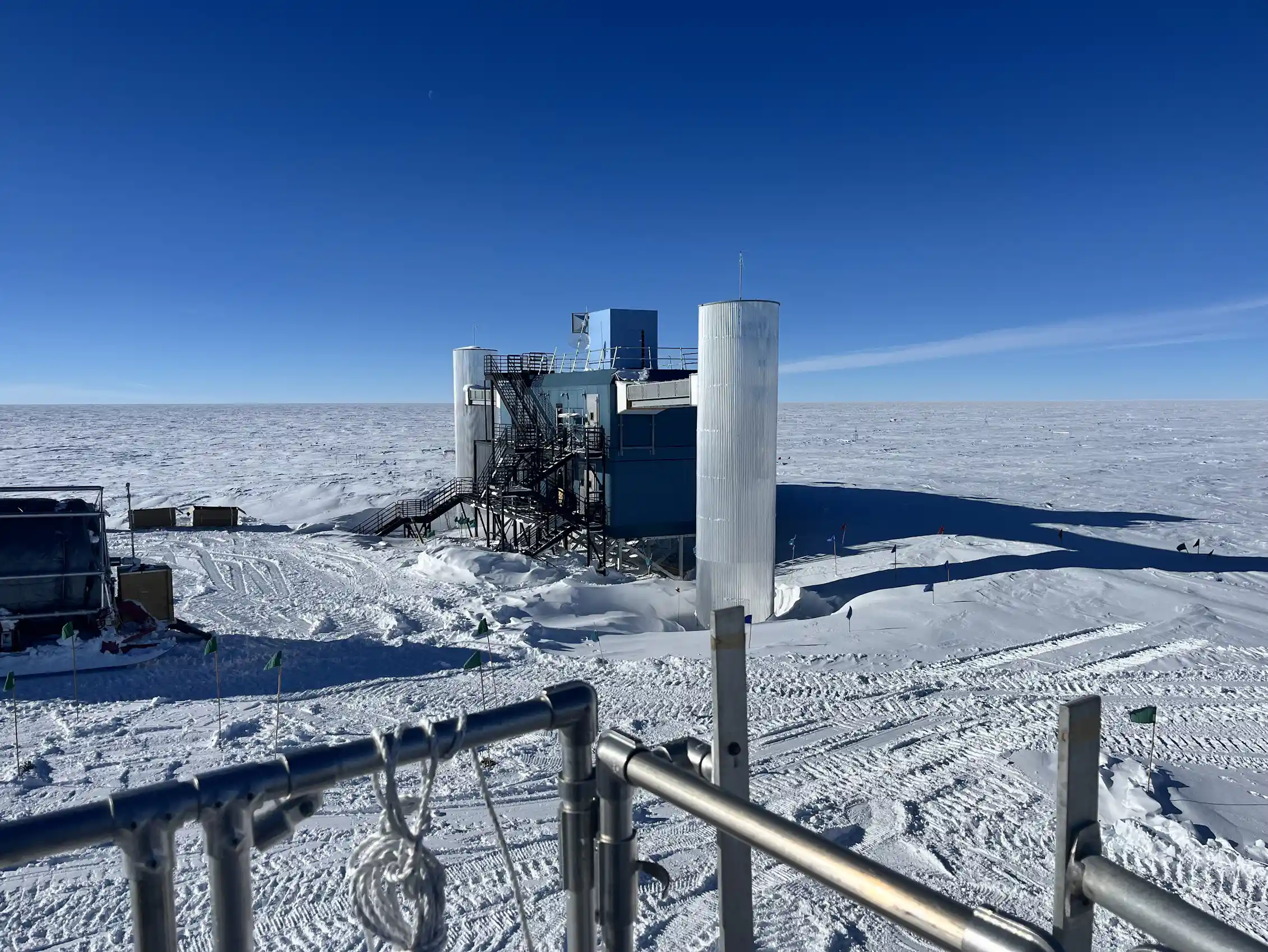
The IceCube observatory sits atop the South Pole’s 1.8-miles-thick pure, clear ice sheet.
South Pole Environment
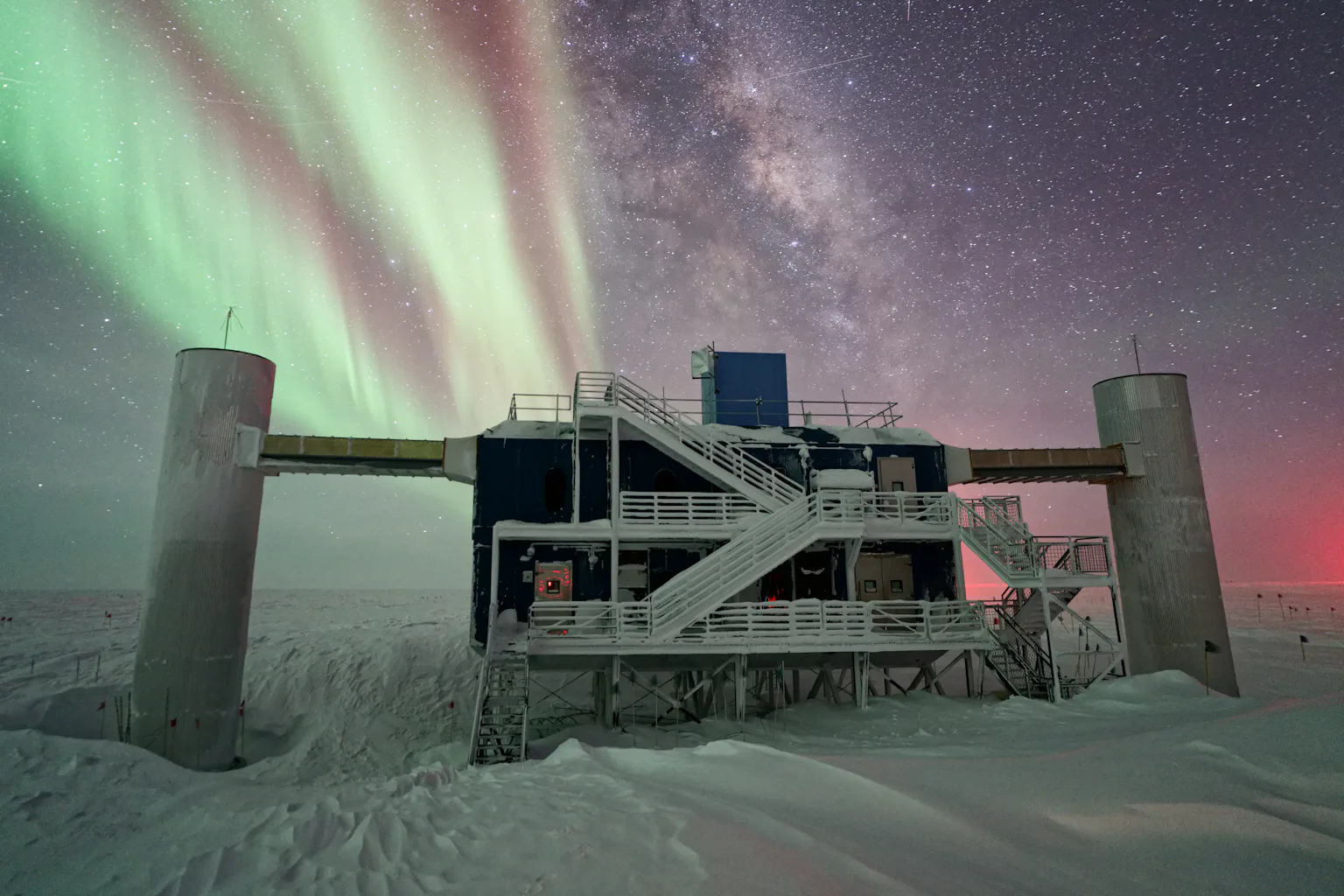
Standing at the South Pole is the next-best thing to being on another planet with an eerie silence and featureless snow landscape.
IceCube’s Purpose
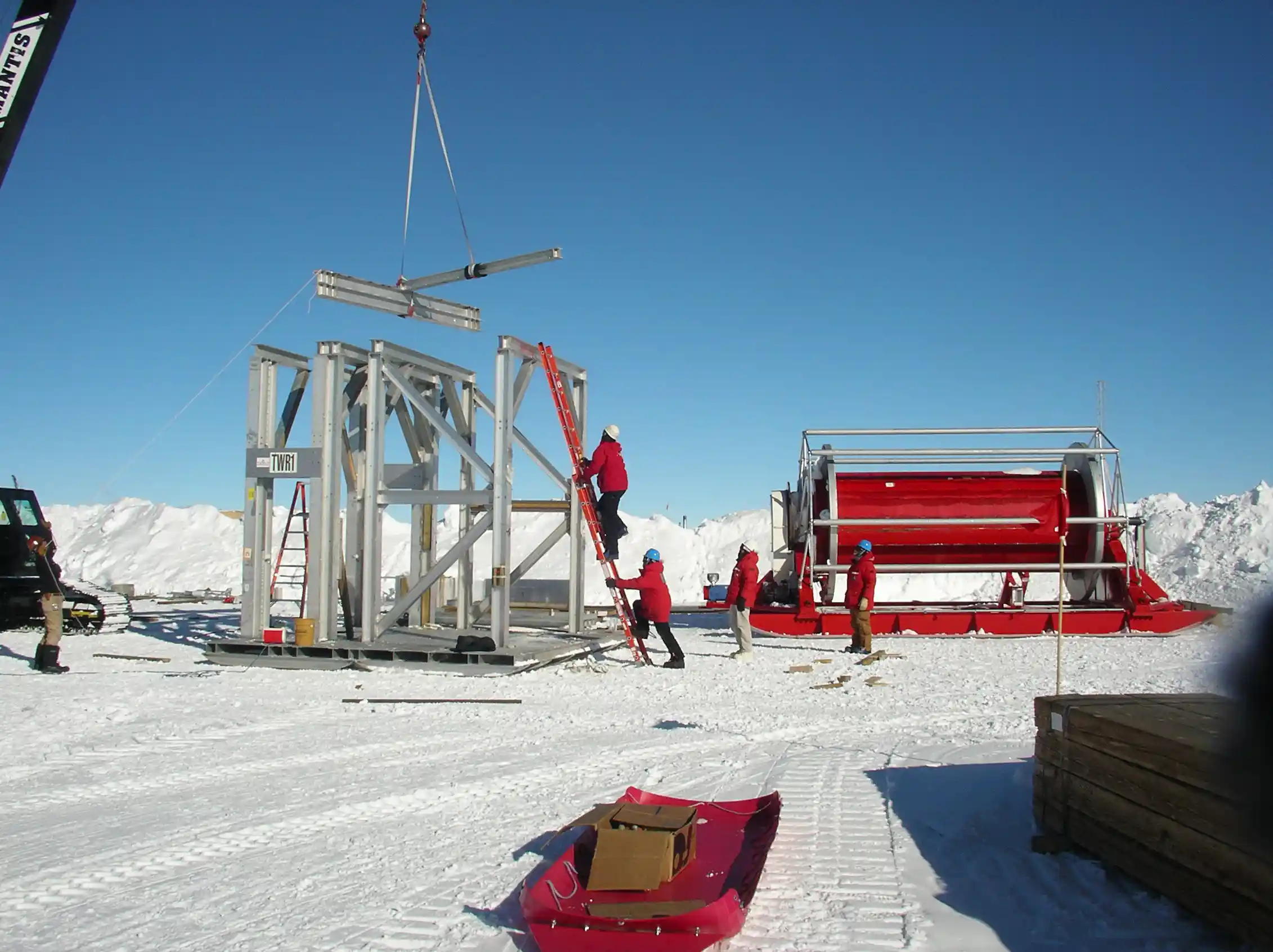
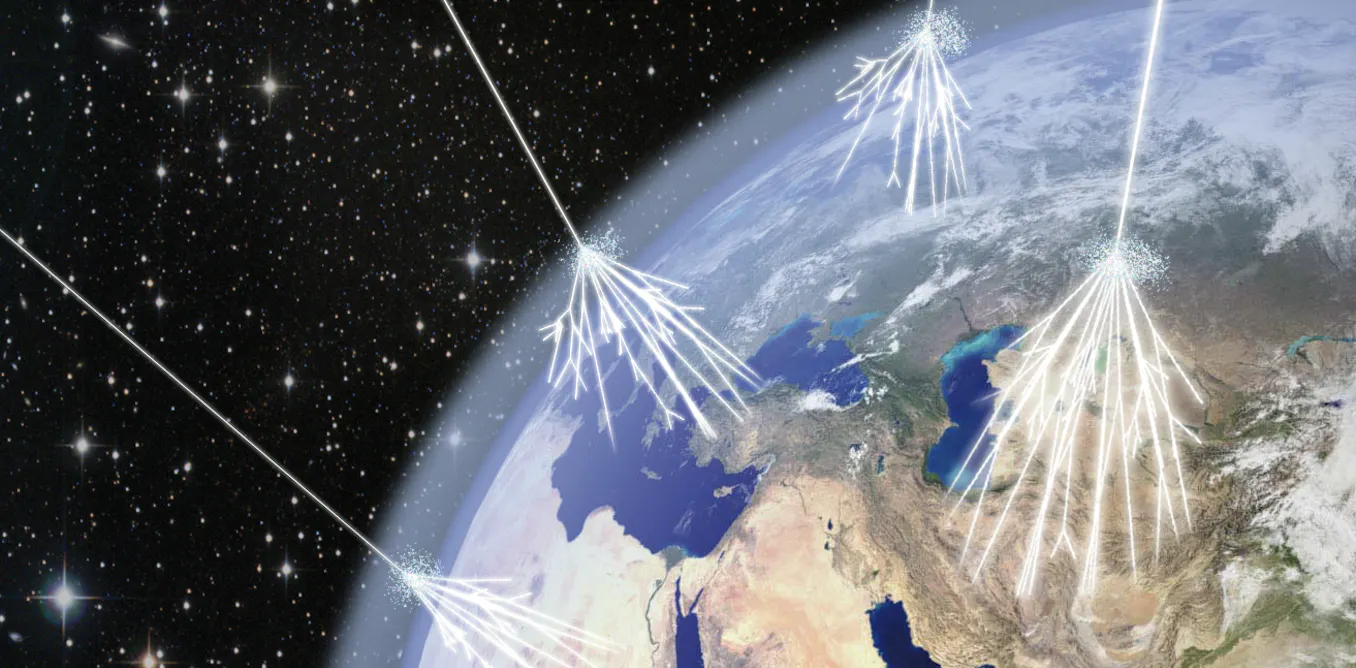
This telescope watches for mysterious subatomic particles called neutrinos from space.
Nobel Prize Connection
Francis Halzen, recipient of the 2026 Nobel Prize in physics, spearheaded the IceCube project.
IceCube Team

I’m an astrophysicist part of the international team that started building IceCube in 2005 and operates it today.
IceCube Construction

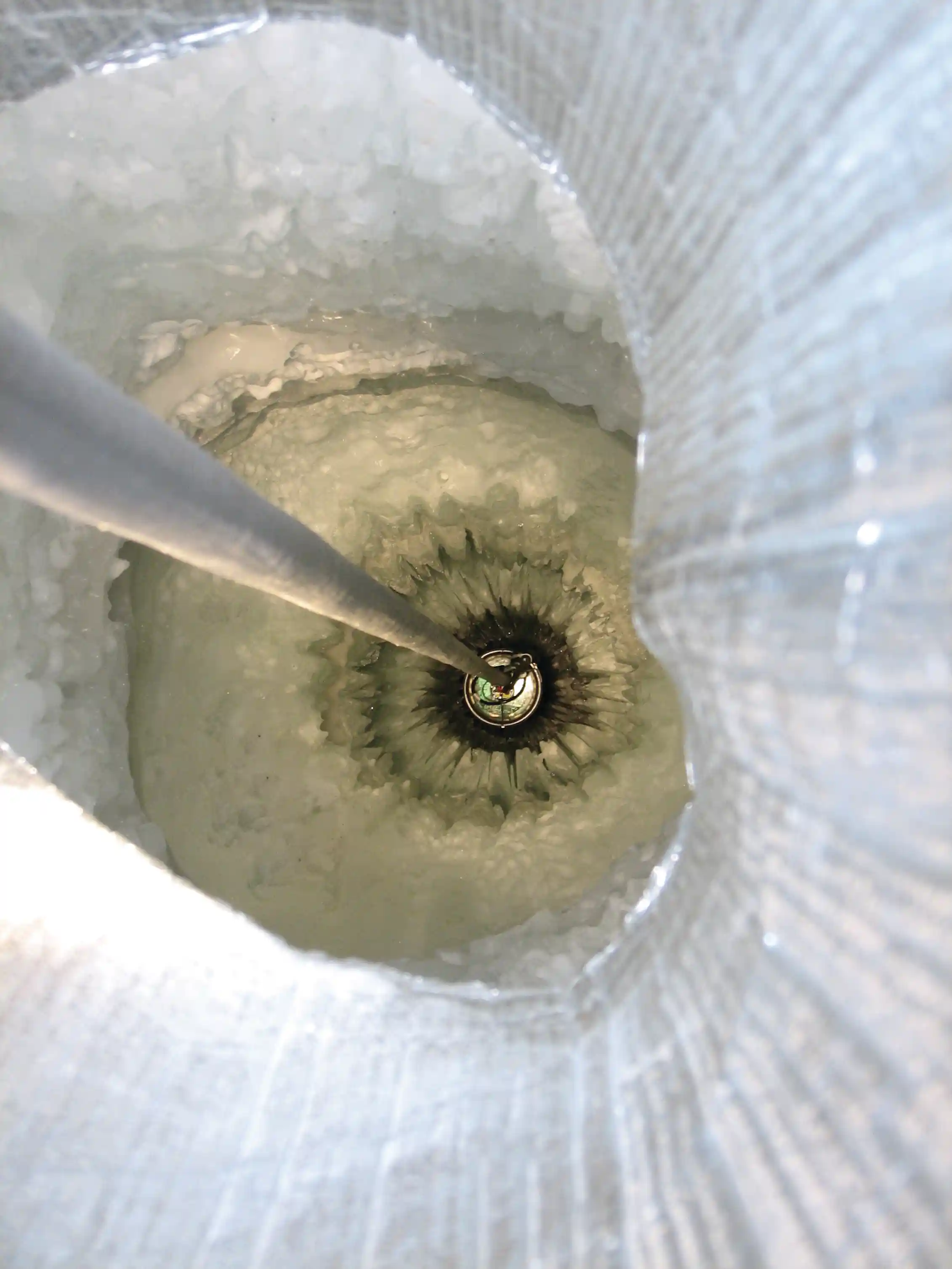
Workers melt holes 1.5 miles deep in Antarctic ice to install IceCube sensors using hot water drills.
Neutrino Detection
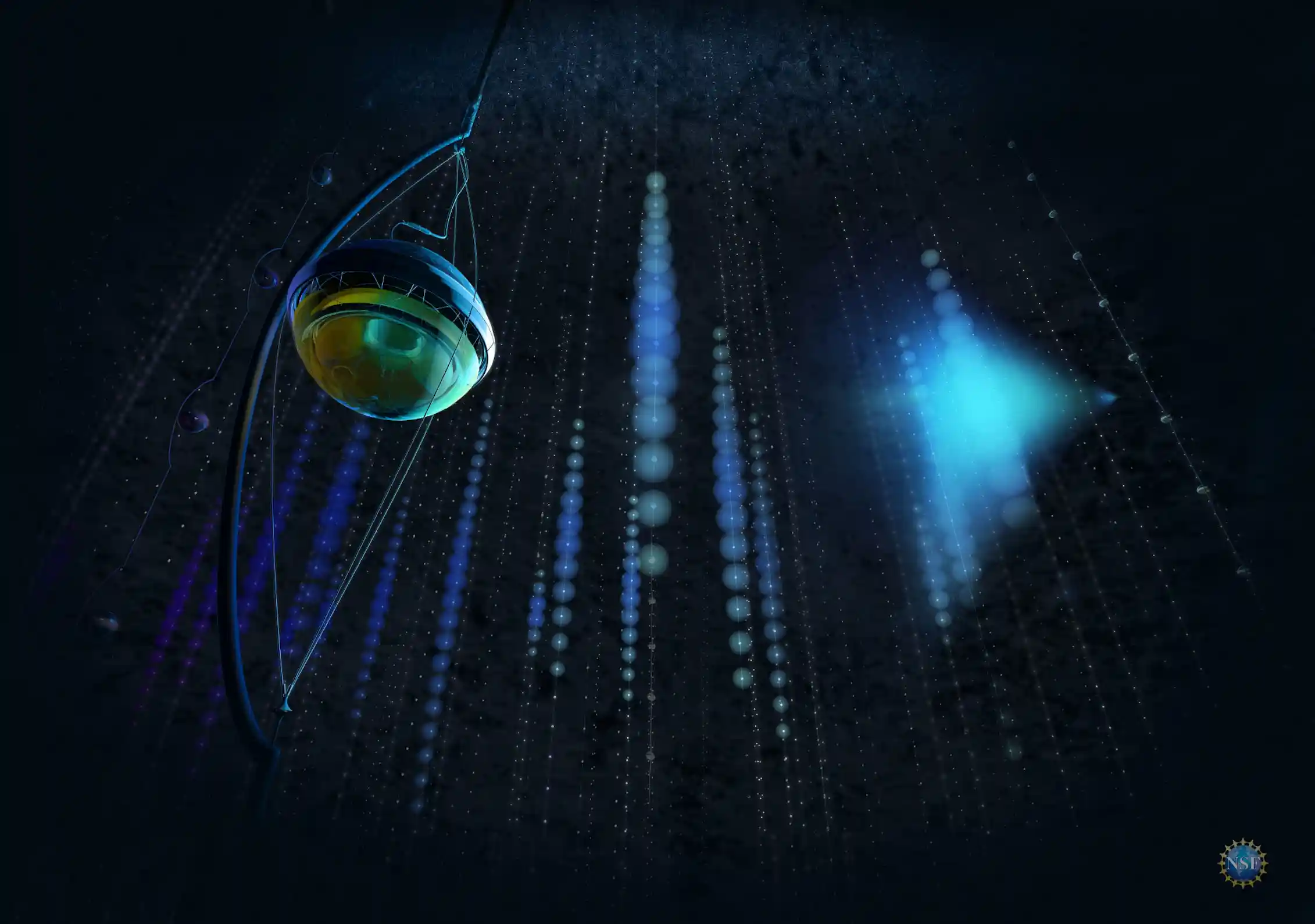
Neutrinos, ghost particles, rarely interact with matter but can be detected by IceCube’s sensors in the ice.
Neutrino Interaction
When a neutrino smashes into ice, it releases high-energy particles visible to IceCube’s sensors.
Neutrino Tracking
By measuring visible particles, IceCube determines the neutrino’s direction, energy, and type.
South Pole Challenges
The South Pole is cold, isolated, and has six months of constant daylight followed by six months of darkness.
IceCube Development
Halzen began work in 1993 with AMANDA, which evolved into IceCube fully commissioned in 2011.
Neutrino Sources
IceCube detected neutrinos from outside the solar system, including blazars and nearby galaxies.
IceCube Upgrade
In 2025-26, IceCube installed an upgrade to improve detector calibration and focus.
Future Projects
Plans for IceCube Gen2 and other global neutrino telescopes like KM3NeT are underway.
The one thing
IceCube Neutrino Observatory detects cosmic neutrinos using Antarctic ice to trace their origins.